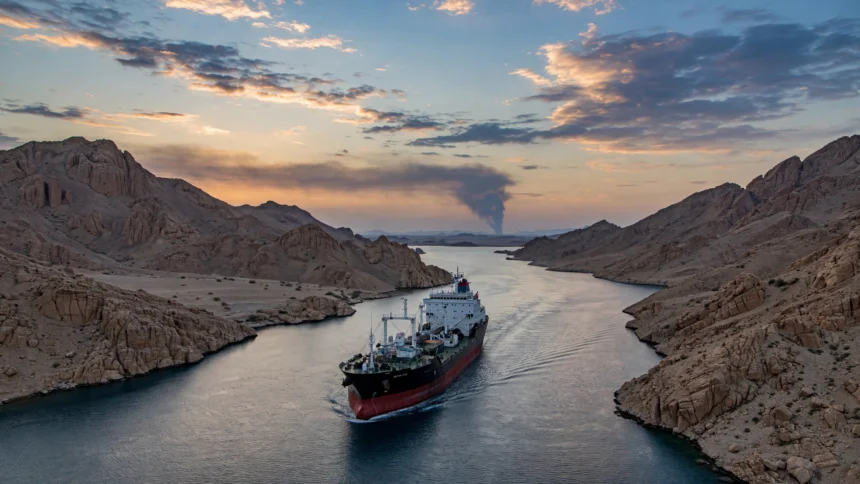
Two oil tankers caught fire in the Strait of Hormuz on Friday after hitting naval mines, Iran’s Revolutionary Guards said, in the latest flare-up in a waterway that carries about a fifth of the world’s oil. The claim, carried by Iranian state television, came a day after Tehran reported similar incidents involving five other tankers and a tugboat. No independent maritime authority has confirmed either set of incidents so far.
The Islamic Revolutionary Guard Corps (IRGC) said the two tankers were trying to leave the strait through what it called an unauthorised route when they struck mines. One vessel was east of the strait and the other was inside it, according to the statement. Both ships had switched off their navigation and identification systems, the Guards said, and were attempting the transit with the support of the US military.
For India, which imports the bulk of the crude oil it consumes, every incident in Hormuz is watched closely. Any sustained disruption in the narrow channel between Iran and Oman can push up shipping costs and crude prices within days, and it feeds directly into what Indian consumers pay for petrol, diesel and cooking gas.
What Iran said on Friday
In a statement carried by state TV, the IRGC Navy said the two vessels were “violating” tankers that had tried to use passages Iran does not permit. “Two violating oil tankers, one east of the Strait of Hormuz and the other within the Strait itself, that attempted to transit via an unauthorised route struck mines,” the statement said.
The Guards added that the tankers had deactivated all of their navigation and identification systems and were trying to exit the strait “with the support of the aggressor and terrorist American military”, but caught fire after hitting the mines and were brought to a stop.
The statement also made clear that Tehran considers the strait closed for now. “The Strait of Hormuz remains closed, by God’s grace and through the efforts of the brave men of the IRGC Navy, and this situation will not change until the seven conditions put forward by Iran are fulfilled,” it said.
Thursday’s incidents remain unverified
On Thursday, Iranian media reported that five oil tankers and a tugboat had caught fire in the strait in similar circumstances. Some Iranian outlets gave different figures for the vessels involved, and there has been no confirmation of any of these incidents from maritime officials.
That gap matters. The strait is one of the most closely tracked shipping lanes in the world, with warships, insurers and satellite trackers watching vessel movements around the clock. So far, none of them has publicly confirmed the fires Iran has reported over the last two days.
The United States, which has imposed a blockade on Iranian ports and has been escorting tankers through the strait, has pushed back on the Iranian account. US Central Command said last month that it had helped Gulf countries export 1.5 billion barrels of oil through Hormuz since the summer, and it recently said that all mines had been cleared from the waterway.
Why the Strait of Hormuz matters so much
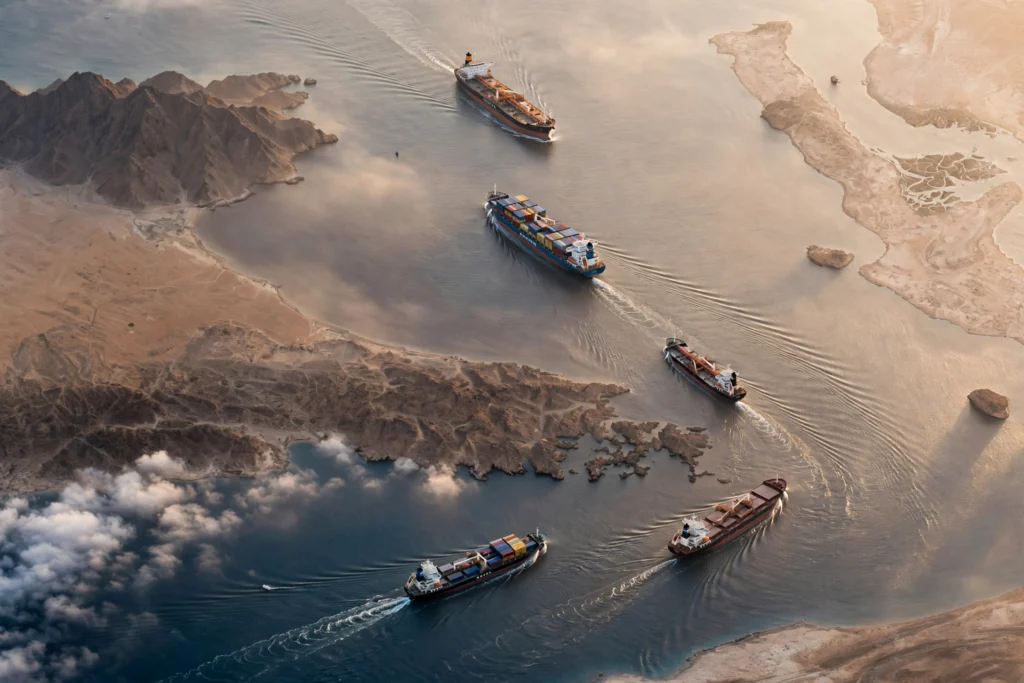
The Strait of Hormuz is the only sea passage from the Persian Gulf to the open ocean. Roughly a fifth of global oil consumption normally moves through it, along with large volumes of liquefied natural gas. At its narrowest, the shipping lanes are only a few kilometres wide, which is why any threat to traffic there moves oil markets instantly.
- About a fifth of the world’s oil normally passes through the strait every day.
- India is heavily exposed, importing most of its crude, much of it from Gulf producers that ship through Hormuz.
- Insurance and freight costs rise fast when tankers face mine or attack risks, and those costs feed into fuel prices.
- The US has been escorting tankers through the strait and enforcing a blockade on Iranian ports since the Middle East war began on February 28.
Tehran has sought to limit traffic through the waterway since the war broke out, while Washington has tried to keep the route open for Gulf exports. That standoff is the backdrop to the claims and counter-claims of the past two days.
What it means for India
India’s refiners buy crude from several Gulf suppliers, and most of those cargoes pass through Hormuz. A short disruption can usually be absorbed, because refiners hold stocks and can switch suppliers. A longer closure would be a different story, pushing up India’s import bill and, over time, retail fuel prices.
Oil prices had eased this week after the US midterm elections, with Brent crude falling sharply. Traders say any confirmed disruption in Hormuz could reverse that quickly, which is why markets are watching for independent confirmation of the Iranian claims.
For now, the practical advice for Indian readers is simple: there is no shortage and no reason to panic-buy fuel. The situation is fluid, and the key question is whether the incidents Iran describes are confirmed by shipping sources in the coming hours.
What happens next
All eyes are now on two things. First, whether maritime authorities, insurers or satellite imagery confirm the fires Iran has reported. Second, whether the diplomatic track moves: US-mediated talks between Moscow and Kyiv are expected in Abu Dhabi on November 10 and 11, and separate efforts to ease the US-Iran standoff have been under way, including a reported seven-day plan and a letter from US Vice President JD Vance aimed at reviving negotiations.
If the claims are confirmed, pressure will grow for a diplomatic off-ramp, because neither side benefits from a prolonged closure of the world’s most important oil chokepoint. If they are not confirmed, the episode will still add to the uncertainty that has kept shipping and oil markets on edge for months.
Frequently asked questions
What happened in the Strait of Hormuz on Friday?
Iran’s Revolutionary Guards said two oil tankers caught fire after hitting naval mines while using an unauthorised route. One was east of the strait and the other was inside it.
Have the incidents been independently confirmed?
No. Maritime officials have not confirmed the fires reported on Thursday or Friday, and the vessels involved have not been identified.
Why does the Strait of Hormuz matter for oil?
About a fifth of global oil consumption normally moves through the strait, which is the only sea exit from the Persian Gulf. Any disruption there can push up crude prices worldwide.
How does this affect India?
India imports most of its crude oil, much of it from Gulf producers shipping through Hormuz. A prolonged disruption could raise India’s import bill and, over time, fuel prices.
Is the strait open or closed?
Iran says the strait remains closed until the US accepts its seven conditions. The US says it has been escorting tankers through and that the main shipping lanes remain safe.
Informeia will update this story as maritime authorities and shipping sources respond to the Iranian claims.