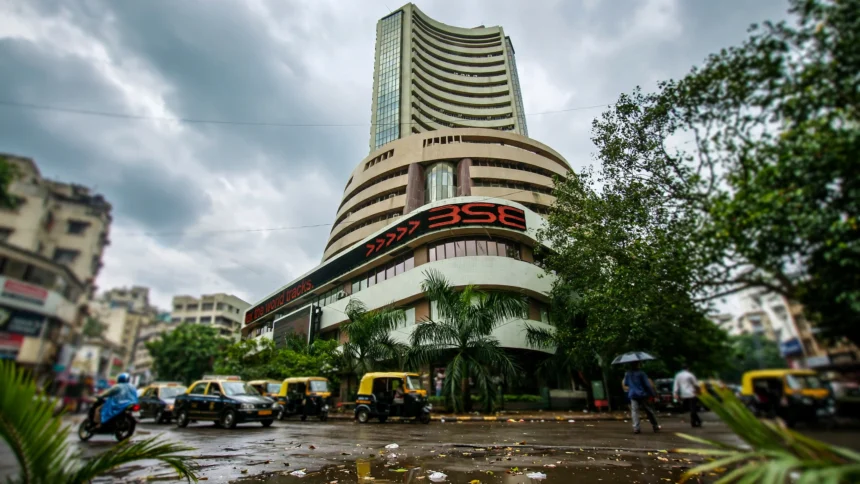
Indian stock markets have pulled off one of the sharpest turnarounds in recent memory. The Nifty 50 has climbed 12.28% so far in November, putting it on course for its best November since 1993 and its strongest month since April 2020. The Sensex has done even better, rising 13.25%. Behind it: foreign investors, who spent most of 2026 selling Indian shares, have poured in a record Rs 1.42 lakh crore this month.
On 26 November, the Nifty ended near 25,885, within touching distance of 26,000, after sinking to an intraday low of 22,179.9 on 8 October. It is now down only about 1% for 2026.
Record foreign money returns to India
Foreign portfolio investors sold a net Rs 2.95 lakh crore of Indian equities in the first ten months of 2026. November has reversed that flow completely. Inflows of Rs 1.42 lakh crore this month are the highest monthly figure on record, according to Outlook Business, while Mint put the tally at nearly Rs 1.45 lakh crore. On 25 November alone, foreign funds bought Rs 4,479.08 crore of shares, and domestic institutions added Rs 4,018.72 crore.
Jefferies noted that the inflows came after two years of continuous selling, with net purchases of USD 11.4 billion since mid-October, of which USD 9.6 billion landed in November alone. The buying has spread beyond the big names: ICICI Bank, HDFC Bank and Reliance Industries together accounted for half of the gains on 25 November, rising 3.44%, 3.2% and 1.5% respectively, while TCS gained 4.89% and HCLTech jumped 6.42% in one session.

What drove the turnaround
Four forces have come together. First, global investors are unwinding the crowded artificial intelligence trade: as US technology stocks sold off on valuation worries, money rotated into steadier markets, and India was the main beneficiary.
Second, earnings have beaten expectations: combined Nifty 50 net profit rose 27% year on year to a 17-quarter high in the September quarter.
Third, crude oil has eased, with Brent below USD 90 a barrel, helping India’s inflation outlook. Fourth, the rupee has recovered from its early-October record low to 92.18 on 25 November, its best single-day gain since 12 March, and is now the top-performing emerging-market currency this quarter.
Asia’s odd one out
India’s rally stands out because most of Asia has gone the other way. South Korea’s KOSPI, Taiwan’s TAIEX and Japan’s Nikkei 225 have fallen 9 to 13% this month. The Nasdaq Composite is down 14.5% from its all-time high and more than 7% in November.
The contrast is the point: the AI sell-off hammering chip-heavy Korea, Taiwan and Japan has pushed money towards India, which has limited AI exposure. Bank of America’s 17 November survey found investors moving India back to net overweight for the first time since January 2026.
Why it matters
For ordinary investors, this rally changes the maths of 2026. Anyone who kept a monthly SIP running through the October lows has seen most of the year’s paper losses repaired in a matter of weeks, without having to time a single trade. The lesson: the months when foreign investors sell hardest are usually the months when staying invested pays most.
The record inflow, roughly half the Rs 2.95 lakh crore foreigners sold in the first ten months, shows how quickly sentiment can flip. Goldman Sachs now forecasts the Nifty at 28,500 by December 2027.
The risks have not disappeared. A proposed 25% US tariff on Indian goods still hangs over exporters, and two trading sessions remain in November, so the “best month since 1993” tag is not yet sealed. But for now, the message is clear: after ten months of selling, the world’s money is coming back to India, and fast.
What to watch next
- The 26,000 level: a decisive break above it could trigger fresh buying; the 25,800 to 25,600 zone is the first support if profit booking returns.
- December flows: whether foreign buying continues after a record month, or pauses once the calendar turns.
- The tariff question: how the proposed US tariffs develop, and whether a trade deal brings the rate down to 17% as reported.
- Quarterly earnings: the next results will test whether the 27% profit jump was a one-off or the start of a trend.
FAQs
How much has the Nifty gained in November 2026?
The Nifty 50 has risen 12.28% so far in November, while the Sensex has gained 13.25%, according to PTI data reported after the close on 26 November.
Why is it called the best November since 1993?
Against earlier Novembers only, it is heading for its best showing since 1993. It would also be the biggest monthly gain since April 2020, when the Nifty jumped 14.6%.
How much foreign money has come into Indian stocks in November?
About Rs 1.42 lakh crore, the highest monthly inflow on record. That reverses nearly half of the Rs 2.95 lakh crore foreign investors sold in the first ten months of 2026.
Why are Asian markets falling while India rises?
The global AI trade is unwinding, hitting chip-heavy markets such as South Korea, Taiwan and Japan. India has limited exposure to AI stocks, so the same rotation that hurts its neighbours is bringing money into Indian shares.
Two sessions remain in November. But the month has already rewritten the story of 2026 for Indian markets, from a year of foreign selling to a month of record buying.