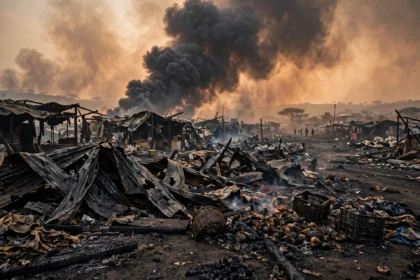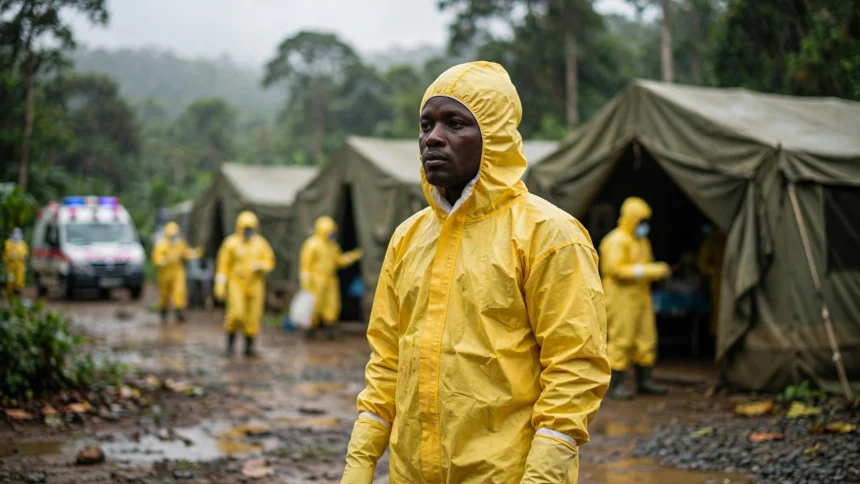
Ebola has now travelled farther than any outbreak before it. The disease, which began in eastern Congo in mid-May, has spread to four more countries, with Nigeria the latest to report a confirmed case. In Congo itself, at least 9,500 people have been infected and more than 4,600 have died. The World Health Organization has called it the fastest-growing Ebola outbreak in recorded history.
Nigeria’s first case: what happened
The Nigerian patient is a woman who travelled from Uganda to Abuja, arriving on October 3. She began showing symptoms on October 7 and was admitted to a private hospital in the capital on October 11, where Ebola was later diagnosed. Health officials confirmed the positive result on Tuesday, marking the first spread of the current outbreak to West Africa.
The Nigeria Centre for Disease Control and Prevention (NCDC) said three separate molecular tests all confirmed the Bundibugyo strain, matching the virus behind the Congo outbreak. “We did three levels of tests, but all molecular. The strain was Bundibugyo,” said Olajumoke Babatunde, director of the public health laboratory service at the NCDC. The WHO has independently confirmed the strain.
Health Minister Muhammad Pate said authorities had identified 44 contacts of the patient and were “doing everything possible to contain this case.” Contact tracing is now underway across the capital, and hospitals in Abuja have been placed on alert.
Uganda: outbreak declared over, but new case linked
Uganda confirmed an Ebola outbreak on the same day as neighbouring Congo, after detecting the infection in a man who had travelled from Congo. The first cases were Congolese patients who had crossed the border seeking treatment for an unknown illness before Ebola was diagnosed.
The Ugandan outbreak was declared over on August 27 after 20 confirmed cases, of which 18 patients recovered and two died. More than 800 contacts were identified and monitored. The country said on Tuesday that it currently has no new cases, but it is through Uganda that the virus reached Nigeria.
Kenya: nine cases and counting
Kenya announced its first Ebola case on October 6, involving a man who had travelled from Congo via Uganda before arriving in the capital, Nairobi, on October 3. He tested positive on October 5 and died the same day.
Kenya’s Ebola cases have since increased to nine, including four relatives of the first patient and four health workers. Authorities have identified 135 contacts linked to the nine patients, with 134 placed in quarantine. The Health Ministry says there is still no evidence of transmission beyond the known contacts of the first patient.

France: the one case outside Africa
France is the only country outside Africa to have recorded a case in this outbreak. In June, a doctor returning from a humanitarian mission in one of the virus transmission zones in Congo tested positive for Ebola. The patient was taken into care at a specialised facility, recovered, and was discharged on July 4, according to the WHO.
Why this outbreak is different
Several factors make this outbreak stand out from earlier ones:
- Speed: The WHO says it is the fastest-growing Ebola outbreak in history, with cases multiplying across three African regions in five months.
- Range: It has spread farther across Africa than any previous outbreak, recorded in the central, western and eastern regions of the continent.
- The strain: Bundibugyo has no approved vaccine and no specific drug, which limits the tools available to frontline health workers.
- Weak surveillance: A recurring problem has been delayed detection. Most of the first cases in new countries were confirmed long after people began showing symptoms or after they had already travelled.
What comes next
Nigeria’s response in the coming days will be watched closely: if the 44 contacts are contained and no secondary infections emerge, the outbreak’s West African foothold could be cut short. If not, the region faces a far harder fight.
FAQs
Which countries have Ebola cases in this outbreak?
Congo, plus Uganda, Kenya, Nigeria and France. Uganda’s outbreak was declared over in August, and France’s single case ended in recovery in July.
How many people have died?
At least 4,600 of the 9,500 people infected in Congo have died, according to the latest figures.
Is there a vaccine for this strain?
No. The outbreak is caused by the Bundibugyo strain, for which there is no approved vaccine and no specific treatment.
How does Ebola spread?
Ebola spreads through direct contact with the body fluids of an infected person. It does not spread through the air, which is why contact tracing and isolation are the main tools for containing it.
Should travellers to Africa be worried?
Health agencies recommend checking travel advisories and avoiding non-essential travel to outbreak zones. Anyone returning from an affected region with a fever should seek medical care immediately and report their travel history.
The numbers in this report are based on figures from the WHO and national health authorities as of October 21. We will update this story as the situation develops.