Every monsoon, the cycle repeats. Hospitals fill with fever cases, families rush to get platelet counts checked, and pharmacies run out of ORS sachets. Dengue has become a seasonal fixture of Indian life. Now, for the first time, the country may be closing in on a real way out.
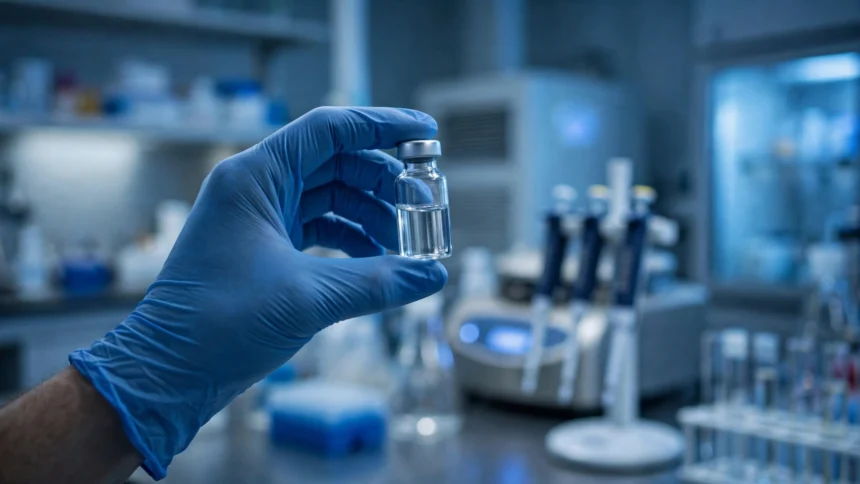
Panacea Biotec’s indigenous dengue vaccine candidate, DengiAll, has entered the final stage of clinical trials. If the results hold up, India could have its first home-grown dengue vaccine as early as next year, a development public health experts are calling a potential turning point in the country’s long fight against the mosquito-borne disease.
A fifteen-year journey, nearing its end
Panacea Biotec has been chasing this vaccine for nearly fifteen years, making DengiAll one of the longest-running vaccine development programmes in Indian pharma. Developed under a licensing agreement with the US National Institutes of Health, its formulation closely mirrors the NIH’s own dengue vaccine candidate.
The earlier phases went well. Phase I and II trials demonstrated a robust immune response and a favourable safety profile, clearing the path for the large-scale Phase III study now underway, the last big scientific hurdle before regulators can consider an approval.
Why a dengue vaccine matters so much
The numbers explain the urgency. The World Health Organization says almost half the world’s population is now at risk of dengue, with 100 to 400 million infections recorded every year. The disease has exploded globally, fuelled by rising temperatures and densely populated cities.
India carries a heavy share of that burden. The country alone has recorded over one million cases and at least 1,500 deaths since 2021. Dr Ekta Gupta, professor of clinical virology at the Institute of Liver and Biliary Sciences in New Delhi, says dengue is now considered hyperendemic in India, with all four virus serotypes circulating at the same time.
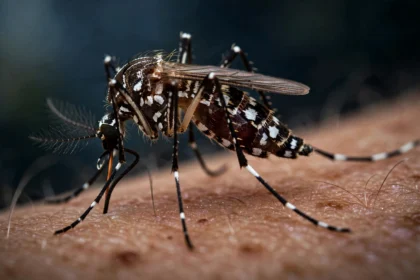
What makes dengue so dangerous is the way it punishes repeat infections. A first bout of dengue is often mild, but a second infection with a different serotype can trigger dengue haemorrhagic fever, the severe and sometimes fatal form of the disease. That is exactly why a tetravalent vaccine matters: DengiAll is designed to protect against all four serotypes, DENV-1, DENV-2, DENV-3 and DENV-4, in a single shot.
Inside the final trials
The Phase III trial is a large multi-centre effort overseen by the Indian Council of Medical Research. More than 10,000 volunteers across the country have been enrolled, and researchers are tracking safety, immune responses, and laboratory-confirmed dengue infections.
One detail could prove decisive for public health. DengiAll is being evaluated as a single-dose vaccine, which would make it one of the world’s first single-shot dengue vaccines. No pre-vaccination screening would be needed either. That combination matters enormously in India, where follow-up doses are hard to enforce in rural areas and where dengue exposure is already widespread.
Participants have now completed almost twelve months of follow-up, and the data being gathered will show how effectively the vaccine protects against dengue in real-world conditions and how safe it is for the intended population.
What the experts are saying
The people behind the project are not hiding their hopes. “We will try to get this vaccine out there as soon as possible,” Syed Khalid Ali, chief scientific officer of Panacea Biotec, told AFP in New Delhi.
Dr Gupta agrees the need is urgent. “This vaccine is very much needed right now to control the occurrence of these cases, or at least prevent the severity,” she said, pointing to the strain seasonal outbreaks place on hospitals every year.
What happens next
If the Phase III results come back positive, regulatory review follows. ICMR Director General Dr Rajiv Bahl has said India could have its first indigenous dengue vaccine by the end of 2027, subject to successful results and approvals. The company itself says the shot is on track for rollout as early as next year if the data is favourable.
There is still a long road between trial data and a jab in a clinic. But for a disease that has no specific treatment, only supportive care, and that puts lakhs of Indians in hospital beds every single monsoon, the finish line is finally in sight.
Frequently asked questions
What is DengiAll?
Panacea Biotec’s indigenous tetravalent dengue vaccine, developed with the Indian Council of Medical Research and designed to protect against all four dengue serotypes.
When will India’s dengue vaccine be available?
The vaccine is currently in Phase III trials. If the results are favourable, regulatory approval could follow, with a possible rollout in 2027.
How many doses will the dengue vaccine need?
DengiAll is being evaluated as a single-dose vaccine, which would simplify vaccination programmes, particularly in rural areas. No pre-vaccination screening is expected to be needed.
Is there a dengue treatment available right now?
There is no specific antiviral treatment for dengue. Patients receive supportive care, including hydration and close monitoring, with hospital care for severe cases like dengue haemorrhagic fever.
Why has it taken fifteen years to develop?
Dengue vaccines are notoriously hard to build because they must protect against all four serotypes at once; partial protection can worsen a later infection. That safety requirement makes large, long trials essential.
For millions of Indian families, the day this jab finally arrives cannot come soon enough.