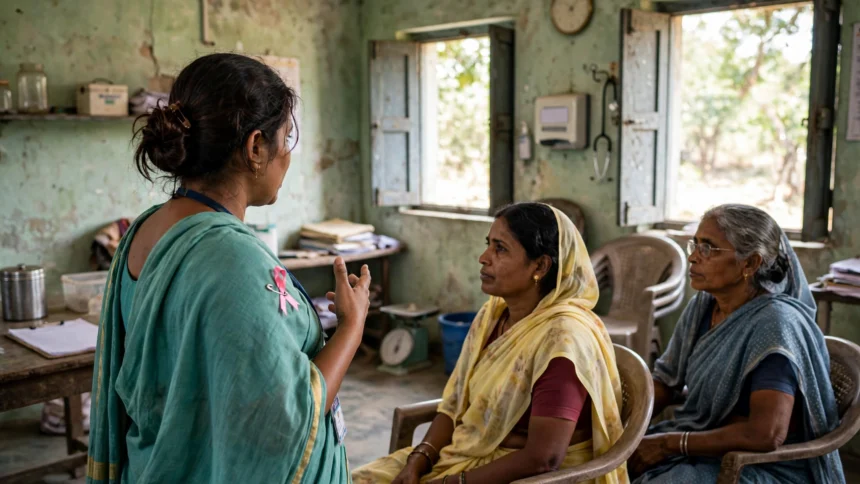
India closed Breast Cancer Awareness Month with a small, unusual reminder that will land in letterboxes across the country. On October 30, the Department of Posts released two commemorative postage stamps and a set of picture postcards dedicated to breast cancer awareness, with support from the Union Ministry of Health and Family Welfare. The message printed on them is simple: get checked early, and do not wait for symptoms to force the issue.
The stamps were unveiled in New Delhi by Union Health Secretary Punya Salila Srivastava and Director General of Postal Services Manisha Sinha. The Department of Posts conceived the issue, with technical inputs from the Health Ministry. It is a modest initiative on the surface, but it carries numbers that explain why officials chose this moment to push the point.
2 lakh new cases in a single year
India reported more than two lakh new breast cancer cases in 2024, Srivastava said at the launch. An estimated one in every 29 women in the country faces a lifetime risk of developing the disease. Breast cancer is now the most common cancer among women in India, accounting for more than 30 per cent of all new cancer cases diagnosed among women.
That scale is what makes delayed diagnosis such a concern. Awareness has grown, and screening facilities exist, but officials at the launch were frank that many cases are still found late. When cancer is caught early, treatment options are wider and outcomes are usually better. When it is found late, treatment becomes harder, longer and far more expensive for families.
86.97 crore screenings, and counting
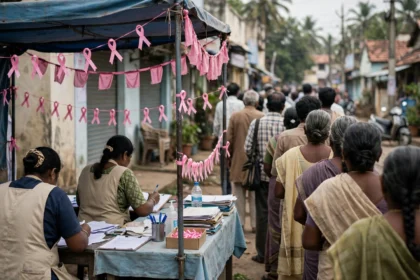
Behind the launch sits a screening programme that is already operating at enormous scale. Under the National Programme for Prevention and Control of Non-Communicable Diseases, screening for oral, breast and cervical cancers is built into primary healthcare services at more than 1.8 lakh Ayushman Arogya Mandirs across the country.
The figures shared at the launch show how far that programme has reached:
- 86.97 crore screenings in total for the three cancers, including 49.02 crore for oral cancer, 22.90 crore for breast cancer and 14.05 crore for cervical cancer.
- 5.50 lakh people currently undergoing treatment after screening, including 2.70 lakh oral cancer patients, 1.43 lakh breast cancer patients and 1.37 lakh cervical cancer patients.
- More than 1.8 lakh Ayushman Arogya Mandirs offering screening as part of routine primary care, rather than only at large hospitals.
Suspected cases are tracked through the NP-NCD portal, with Ayushman Bharat Health Account IDs helping health workers follow a patient from a primary clinic to a district hospital and on to a specialist centre.
Why a stamp, and why now
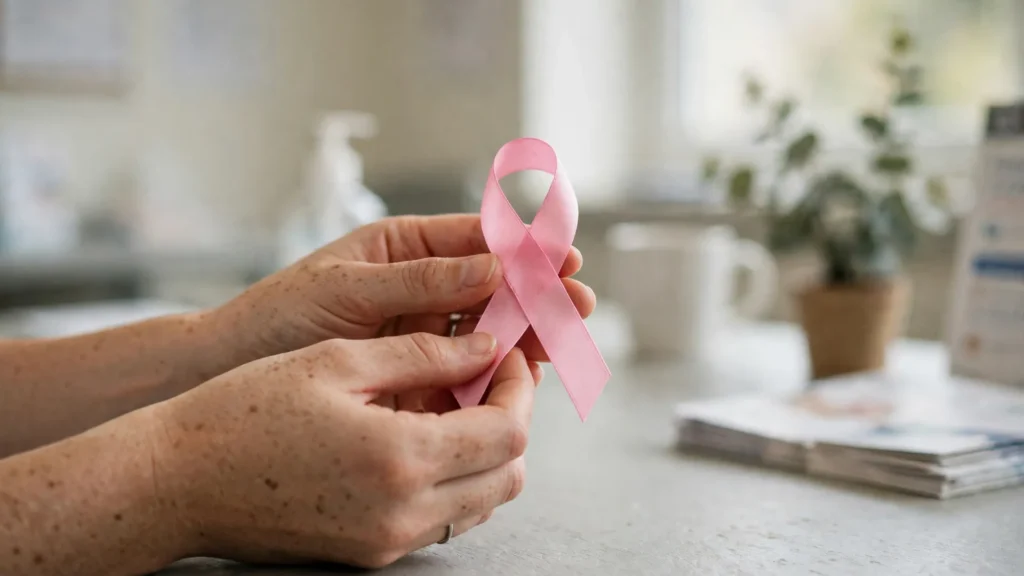
October is observed internationally as Breast Cancer Awareness Month, running from October 1 to 31 each year, with a focus on early detection, education and support for people affected by the disease. The October 30 release was timed to mark the close of that month, but officials stressed that the message does not end with it.
Using the postal network is a deliberate choice. India Post reaches towns and villages where specialist hospitals do not. The souvenir sheet will be available through the postal philately network, and the awareness messages are meant to travel with ordinary mail.
Health officials also used the occasion to repeat practical advice that often gets buried under statistics. Women should be aware of changes in their own bodies, practise regular self-examination, and use government healthcare facilities for timely screening. Regular screening matters even when a woman feels perfectly well, because early breast cancer frequently causes no pain and no obvious symptoms.
What to watch for, and what to do next
Doctors generally advise women to seek medical advice promptly if they notice a new lump in the breast or underarm, a change in breast size or shape, dimpling or puckering of the skin, nipple discharge, or a nipple that turns inward.
Screening is available at Ayushman Arogya Mandirs and other government facilities under the national programme, and women can ask at their nearest primary health centre about breast cancer screening and referral. The point officials kept returning to at the launch was timing: a check done early is a routine appointment, while a check delayed can become an emergency.
FAQs
How many new breast cancer cases did India report in 2024?
More than two lakh new cases, according to figures shared by Union Health Secretary Punya Salila Srivastava at the October 30 launch.
What is the lifetime risk for women in India?
An estimated one in every 29 women faces a lifetime risk of developing breast cancer, officials said.
What did the Department of Posts actually release?
A souvenir sheet comprising two commemorative postage stamps on breast cancer awareness, along with picture postcards, issued with support from the Health Ministry.
Where can women get screened?
Screening for breast, oral and cervical cancers is offered through more than 1.8 lakh Ayushman Arogya Mandirs and other government primary healthcare facilities under the national non-communicable diseases programme.
Does screening help if there are no symptoms?
Yes. Early breast cancer often causes no pain or obvious symptoms, which is why officials stressed regular screening even for women who feel well.
As October’s awareness campaign ends, the stamps serve as a small, lasting nudge: early detection remains the strongest tool India has against its most common cancer among women, and it starts with a single check.