Washington has made a direct, quiet move to bring the United States and Iran back to the negotiating table. US Vice President JD Vance has written to Mohsen Rezaei, head of Iran’s Supreme National Security Council, in an effort to restart peace talks and head off fresh military action after the American midterm elections.
The letter, first reported by The Wall Street Journal on Wednesday, was sent at President Donald Trump’s direction and delivered through Qatari mediators. It does not set out the terms of a deal. Instead, it tries to agree a framework for talks, a first step after months in which diplomacy has stalled and the region has lived with the threat of another strike.
Tehran confirmed on Thursday that it had received the letter. Iran’s semi-official Tasnim news agency said no reply had been sent yet, and that Iran was holding to its seven conditions for any agreement. Any position that contradicts that framework, the agency said, would be unacceptable. Iran has not shut the door, but it has not opened it either.
The timing matters. The US midterms are on November 3, and reports suggest American officials have asked several Gulf states to prepare for a possible short, intense campaign after polling day. No final decision has been taken, and Trump has played down the letter, saying it focused on medical supplies for Iran.
A seven-day plan on the table
Alongside the Vance letter, mediators led by Qatar have been working on a draft built around a seven-day timeline: daily confidence-building steps that would end with the Strait of Hormuz reopening and, in return, some easing of the pressure on Iran.
Foreign Minister Abbas Araghchi said on Wednesday that Tehran was still giving diplomacy a chance. Writing on X, he said Iran’s armed forces were fully prepared to defend the country, but that the government was in close contact with mediators about ways to carry out its own seven-day plan in even less than a week. The plan, first put forward last month, aims to end the conflict and reopen the waterway within a week.
Not every draft has survived contact with Tehran. A senior Iranian official dismissed the Qatari draft as unacceptable ideas rather than a formal offer, according to Reuters reporting on Thursday. Iran wants sanctions relief and an end to the naval blockade before it readmits UN inspectors to its bombed nuclear sites. Washington wants inspectors back in, and the nuclear programme on the agenda from the start, before relief follows.
Why Hormuz sits at the centre
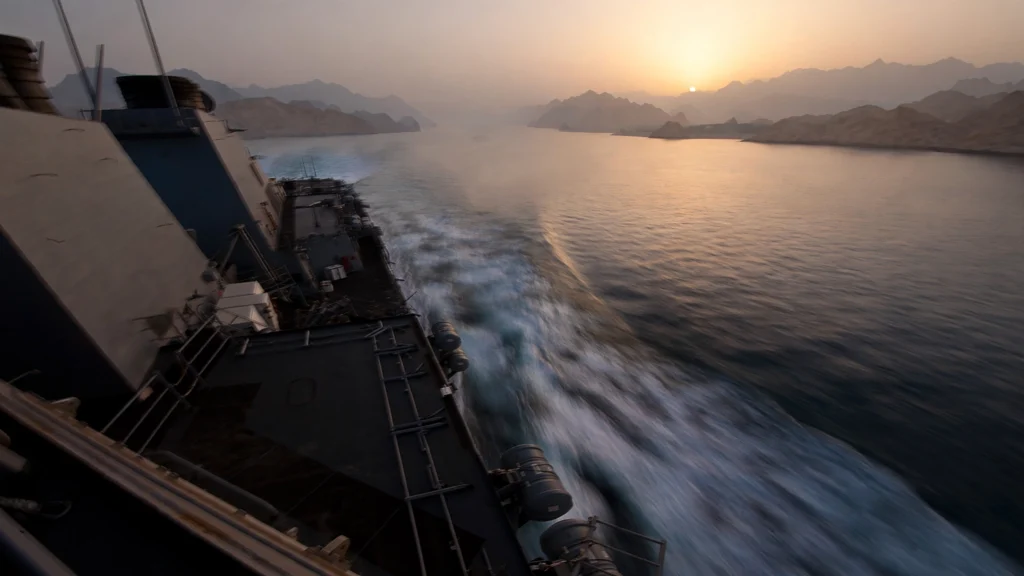
The Strait of Hormuz carries about a fifth of the world’s oil and liquefied natural gas supplies. When shipping through it is disrupted, fuel prices, freight costs and inflation rise in energy-importing countries, including India.
The United States and Israel launched military operations against Iran in late February, according to reports this week, and Iran subsequently closed shipping through the strait. The US has also maintained a naval blockade of Iranian ports. On Thursday, oil prices eased a little on hopes talks might move. Brent crude fell 1.34 per cent to 113.77 dollars a barrel, while US West Texas Intermediate fell 1.95 per cent to 100.78 dollars, paring the previous day’s gains.
The wider war keeps intruding
Diplomacy is not happening in a vacuum. Yemen’s Iran-aligned Houthis have stepped up attacks, saying they hit Saudi Arabia’s biggest oil refinery and striking Aden airport on Wednesday. Early on Thursday, the Saudi-led coalition said it had destroyed a ballistic missile fired towards the kingdom’s eastern region.
The choice of Rezaei was deliberate, according to reports. He carries weight with hardliners and with the Islamic Revolutionary Guard Corps, whose backing any agreement would need. Iranian leaders are reported to have received the approach constructively and to have suggested Qatar or Turkey as possible venues. Rezaei is now expected to deliver Iran’s formal response.
What happens next
- Iran’s reply: Whether Rezaei answers, and whether that reply accepts direct talks led by Vance.
- The seven-day sequence: Whether mediators can turn competing drafts into one set of steps both sides can live with, starting with Hormuz and inspections.
- The calendar: Whether November 3 passes without a new military decision, giving negotiators room to talk instead of react.
For now, both sides are talking about talking. It is not peace, and not even a negotiation yet. It is a letter, a plan measured in days, and a shared interest in avoiding a wider war.
Frequently asked questions
Who did JD Vance write to, and why?
Vance wrote to Mohsen Rezaei, secretary of Iran’s Supreme National Security Council, at President Trump’s direction, to explore a framework for reviving peace negotiations.
Has Iran replied?
Not yet, according to Tasnim on Thursday, October 29. Tehran confirmed receipt and said it insists on its seven conditions being met.
What is the seven-day plan?
A proposal for daily confidence-building steps over seven days, aimed at ending the conflict and reopening the Strait of Hormuz. Iran says its version could be carried out in even less than a week.
Why does Hormuz matter?
About a fifth of the world’s oil and liquefied natural gas supplies pass through the strait, so disruption pushes up energy prices worldwide.
Could military action follow the midterms?
Reports say Washington has asked Gulf states to prepare for a possible short campaign after November 3, but no final decision has been announced.
Informeia will update this story as Iran’s formal response emerges.