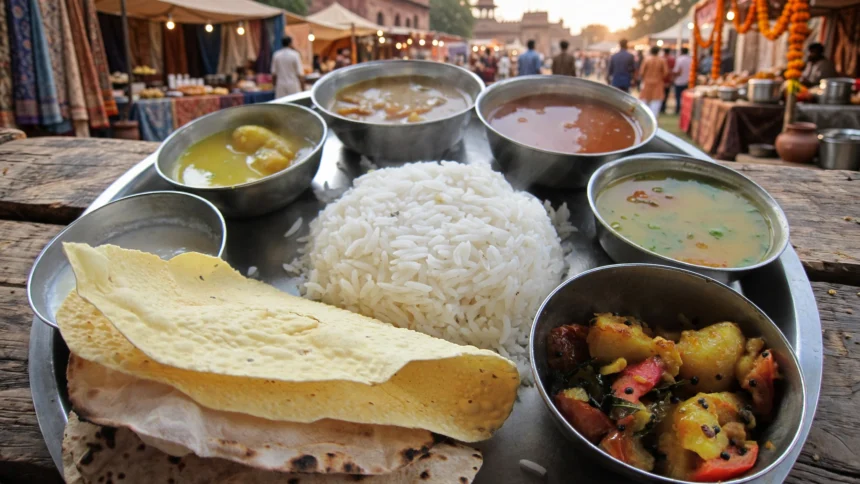
Delhi’s food lovers have a rare weekend ahead. Kahaani: Foods of India, a three-day festival celebrating the country’s forgotten regional cuisines, opens today at Travancore Palace in New Delhi and runs till Sunday, November 15. Twelve chefs from 12 regions are cooking recipes that rarely make it to restaurant menus, from Ladakhi thukpas and Awadhi slow cooking to Syrian Christian dishes from Kerala and Adivasi food from Jharkhand.
Presented by Indophile, the festival is the second edition of Kahaani, a cultural venture started by Aishwarya Jha and Sara Abdullah. Their first festival, Kahaani: Dilli Ki, held earlier this year, focused on the capital’s own community kitchens. This time, the lens has widened to the whole country. The idea, the founders say, is simple: India’s food story is best told through its families, communities and kitchens, not through mainstream restaurant menus.
The festival opens at noon today, and tickets are available on BookMyShow. Beyond the food, Travancore Palace turns into a cultural mela for the weekend, with folk musicians, dancers, traditional street artists and a craft bazaar. There is also a pop-up Museum of Everyday Objects, organised with the Indira Gandhi National Centre for the Arts, displaying antique brassware, traditional utensils and culinary artefacts.
Twelve chefs, twelve regions
The heart of the festival is its chef line-up, curated in partnership with Edible Archives, the food research platform run by Anumitra Ghosh Dastidar and Shalini Krishen. Each chef represents a distinct food tradition, and many of the recipes on offer come from home kitchens rather than professional ones.
- Ladakh: Chef Jigmet Mingyur, a former monk of 14 years who began his formal culinary exploration in 2015, presents trans-Himalayan cooking, including varieties of thukpa made with wild herbs and local ingredients.
- Goa: Shubhra Shankhwalker, who grew up in a Gaud Saraswat Brahmin family, serves Hindu home cooking from Goa, including Uddamethi, Ambadyachi Karam and dried prawn kismur.
- Kerala: Tresa Francis represents Syrian Christian cuisine, one of the state’s oldest community food traditions.
- Nagaland: Yimshen Naro Jamir brings Naga-Angami flavours to the capital.
- Meghalaya: Adonijah Lyngdoh presents Khasi cuisine.
- Jharkhand: Dr Manisha Oraon of Open Farm highlights Adivasi food traditions.
- Awadh: Sheeba Iqbal explores the culinary heritage of the Lucknow region.
For the chefs, the festival is as much about the stories behind the food as the food itself. Mingyur points out that most people picture thukpa as a single noodle soup, when in fact the region has many different varieties, each
shaped by local herbs and ingredients. Shankhwalker says she wants visitors to look beyond the Portuguese and coastal influences that usually define Goan food in Delhi and discover the rich world of Hindu home cooking that rarely gets a platform.
More than a food festival
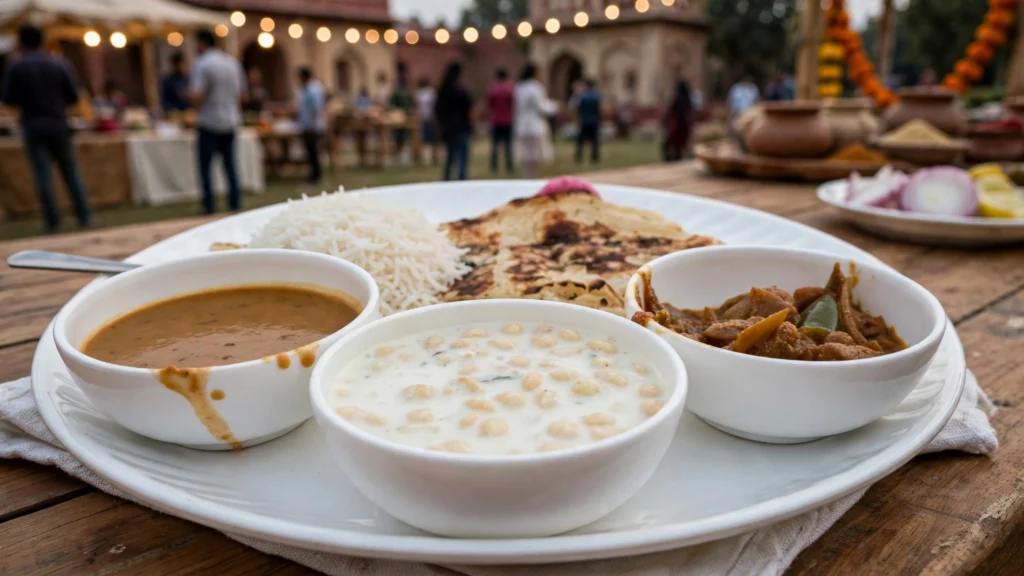
Kahaani is designed to feel like a mela, not a food court. Alongside the tasting counters, visitors can watch live demonstrations by well-known chefs Ritu Dalmia and Manish Mehrotra, and sit in on discussions with food writers and chefs including Suvir Saran, Marryam Reshi and Ruchira Hoon.
The Museum of Everyday Objects is one of the quieter highlights. The pop-up, put together with the IGNCA, displays the vessels and tools that Indian kitchens have used for generations, from antique brassware to hand-beaten utensils. It is a reminder that a cuisine is not just a set of recipes, but also the objects, techniques and memories around them.
The festival has drawn support from the Incredible India programme and state governments including Meghalaya, Karnataka, Kerala and Jammu and Kashmir. The organisers hosted a preview dinner on October 28 at Olive Kitchen and Bar in New Delhi, and the response that evening set the tone for the main event.
Why it matters
India’s regional cuisines have long lived in the shadow of a handful of familiar dishes. A visitor to a Delhi restaurant can find butter chicken and masala dosa with ease, but the food of a Naga-Angami kitchen or a Gaud Saraswat home is almost impossible to taste outside its community. Festivals like Kahaani try to close that gap, giving small food traditions a stage and the chefs behind them an audience.
For anyone planning a visit, the practical details are straightforward. The festival runs from November 13 to 15 at Travancore Palace, 10A KG Marg, near Mandi House, with the gates opening at noon each day. Tickets are on BookMyShow. Arrive hungry, and leave some room: with 12 regional kitchens in one place, a single round of tasting is unlikely to be enough.
FAQs
When is Kahaani: Foods of India happening?
The festival runs from Friday, November 13 to Sunday, November 15, 2026, at Travancore Palace in New Delhi, with the gates opening at noon each day.
How many chefs are taking part?
Twelve chefs from 12 regions are participating, covering Ladakhi, Awadhi, Syrian Christian, Adivasi, Naga-Angami, Khasi and Goan Gaud Saraswat cuisines, among others.
Who is organising the festival?
Kahaani: Foods of India is presented by Indophile, founded by Aishwarya Jha and Sara Abdullah, and curated in partnership with Edible Archives.
Is there anything besides food?
Yes. The venue also hosts folk musicians, dancers, street artists, a craft bazaar, live chef demonstrations and a pop-up Museum of Everyday Objects organised with the IGNCA.
Where can I book tickets?
Tickets are available on BookMyShow.
This weekend, Travancore Palace is the place to taste it.