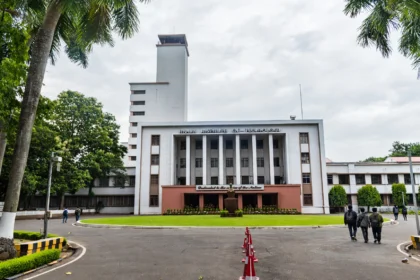
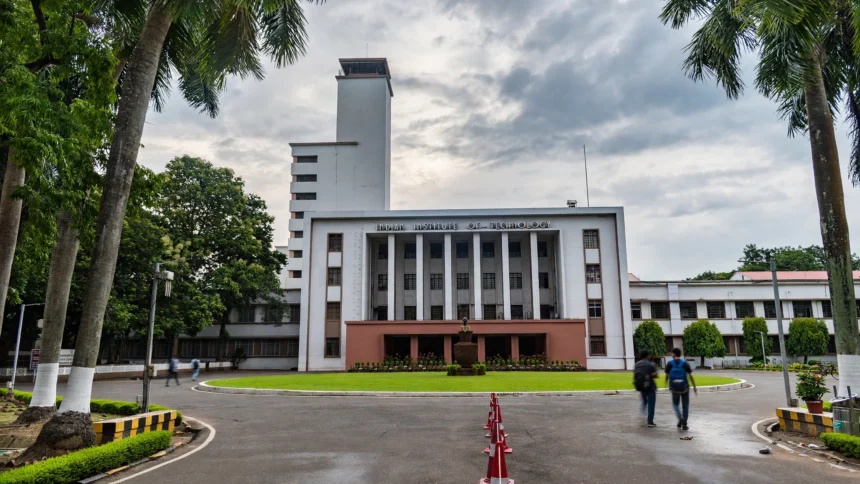
Seventy-five years after it opened its doors as India’s first IIT, IIT Kharagpur is stepping into a field it has never touched before: medicine. The institute has become the first Indian Institute of Technology in the country to offer postgraduate medical degrees accredited by the National Medical Commission (NMC), and admissions open this very academic year.
The announcement, made on November 12, marks a quiet but significant shift in Indian higher education. An engineering powerhouse known for its technology and research programmes will now train doctors too, starting with a small inaugural batch of just 12 students across six MD specialisations.
A first for the IITs
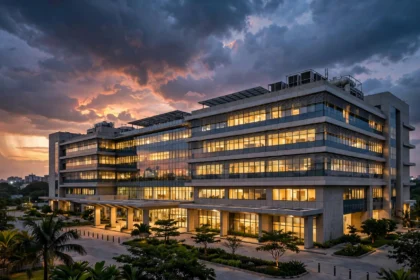
No IIT has offered NMC-accredited postgraduate medical courses before. IIT Kharagpur’s programmes will run from the 2026-27 academic session at the Dr B C Roy Multi-Speciality Medical Research Centre, the institute’s integrated medical school and research hub on campus.
The centre, formally renamed the Dr Shyama Prasad Mookerjee Super Speciality Hospital in 2021, will host the new MD students. The idea is to build a bridge between engineering and medicine, with the institute’s research strength in areas such as medical devices, imaging and data science feeding directly into clinical training.
For an institution founded in 1951, this is the first time any IIT will award a recognised postgraduate medical degree.
The six specialisations and 12 seats
The inaugural batch is deliberately small: two seats in each of the six disciplines, making a total intake of 12 resident doctors.
- MD General Medicine: 2 seats
- MD Radiology: 2 seats
- MD Physiology: 2 seats
- MD Pathology: 2 seats
- MD Community Medicine: 2 seats
- MD Biochemistry: 2 seats
The mix covers both clinical and pre-clinical subjects. General Medicine and Radiology sit on the clinical side, while Physiology, Pathology, Community Medicine and Biochemistry form the pre-clinical and para-clinical core. With only two seats per department, competition for the first batch is expected to be intense.
How admissions will work
Admission to the six MD programmes will be through the NEET-PG 2026 counselling process conducted by the Medical Counselling Committee (MCC). Candidates will be able to select these courses during Round 2 of counselling, subject to the official schedule, eligibility rules and seat matrix published by the MCC.
In the MCC seat matrix, the courses are listed under the name “Dr B C Roy Multi-Speciality Medical Research Centre, Kharagpur, under the aegis of IIT Kharagpur”. Aspirants should check the updated seat matrix on the MCC portal at mcc.nic.in before locking their choices, since allotment depends on rank, category rules and institutional preferences.
Because the intake is so small, only candidates with strong NEET-PG ranks are likely to secure a seat in this first round. The programmes carry the same NMC recognition as MD courses at any other medical college, so the degree will be valid for practice and further specialisation across India.

Why this matters
India faces a persistent shortage of postgraduate medical seats, and every new programme helps, even one as small as this. But the real significance of Kharagpur’s move goes beyond 12 seats.
Medical training inside an IIT opens the door to interdisciplinary work that is hard to replicate in a standalone medical college. Students will study alongside engineers working on imaging systems, prosthetics, health informatics and biomedical devices. The institute has said the focus will be on interdisciplinary medical research, and the location of the programmes inside a research centre rather than a conventional teaching hospital underlines that intent.
It also sets a precedent. If Kharagpur’s experiment works, other IITs with medical research ambitions could follow, and the line between engineering institutions and medical education in India could blur further in the years ahead.
What happens next
The immediate next step is Round 2 of NEET-PG 2026 counselling, where the 12 seats will appear in the MCC seat matrix. Candidates interested in the programmes should watch the MCC portal for the Round 2 schedule and choice-filling dates.
The first batch will begin its three-year training in the 2026-27 session, which means the first MD graduates from an IIT will emerge in 2029. The programme will be watched closely as a test of whether engineering and medicine can share one campus.
FAQs
How many MD seats is IIT Kharagpur offering?
12 seats in total, with two seats in each of six specialisations, for the 2026-27 academic session.
Which MD specialisations are available at IIT Kharagpur?
General Medicine, Radiology, Physiology, Pathology, Community Medicine and Biochemistry.
How can I apply for the IIT Kharagpur MD programmes?
Through NEET-PG 2026 counselling conducted by the MCC. The seats will be available for choice filling in Round 2, under the listing for the Dr B C Roy Multi-Speciality Medical Research Centre, Kharagpur.
Is the IIT Kharagpur MD degree recognised by the NMC?
Yes. The programmes are accredited by the National Medical Commission, and IIT Kharagpur is the first IIT to offer such NMC-accredited postgraduate medical degrees.
Where will the MD courses be taught?
At the Dr B C Roy Multi-Speciality Medical Research Centre on the IIT Kharagpur campus, formally renamed the Dr Shyama Prasad Mookerjee Super Speciality Hospital in 2021.
For medical aspirants weighing their Round 2 choices, Kharagpur’s 12 seats are a small but historic option: a medical degree from India’s oldest IIT, and a front-row seat to where engineering and medicine meet.