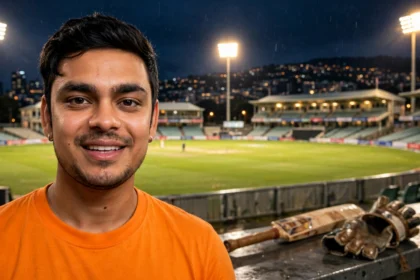

Jay Shah will lead world cricket for two more years. The International Cricket Council announced on Monday, 16 November, that the 38-year-old Indian administrator has been re-elected unopposed as its chairman for a second term, a decision taken at the ICC Board meetings in Bali, Indonesia. No rival candidate stood against him.
Shah’s new term runs till 2028. It will cover two of the biggest moments in modern cricket: the 2027 ODI World Cup in Southern Africa and the sport’s return to the Olympic Games at Los Angeles in 2028, where cricket will be played in the T20 format.
What happened in Bali
The ICC Board meetings in Bali ended on Sunday, and the announcement came on Monday morning. Shah, the only candidate for the post, was reappointed after the directors put forward his name. The ICC confirmed the unopposed reappointment, and Shah thanked the directors for their trust.
“I am deeply honoured by the confidence the ICC Board has placed in me and sincerely grateful to every Director for their continued trust and support,” Shah said after the announcement. “Serving as Chair of the ICC is both a privilege and a responsibility, and I remain committed to working with our Members to advance the interests of cricket across the world.”
He added that cricket’s return to the Olympics presents an extraordinary opportunity to introduce the game to new audiences. The board meetings also confirmed that the World Test Championship will remain a nine-team competition until 2031.
The road to the top
Shah’s rise through cricket administration has been fast. He began in 2009 at the district and state levels in Gujarat, moved up through the Gujarat Cricket Association, and later became secretary of the Board of Control for Cricket in India (BCCI). He also chaired the Asian Cricket Council before stepping onto the world stage.
In August 2024, he was elected ICC chairman, becoming the youngest person ever to hold the post at the age of 35. He took charge on 1 December 2024, succeeding New Zealand’s Greg Barclay, who had decided against a third term. Shah is the fifth Indian to lead the global body, following Jagmohan Dalmiya, Sharad Pawar, N. Srinivasan and Shashank Manohar, a line that underlines how central India has become to the governance of the game.
During his years at the BCCI, Indian cricket saw the record-breaking IPL media rights deal, the launch of the Women’s Premier League and the introduction of the Test Cricket Incentive Scheme, which rewards players who commit to the longest format.
What his first term delivered
Shah’s first two years at the ICC were built around three stated priorities: expanding cricket’s global footprint, strengthening women’s cricket, and protecting Test cricket. The most visible achievement was locking in cricket’s Olympic return. The sport last appeared at the Games in Paris in 1900, more than a century ago, and its comeback at Los Angeles 2028, in the T20 format, is the ICC’s biggest stage yet.
India will also host the 2029 Champions Trophy and co-host the 2031 ODI World Cup, decisions announced during his first term that keep the sport’s biggest events anchored in its largest market. But the first term was not without friction, drawing criticism over the hosting dispute around the 2025 Champions Trophy, scrutiny of how the 2024 T20 World Cup was managed, and questions about financial inequalities between cricketing nations. The decision to replace Bangladesh with Scotland for the 2026 T20 World Cup also proved controversial.
Why it matters
An unopposed re-election is rare in international sport, and it tells its own story. It means no member board was willing, or able, to put up an alternative, and it gives Shah a clear mandate to push through the changes he has promised. For India, it cements a position no other country holds: the sport’s biggest market, its biggest broadcaster revenues, and now its top administrator, all aligned.
That alignment cuts both ways. Supporters argue that cricket needs a strong centre to grow beyond its traditional strongholds, and that the Olympic return and the commercial growth under Shah prove the model works. Critics worry that the same concentration of power makes it harder for smaller boards to be heard, especially on money, scheduling and tournament hosting, where India’s calendar already dominates.
The next two years will be judged on whether the growth reaches beyond the big three. If the Olympic debut in Los Angeles brings in new audiences, if the expanded competition pathways give associate nations real fixtures rather than token ones, and if women’s cricket keeps growing at its current pace, the second term will be remembered as the one that changed cricket’s map. If the gains stay concentrated in the countries that already dominate the sport, the questions that followed his first term will only get louder.
What happens next
- 2027 ODI World Cup: The next men’s 50-over World Cup takes place in Southern Africa, the first big test of his second term.
- LA28 Olympics: Cricket returns to the Games in T20 format, its first Olympic appearance since Paris 1900.
- 2029 Champions Trophy: India hosts the tournament, with the 2031 World Cup co-hosting to follow.
- Test cricket: The World Test Championship stays a nine-team competition until 2031.
- Expansion: The ICC’s expanded competition plan promises more participation and development pathways for emerging cricket nations.
FAQs
Who is Jay Shah?
Jay Shah is an Indian cricket administrator and the chairman of the International Cricket Council. He previously served as secretary of the BCCI and chairperson of the Asian Cricket Council.
How long is his second term as ICC chairman?
Two years, running till 2028. It covers the 2027 ODI World Cup and cricket’s return to the Olympic Games at Los Angeles 2028.
Was anyone else in the running for ICC chairman?
No. Shah was the only candidate, re-elected unopposed after the ICC directors proposed his name in Bali.
When is cricket returning to the Olympics?
Cricket returns at the Los Angeles 2028 Olympics in the T20 format. The sport last featured at the Olympic Games in Paris in 1900.
How many Indians have led the ICC before Jay Shah?
Four: Jagmohan Dalmiya, Sharad Pawar, N. Srinivasan and Shashank Manohar. Shah is the fifth Indian to head the global governing body.
Shah’s re-election may have been a formality, but the two years ahead are anything but. With a World Cup, an Olympic debut and a home Champions Trophy on the calendar, world cricket’s biggest stage is set.