

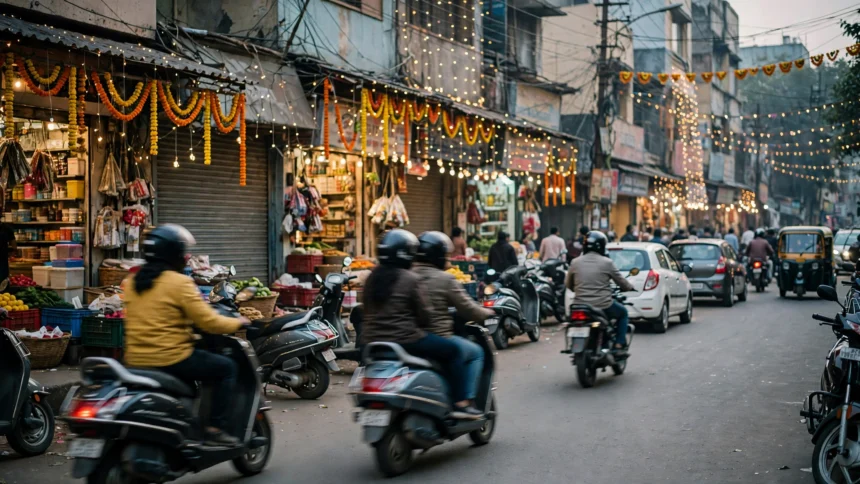
Gujarat registered 1,26,336 vehicles in the first 15 days of November 2026, and the fuel split tells a story of its own: E20 petrol vehicles outsold pure electrics by nearly 13 to 1 through the Diwali period.
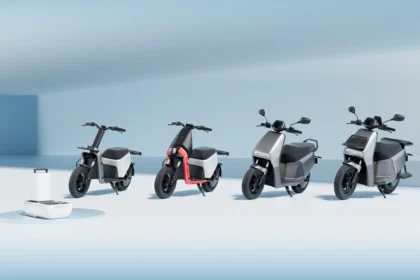
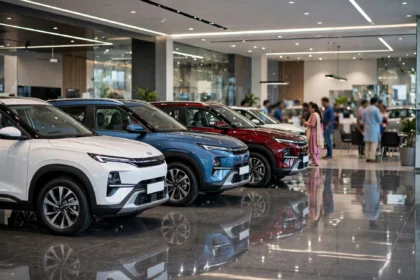
Two-wheelers did the heavy lifting. As many as 1,02,343 non-transport two-wheelers were registered in the fortnight, around 81% of all registrations. Motorcars added 13,735, goods vehicles 3,418 and passenger vehicles 965.
Two-wheelers dominate the festive rush
The Diwali fortnight in Gujarat has always belonged to the scooter and motorcycle buyer, and this year was no different. Four out of every five vehicles registered in the first half of November were two-wheelers. Cars were a much smaller slice: the 13,735 motorcars registered work out to barely one in nine vehicles, a ratio that shows how much of the festive surge came from first-time buyers and families upgrading a scooter rather than buying a second car.
E20 petrol leaves EVs far behind
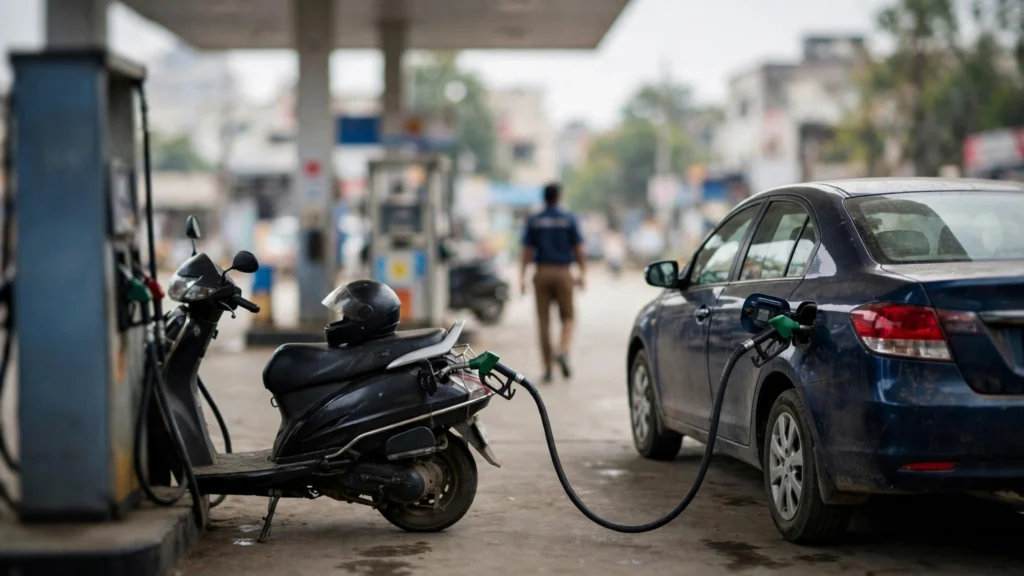
The fuel-wise break-up is where the fortnight gets interesting. E20 petrol, which blends 20% ethanol with petrol, led every other fuel by a wide margin:
- E20 petrol: 65,477 vehicles
- Petrol: 37,154 vehicles
- Diesel: 8,465 vehicles
- Pure electric: 4,978 vehicles
- CNG: 4,324 vehicles
- E20-CNG: 3,946 vehicles
- Petrol-CNG: 742 vehicles
- Strong hybrid: 275 vehicles
- Other fuels: 975 vehicles
E20-compatible vehicles made up more than half of everything registered, while pure electrics accounted for just 3.9%. For every electric vehicle registered, more than 13 E20 vehicles found a buyer.
The wider picture: Surat and Ahmedabad stay in top gear
Surat alone has registered 2,17,987 vehicles between January and October, up from 1,79,871 in the same period of 2025, according to Regional Transport Office data reported by The Indian Express. Ahmedabad leads the state with 3.52 lakh registrations so far this year.
The electric story looks different at the city level. Surat has registered 20,294 new EVs so far this year, against just over 12,000 in all of 2025. Ahmedabad has crossed 23,000 EV registrations, Vadodara stands at 11,026 and Rajkot at 7,894. Gujarat’s EV share for the financial year so far is 5.9%, with 89,514 electrics registered between April and early November, already more than the whole of last year.
October, the month before the festive fortnight, was softer. Federation of Automobile Dealers Associations data showed Gujarat recording 3 lakh registrations in October, down 7.2% year on year, with two-wheelers down 13.3% even as passenger vehicles rose 12.7% to 55,487. Dhanteras itself was weaker than last year. The strong first-half-of-November tally suggests buyers spread their purchases across the fortnight rather than crowding into a single auspicious day.
Why it matters
Three things stand out.
First, ethanol-blended petrol has quietly become Gujarat’s default fuel. E20 vehicles took more than half of all registrations, not because of a subsidy or a mandate aimed at buyers, but because almost every new petrol car and scooter sold today is E20-compatible. The blend is now the path of least resistance: no new habit, no new infrastructure, no range calculation.
Second, the electric push has not stalled, it has simply been outpaced in the festive rush. Gujarat’s 5.9% EV share for the financial year so far is still well below the national figure of 11.45%, and the fortnight’s 3.9% is lower still. Yet the absolute numbers keep climbing: Surat’s EV registrations are already two-thirds higher than all of last year. The question now is whether the EV share rebounds once the festive petrol surge passes.
Third, the shape of demand says something about who is buying. When 81% of registrations are two-wheelers, the festive market is being powered by households spending Rs 80,000 to Rs 1.5 lakh, not by luxury buyers. For dealers, the two-wheeler market matters more than any single car launch. For policymakers, the fastest route to cleaner air in Gujarat’s cities runs through the scooter segment, through E20 today and affordable electric two-wheelers next.
What to watch is the full-month Vahan data for November. If the EV share recovers towards the 5.9% financial-year average, the fortnight will look like a festive blip. If it stays near 4%, Gujarat’s electric transition has a longer road ahead.
FAQs
How many vehicles did Gujarat register in early November 2026?
Gujarat recorded 1,26,336 vehicle registrations in the first 15 days of November 2026, covering the Diwali festive period.
What is E20 petrol?
E20 is petrol blended with 20% ethanol. Most new petrol vehicles sold in India today are designed to run on it, and it accounted for 65,477 registrations in the fortnight.
Why did electric vehicles trail so far behind?
Pure electrics made up just 3.9% of the fortnight’s registrations. Buyers continue to weigh higher upfront prices, charging access and model choice against the familiarity of petrol, while E20 vehicles need no change in habit at all. EV numbers are still growing, with Surat alone registering 20,294 EVs so far this year.
Which Gujarat city registered the most vehicles this year?
Ahmedabad leads with 3.52 lakh registrations between January and October 2026, followed by Surat with 2,17,987.
How did October compare?
October was softer, with 3 lakh registrations across Gujarat, down 7.2% year on year. Passenger vehicles grew 12.7% to 55,487, but two-wheelers fell 13.3%.
Gujarat’s Diwali rush shows a market in transition, but on its own terms: ethanol-blended fuel is winning the festive season, electrics are growing from a small base, and the two-wheeler still rules the road.