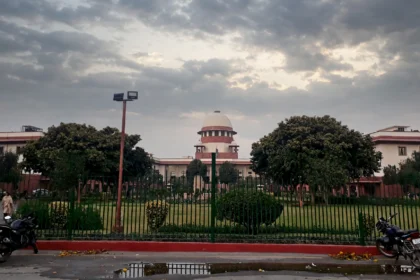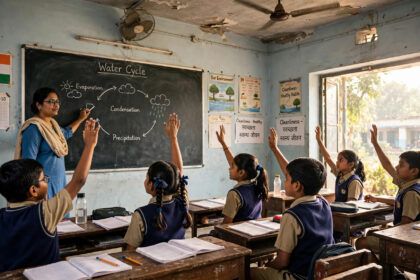
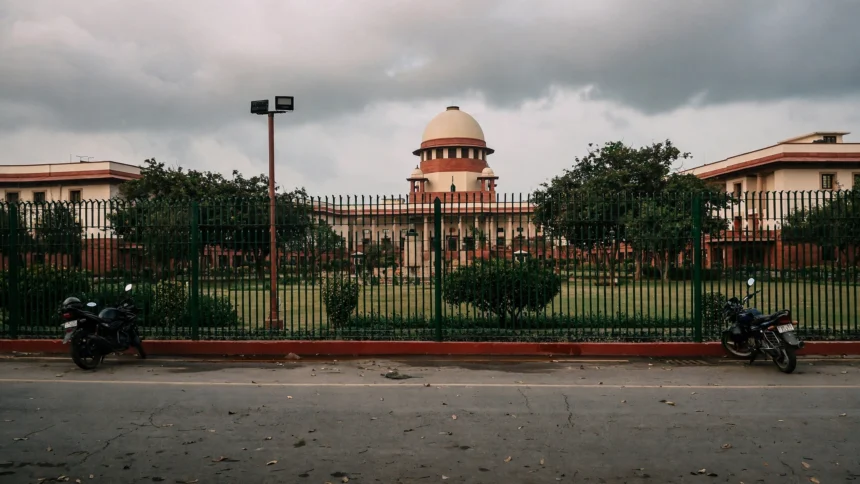
The Central Board of Secondary Education has gone back to the Supreme Court, asking it to take back the relief it granted Class 6 students from the three-language policy in September. The board filed its recall application on Wednesday, arguing that the exemption benefits only a tiny slice of students while creating fresh problems for schools and for children who have already adjusted to the new rules.
What CBSE told the court
CBSE has asked the court to recall its September 28 order, which extended to current Class 6 students the same exemption already available to Classes 7 to 9. The board argued that only 4,186 students, or 0.18 per cent of the Class 6 cohort, would actually benefit from the relief.
Against that, the board said, the exemption is unfair to around 45,000 students who have already opted for two native languages under the new framework, and that the relief disrupts academic arrangements in schools, where timetables and textbook planning were already fixed. The application was filed on Wednesday, a day before the matter was listed for further hearing on November 19.
What the September 28 order said
On September 28, a bench headed by Chief Justice of India Surya Kant, along with Justices Joymalya Bagchi and V. Mohana, directed CBSE to give the current Class 6 batch the same transitional relaxation as Class 7 students. Children still study the third language, but it is assessed internally by the school, with no pass or fail consequence in the Board examination. Students receive only an appearance certificate, and no school can hold a child back on account of the internal assessment.
The Centre had opposed the relief. Solicitor General Tushar Mehta told the court that about 98 to 99 per cent of CBSE schools had the required facilities, and only around 1.2 per cent, roughly 346 of the board’s 28,819 affiliated schools, were yet to put them in place. The order also fixed a timeline: the three-language requirement would apply to the current Class 6 batch from April 1, 2027, while fresh batches entering Class 6 from the 2027-28 session must study three languages from the outset.
How the row reached the court
The dispute began in April this year, when CBSE revised its scheme of studies under the National Education Policy 2020 and the National Curriculum Framework for School Education 2023, making a third language compulsory for Class 6 from 2026-27. A circular on April 9 told schools to introduce the third language in Class 6, and on May 15 the board extended the requirement to Class 9 from July 1, 2026.
Parents and teachers moved the Supreme Court in May, arguing that the sudden change would disrupt students’ existing language choices. CBSE answered with a June 29 circular giving transitional relief to Classes 7, 8 and 9, and a one-time relaxation on July 10 for students already in Class 9. On July 14, the Supreme Court refused to stay the policy itself, observing that learning a language never goes waste. The September 28 order then gave the current Class 6 batch the same breathing room as Class 7, and CBSE’s recall application now asks the court to undo that step.
Why it matters
The numbers in CBSE’s own application frame the argument: 4,186 students gain from the exemption, while around 45,000, in the board’s telling, lose out because schools must run two parallel language tracks in the same classrooms. The board’s case is about symmetry: a relief designed for a small group should not unsettle arrangements a much larger group has already accepted.
For parents, the practical question is narrower and still unanswered: until the court rules on the recall plea, families of current Class 6 children do not know for certain whether the third language will carry a Board examination in Class 10. For schools, the cost is planning churn: timetables and textbook orders drawn up around one set of rules would have to be reworked months into the academic year.
What happens next
The court will now decide whether to recall the September 28 order. The broader challenge to the framework remains pending, and the September order was interim relief, not a final ruling on the policy. Whatever the court decides, the dispute is confined to the current batch: fresh batches entering Class 6 from 2027-28 will study three languages from the outset.
FAQs
Does the recall application change anything for Class 6 students right now?
No. The September 28 order stays in force until the Supreme Court decides on the recall plea.
What exactly did the September 28 order do?
It gave current Class 6 students the same exemption as Class 7: they study the third language, but it is assessed by the school, with no pass or fail consequence in the Class 10 Board examination.
Why does CBSE want the order recalled?
The board says only 4,186 students, or 0.18 per cent, benefit, while the exemption is unfair to around 45,000 students who already opted for two native languages and disrupts school arrangements.
What is the three-language policy?
Under the National Education Policy 2020 and the National Curriculum Framework for School Education 2023, CBSE students study three languages, with at least two of them Indian languages.
Stay with Informeia for the latest on education policy and exam news.