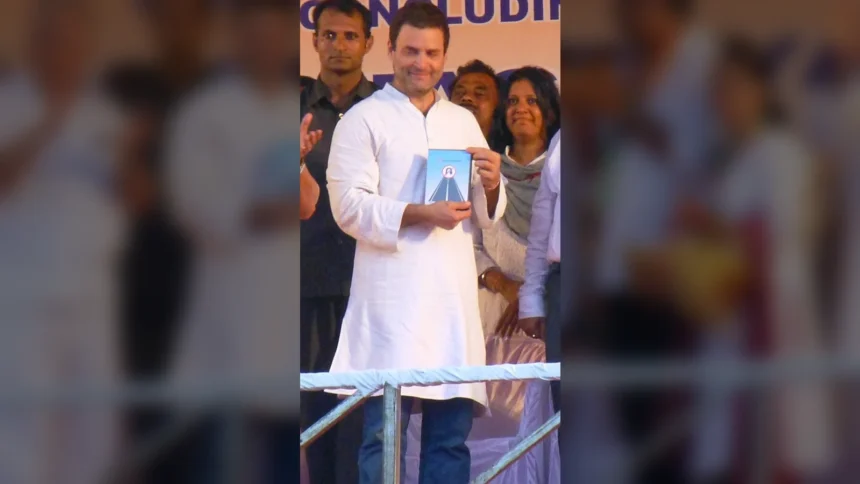
Leader of the Opposition Rahul Gandhi on Friday launched a sharp attack on Prime Minister Narendra Modi, calling him a “compromised PM” after the leaders of the United States, China and Russia held a rare trilateral meeting in Shenzhen. Sharing a photograph of Donald Trump, Xi Jinping and Vladimir Putin seated together, Gandhi said India would have had a place at that table if the Congress were in power.
“If Congress were in power, India’s Prime Minister would be sitting at this table. A compromised PM can never sit at this table,” Gandhi wrote in a post on X on Friday morning. The remark quickly became the day’s biggest political flashpoint, with the BJP hitting back within hours.
What happened in Shenzhen
The three leaders met on Thursday, November 19, at Kylin Villa in Shenzhen, China’s technology hub, on the sidelines of the APEC Summit. The meeting lasted around 80 to 90 minutes and is being described as the first formal trilateral engagement between the leaders of the United States, China and Russia.
The talks focused on international security and strategic stability. The three countries later issued a joint declaration titled “The Russia-China-US Heads of State Declaration Toward Peace”, agreeing to work towards reforming the United Nations, increasing oil supplies, holding talks on reducing nuclear risks, and maintaining strategic stability. The term “G3” has gained currency to describe the trio, and the photograph of the three leaders at one table is what Gandhi shared with his post.
Gandhi’s “side player” argument
Gandhi’s post was not an isolated remark. It followed his interaction with students at the University of Chicago on Wednesday, where he argued that India should be playing a far more active role in global conversations and had instead become a “side player” on the world stage.
“But frankly, India has become a side player. We have stepped back from the stage. We have a voice and a view, but that view is missing,” Gandhi said at the Chicago event. He also spoke about Pakistan’s role in negotiations between the United States and Iran, and said Islamabad’s support for terrorism remained a major obstacle to any engagement.
At the same interaction, Gandhi ruled out any election boycott by the Congress despite his allegations of irregularities in the electoral process, calling Indian democracy “sacred”. He also claimed the Congress had “decimated the idea of the BJP politically”.
The BJP hits back
The BJP responded swiftly and sharply on Friday. Party spokesperson Pradeep Bhandari called Gandhi a “Pakistan fanboy” and claimed that if the Congress were in power today, India would have lost its BRICS membership and been sidelined on the global stage. He said India did not need lectures from the Congress, which he accused of designing foreign policy around Pakistan.
BJP spokesperson and Rajya Sabha MP Sudhanshu Trivedi mocked Gandhi’s remarks, saying the Congress should consider sending an AI-generated version of its leader abroad because he kept repeating the same words. Union Minister Kiren Rijiju accused Gandhi of colluding with foreign-based anti-India forces, while BJP spokesperson Prakash Reddy said questioning India’s electoral process on foreign soil was against the country’s interests.
Why it matters
Beyond the day’s political sparring, the row underlines how foreign policy has become a frontline domestic argument in India. Gandhi is using the Shenzhen photograph to claim that India’s voice is absent from the rooms where the world’s biggest powers settle questions of war, energy and nuclear risk. The BJP’s counter is that the Congress compromised India’s interests in its years in power and has no standing to lecture the government.
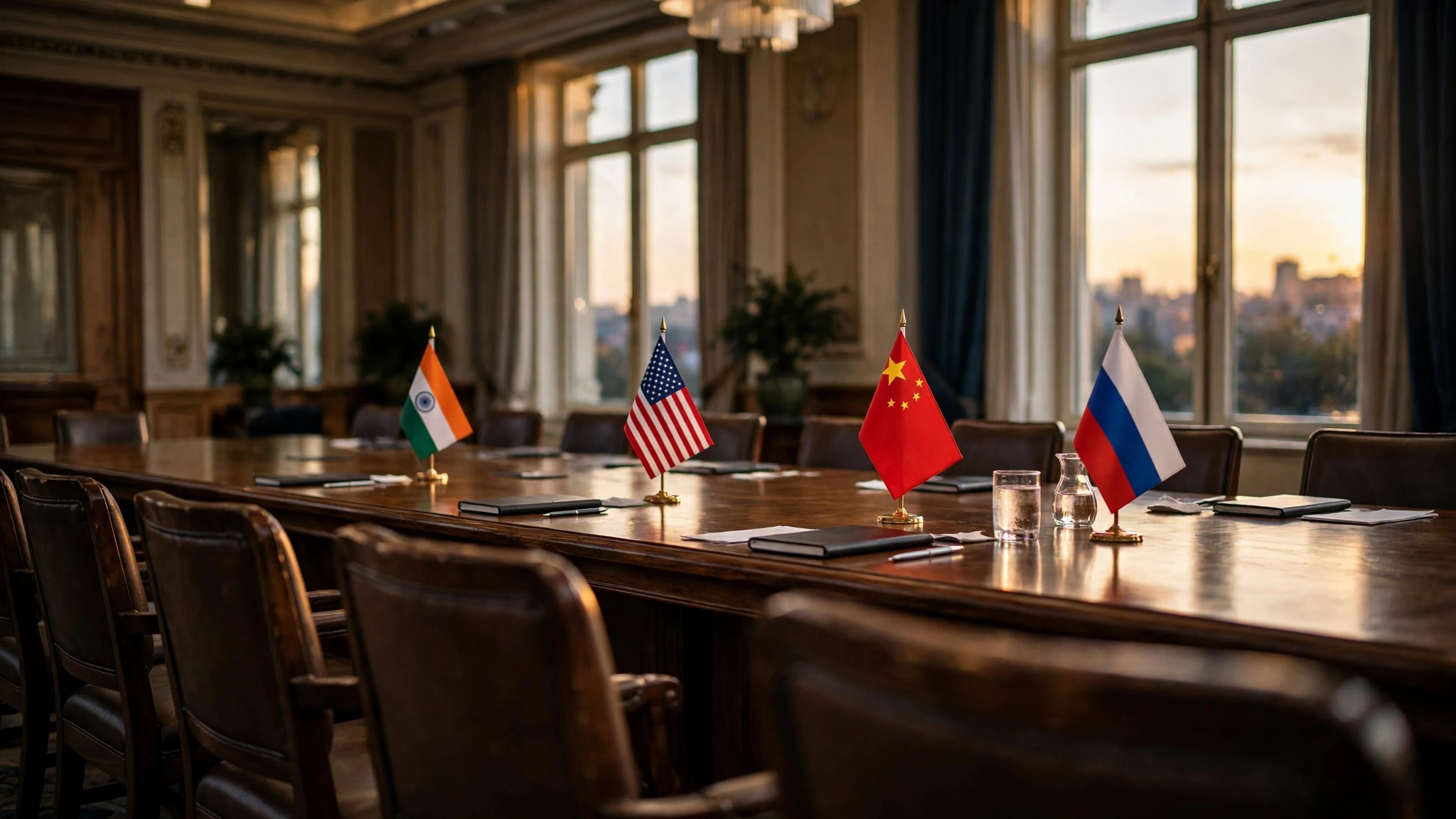
It is worth noting what the Shenzhen meeting actually was. It was a trilateral of three specific powers, held on the sidelines of the APEC Summit, a 21-member economic forum established in 1989 of which India is not a member. India was never an invitee to that table, so Gandhi’s “seat at the table” line is political rhetoric rather than a description of a snub. But rhetoric is the point: the photograph gives the Opposition a vivid symbol, and the government a vivid target, and both sides will keep using it in Parliament and in the run-up to the next round of state elections.
FAQs
What did Rahul Gandhi say about PM Modi?
Sharing a photo of Trump, Xi and Putin, Gandhi wrote on X: “If Congress were in power, India’s Prime Minister would be sitting at this table. A compromised PM can never sit at this table.”
When and where did the trilateral meeting take place?
The leaders of the US, China and Russia met on Thursday, November 19, 2026, at Kylin Villa in Shenzhen, on the sidelines of the APEC Summit. It was their first formal trilateral meeting.
What did the three leaders agree on?
They adopted a joint declaration on peace and strategic stability, covering UN reform, increased oil supplies and dialogue on reducing nuclear risks.
Is India a member of APEC?
No. APEC is a 21-member economic forum established in 1989, and India is not part of the bloc.
How did the BJP respond?
BJP spokespersons Pradeep Bhandari, Sudhanshu Trivedi and Prakash Reddy, along with Union Minister Kiren Rijiju, attacked Gandhi, accusing him of praising Pakistan and questioning Indian democracy abroad.
The Shenzhen photograph may fade in a day, but the argument it sparked, about where India stands when the great powers sit down together, will run for months.