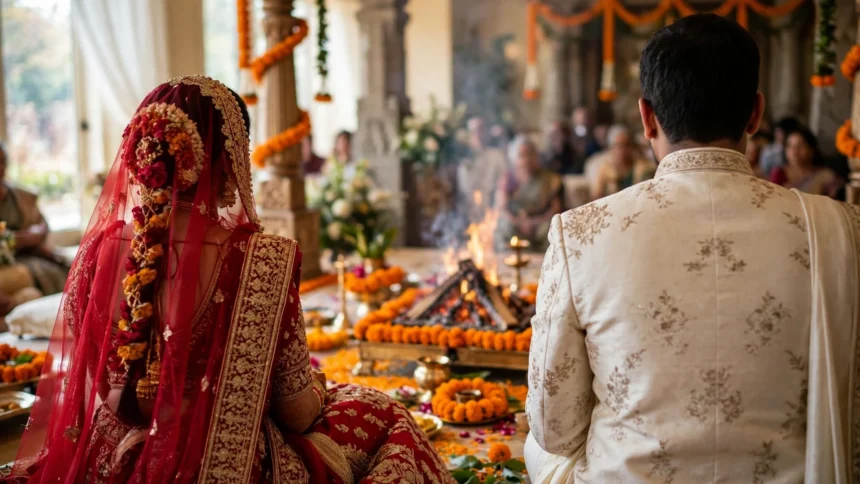
A marriage certificate is the one document couples reach for again and again: opening a joint bank account, adding a spouse’s name to a passport, applying for a visa, or claiming insurance.
- What Is a Marriage Certificate and Why Do You Need One?
- Which Law Applies to Your Marriage?
- Who Can Apply?
- Documents Required: The Complete Checklist
- How to Apply Online: Step by Step
- A Worked Example: Applying in Delhi
- How to Check Application Status
- How to Download the Certificate
- Common Mistakes and How to Avoid Them
- What If You Married Years Ago?
- Frequently Asked Questions
This guide explains who can apply, which law your marriage falls under, the documents you need, the online steps, and the mistakes that cause most rejections.
What Is a Marriage Certificate and Why Do You Need One?
A marriage certificate is an official record issued by the state government that proves two people are legally married. It records the names of both spouses, their dates of birth, the date and place of marriage, and the names of witnesses.
Banks, passport offices, embassies, insurance companies and courts all accept it as proof of marriage. It is also the document you need to change a surname after marriage or add a spouse to a health insurance policy.
Which Law Applies to Your Marriage?
India registers marriages under two main laws, and the one you choose decides the process.
- Hindu Marriage Act, 1955: for Hindu, Buddhist, Jain and Sikh couples. The marriage must already have taken place, and registration usually happens within a short window after the ceremony.
- Special Marriage Act, 1954: for couples of different religions, or any couple that prefers a civil marriage. You must give 30 days’ notice to the marriage officer before the marriage can be solemnised and registered.
Who Can Apply?
Both spouses must apply together, and both must meet the legal age at the time of marriage: 21 years for the groom and 18 years for the bride. Both must be unmarried at the time of marriage, unless a previous marriage has legally ended, in which case the divorce decree or death certificate is needed.
At least one spouse should usually live in the area where the application is made, and two witnesses who were present at the marriage must sign the form.
Documents Required: The Complete Checklist
Keep every document scanned and ready before you start the form. Most portals accept PDF or JPG files, usually under 2 MB each.
- Identity proof of both spouses: Aadhaar card, voter ID, passport or driving licence.
- Address proof of both spouses: Aadhaar card, passport, voter ID or a recent utility bill.
- Proof of date of birth: birth certificate, Class 10 mark sheet or passport.
- Proof of marriage: wedding invitation card, photographs of the ceremony, or a certificate from the place of worship where the marriage took place.
- Marriage photographs: one or two photographs of the couple together at the ceremony, plus a joint photograph if the state asks for one.
- Passport size photographs: two each of the bride and groom, as the portal specifies.
- Witness identity proofs: Aadhaar card or voter ID of both witnesses, with their passport size photographs.
- Affidavit: a signed declaration by both spouses stating the date and place of marriage and marital status. Many state portals provide a ready format.
- Divorce decree or death certificate: only if either spouse was married before.
How to Apply Online: Step by Step
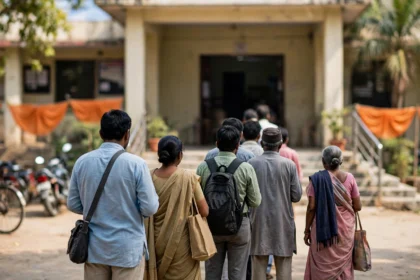
Marriage registration is handled by the state government, so you apply on your state’s portal or at the office of the Sub-Divisional Magistrate or marriage registrar. The steps are broadly the same everywhere.
- Step 1: Visit your state government’s marriage registration portal, or the district administration website, and create an account with a mobile number and email ID.
- Step 2: Select the marriage registration service and choose the Act that applies to your marriage, Hindu Marriage Act or Special Marriage Act.
- Step 3: Fill in the details of both spouses: full names, dates of birth, addresses, and the date and place of marriage. Copy names exactly as they appear on the identity proofs.
- Step 4: Enter the witness details and upload their identity proofs.
- Step 5: Upload the scanned documents and photographs in the format and size the portal asks for.
- Step 6: Pay the registration fee online. The fee is nominal in most states and varies by state, so check the amount on the portal before paying.
- Step 7: Submit the form and note down the application or acknowledgement number. You will need it to track the status and to book an appointment, if your state asks for one.
- Step 8: If the portal asks for a verification visit, both spouses and the witnesses visit the registrar’s office on the given date with the original documents. After verification, the certificate is issued and can usually be downloaded from the same portal.

A Worked Example: Applying in Delhi
Take a couple married in Delhi in a Hindu ceremony. They log in to the Delhi government’s e-district portal, choose marriage registration under the Hindu Marriage Act, and fill in both names, dates of birth, and the marriage date and venue. They upload both Aadhaar cards, the wedding invitation card, two ceremony photographs, and a joint photograph. Two friends who attended the wedding act as witnesses and upload their Aadhaar cards.
They pay the fee online and receive an acknowledgement number, then get an appointment date at the SDM office, where they carry the original documents. The officer checks the originals against the uploads, both spouses and witnesses sign, and the certificate is issued. The whole process typically takes a week or two when the documents are complete.
How to Check Application Status
Go to the same portal where you applied, open the status tracking option, and enter your acknowledgement number with the registered mobile number. The status shows whether the application is pending, under verification, approved, or ready for download.
If the status stays pending beyond the time the portal mentions, visit the registrar’s office with your receipt and acknowledgement number. Do not submit a second application, because a duplicate can delay both.
How to Download the Certificate
In most states, the approved certificate can be downloaded from the same portal as a digitally signed PDF. It carries a QR code and is accepted everywhere the printed certificate is accepted. If your state still issues only a printed copy, collect it from the registrar’s office with the acknowledgement receipt and an identity proof.
Common Mistakes and How to Avoid Them
- Mismatched names: check that the spelling of both names is identical on the form, the Aadhaar cards and the wedding card before submitting.
- Wrong Act selected: a Hindu ceremony registered under the Special Marriage Act, or vice versa, will be rejected. Pick the Act that matches how the marriage was performed.
- Blurry or oversized uploads: scan documents clearly and keep each file within the size limit the portal states. A blurry Aadhaar scan is a common cause of rejection.
- Missing witness documents: both witnesses must submit identity proof. A form with only one witness is incomplete.
- Skipping the 30 day notice: under the Special Marriage Act, the marriage cannot be solemnised before the notice period ends. Plan the date accordingly.
- Applying in the wrong district: apply where the marriage took place or where at least one spouse lives, as the state rules require.
- Not keeping the acknowledgement number: save it on your phone and in an email. Without it, tracking the application or collecting the certificate becomes difficult.
What If You Married Years Ago?
A marriage can be registered years after the ceremony, and many couples do it when they need the certificate for a passport or visa. The process is the same, but you will need proof that the marriage took place on the stated date, such as old photographs, the wedding invitation, or an affidavit from the priest or witnesses. There may be a late registration fee. Check your state portal for the late registration rules.
Frequently Asked Questions
Is a marriage certificate compulsory in India?
Registration is compulsory in most states, and it is strongly recommended everywhere because it is the standard proof of marriage for passports, visas, bank accounts and insurance.
How long does it take to get a marriage certificate?
Usually a week to fifteen days after a complete application, though it varies by state. Under the Special Marriage Act, add the 30 day notice period.
Can we apply online if we married in another state?
Apply in the state where the marriage took place or where at least one spouse currently lives, following that state’s rules.
Is the downloaded certificate valid for a passport?
Yes. A digitally signed certificate downloaded from the official portal is accepted as proof of marriage for a passport and for visa applications.
Can the certificate be corrected later?
Yes, but corrections need an application at the same registrar office with supporting documents. Check every name and date carefully before submitting the original application.
Registering your marriage is straightforward once the documents are ready: pick the right Act, keep names consistent across every document, and keep the acknowledgement number safe. If anything is unclear, verify the process and fee in the official notification on your state government’s portal.