Indian artificial intelligence startups raised $1.6 billion in equity funding in the first nine months of 2026, nearly double the $822 million of the same period last year. The figure, from data intelligence platform Tracxn, is the highest nine-month total for Indian AI companies since 2019, even as deal numbers fell sharply.
The report, released on Monday, paints a boom getting taller, not wider. Money is pouring in, but to fewer companies, and mostly into the infrastructure powering AI, not the apps built on top of it.
The numbers behind the surge
Indian AI companies raised it across 87 equity funding rounds between January and September 2026, according to Tracxn’s India AI 9M 2026 report, a 96 per cent jump from $822 million in the same period of 2025 and 162 per cent higher than the $616 million of 2024.
The deal count moved the other way. Rounds fell 42 per cent, from 149 to 87, while the average deal size more than tripled to $18.5 million from $5.5 million. First-time funded startups dropped 60 per cent, from 60 to 24.
| Period | Funding raised | Funding rounds |
|---|---|---|
| Jan-Sep 2025 | $822 million | 149 |
| Jan-Sep 2026 | $1.6 billion | 87 |
Early-stage funding led the rise, up 191 per cent to $1.3 billion from $434 million, and now accounts for 78 per cent of all AI funding, up from 53 per cent.
A few big cheques did the heavy lifting
The headline number rests on a few very large deals. The 10 largest rounds raised $1.5 billion between them, or 90 per cent of the total.
- Neysa, a Mumbai-based AI cloud provider, raised the largest round: a $600 million Series B in February, equal to 37 per cent of all Indian AI funding in the nine months.
- Sarvam, the Bengaluru generative AI developer, raised $255 million in a Series B in June and $90.4 million more in August.
- Yotta, another AI infrastructure firm, secured $150 million in a Series D in July.
Tracxn co-founder Neha Singh summed it up: funding has risen in dollars, not in deal numbers, and almost all of the rise comes from infrastructure rounds.
Infrastructure takes the lion’s share
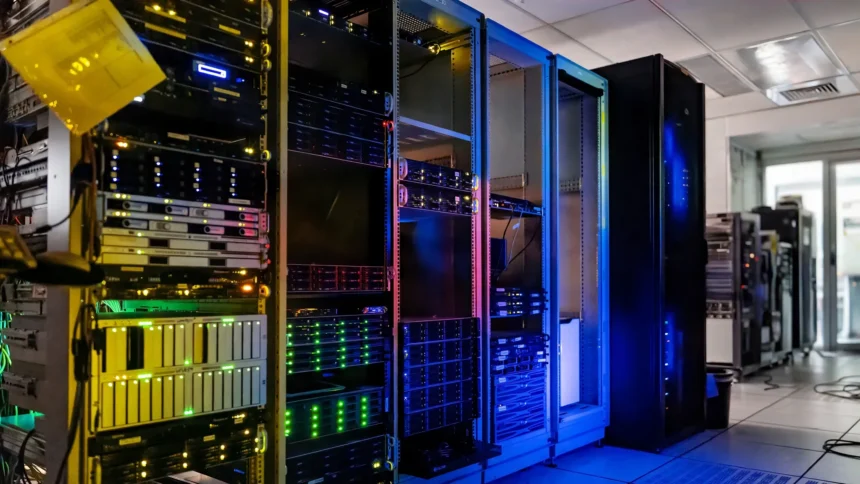
AI infrastructure companies, the firms building data centres, GPU clouds and the computing backbone for AI models, raised $1.2 billion across 19 rounds, or 75 per cent of all funding in the sector.
AI application startups raised $390 million across 62 rounds, down 27 per cent from $532 million a year earlier. Investors are betting far more on the picks and shovels of the AI economy than on the apps themselves, for now.
Mumbai passes Bengaluru
The most striking shift is geographic. Mumbai overtook Bengaluru as India’s top city for AI funding, raising $765 million, or 48 per cent of the total, up from just 2 per cent a year ago. Bengaluru raised $711 million, a 44 per cent share, down from 54 per cent.
Neysa’s round alone explains most of Mumbai’s surge. For scale, AI companies globally raised $383.5 billion in the same period, so India’s $1.6 billion is 0.4 per cent of that, placing the country ninth.

Why it matters
The headline looks like a triumph, and in one sense it is: funding at a seven-year high, with serious capital behind home-grown infrastructure, is a real vote of confidence. But the shape of the boom matters as much as its size.
First, concentration is a risk. When 90 per cent of the money goes to 10 deals, the ecosystem depends on a handful of companies, while the 60-odd application startups sharing $390 million could quietly be left behind, even though that is where most Indian users actually meet AI.
Second, the infrastructure tilt bets that India should own the computing layer, not just rent it. If Neysa, Yotta and their peers deliver affordable GPU capacity at home, Indian startups stop paying foreign cloud bills for every model they train.
Third, the early-stage surge is the most hopeful number in the report. At $1.3 billion, it is nearly three times last year’s level: investors still back new ideas, even as the bar for a second or third cheque has risen. What to watch is whether the application layer catches up. If the infrastructure now being built produces Indian AI products that people pay for, this cycle will look like a foundation. If not, it will look like a very expensive bet on plumbing.
Frequently asked questions
How much did Indian AI startups raise in 2026?
$1.6 billion in the first nine months, up 96 per cent from $822 million a year earlier, according to Tracxn.
Which company raised the most?
Mumbai-based AI cloud provider Neysa, with a $600 million Series B in February 2026, 37 per cent of all Indian AI funding in the period.
Why did funding rise while deal numbers fell?
Rounds fell 42 per cent to 87, but the average deal size more than tripled to $18.5 million, and a few very large infrastructure rounds drove almost all of the growth.
Which city attracted the most AI funding?
Mumbai overtook Bengaluru, raising $765 million (48 per cent) against Bengaluru’s $711 million (44 per cent), largely because of Neysa’s round.
India’s AI story in 2026 is no longer about whether the money will come. It has come, in record amounts. The question now is whether it spreads beyond the few companies that captured most of it.