India’s central bank has quietly moved another slice of the country’s gold home. The Reserve Bank of India brought back 60.08 tonnes of gold from vaults overseas between April and September this year, taking the share of its gold stored inside India to 84 per cent, according to its latest half-yearly report on foreign exchange reserves, released on November 25.
The shift does not change how much gold India owns. The RBI still holds 880.52 tonnes in total, exactly the same as at the end of March. What has changed is where that gold sits.
Where India’s gold now sits
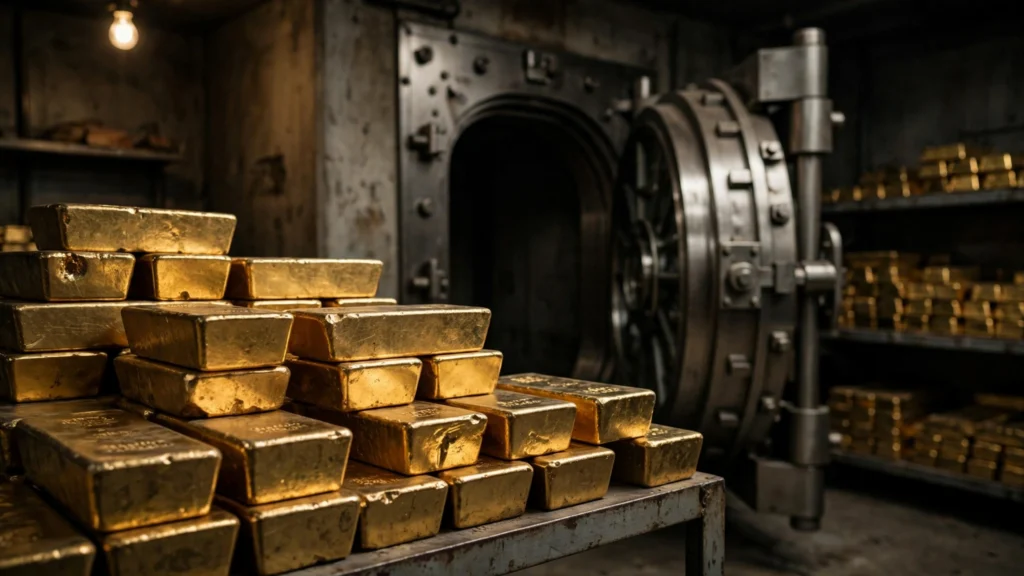
At the end of September, 740.13 tonnes of the RBI’s gold were held in domestic vaults in India, up from 680.05 tonnes at the end of March. The gold kept in safe custody with the Bank of England and the Bank for International Settlements fell to 140.39 tonnes, down from 197.67 tonnes over the same six months.
That takes the domestic share of India’s gold reserves to 84.05 per cent, from 77.23 per cent at the end of March. It is the latest step in a repatriation drive the RBI began in 2024, when it moved more than 100 tonnes of gold back to India for the first time in years.
The report also shows the value of the gold stock fell even though the quantity did not change. International gold prices averaged around 4,721 dollars per troy ounce in April and eased to about 4,319 dollars in September, a drop of roughly 9 per cent. As a result, the value of the RBI’s gold reserves declined to 106.08 billion dollars at the end of September, from 115.40 billion dollars at the end of March.
The numbers at a glance
- Total gold held: 880.52 tonnes, unchanged from March to September 2026
- Gold held in India: 740.13 tonnes, up from 680.05 tonnes
- Gold held overseas: 140.39 tonnes, down from 197.67 tonnes
- Domestic share: 84.05 per cent, up from 77.23 per cent
- Value of gold reserves: 106.08 billion dollars, down from 115.40 billion dollars
- Gold’s share of forex reserves: 14.38 per cent, down from 16.70 per cent
- Total forex reserves: 737.78 billion dollars, up from 691.11 billion dollars
Reserves grew even as gold prices slipped
While gold lost value in the six months to September, India’s overall foreign exchange reserves grew by 46.67 billion dollars, rising from 691.11 billion dollars at the end of March to 737.78 billion dollars at the end of September. The central bank was a net buyer of foreign exchange for the fourth month in a row in September, picking up 6.94 billion dollars in the month.
More recent weekly data shows the reserves have since eased to 705.34 billion dollars as of November 13, after a 14.20 billion dollar fall in that week. The position is still 14.23 billion dollars higher than at the end of March.
Why it matters
Gold held at home is gold fully under the central bank’s own control. Storing bullion with the Bank of England or the BIS is standard practice for central banks, and it makes the metal easier to trade or pledge in a crisis. But keeping it in domestic vaults removes any question, however remote, of access in a geopolitical emergency, and it saves on storage and insurance costs abroad.
For readers, the move is a signal rather than a market event. It will not change gold prices in Indian shops, and it does not mean the RBI is buying more gold. What it does show is the central bank’s preference for holding its insurance policy close at hand at a time when global trade is being reshaped by tariffs, sanctions and shifting alliances. The United States proposed tariffs of up to 25 per cent on Indian goods this week, and the same uncertainty that drives such headlines is what makes central banks want their reserves where they can reach them.
What happens next
The repatriation is likely to continue in smaller lots, since only 140.39 tonnes remain overseas. The next half-yearly report, due in May 2027, will show whether the domestic share climbs further towards 90 per cent. Traders will also watch the weekly reserves data for signs of how the RBI is handling the rupee, which strengthened to around 92.23 per dollar on November 25.
FAQs
How much gold does the RBI hold?
The RBI holds 880.52 tonnes of gold, unchanged between March and September 2026.
How much of it is now stored in India?
740.13 tonnes, or 84.05 per cent of the total, up from 680.05 tonnes and 77.23 per cent at the end of March.
Did the RBI buy new gold?
No. The total quantity stayed the same. The 60.08 tonnes were moved from overseas vaults to domestic ones, not freshly purchased.
Why did the value of the gold reserves fall?
International gold prices fell about 9 per cent between April and September 2026, cutting the value of the stock to 106.08 billion dollars from 115.40 billion dollars.
How large are India’s total forex reserves?
737.78 billion dollars at the end of September 2026, up 46.67 billion dollars from March. The latest weekly figure, as of November 13, was 705.34 billion dollars.
India’s gold is coming home in stages, and this week’s report shows the shift is now more than four-fifths complete. The metal itself has not changed. Its address has.