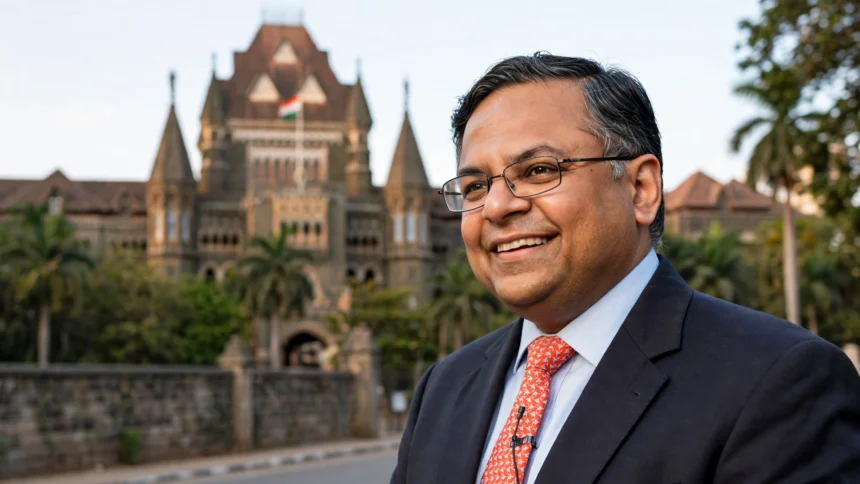
Tata Trusts have taken their own group holding company to court. On Thursday, the Sir Dorabji Tata Trust and the R.D. Tata Trust moved the Bombay High Court against Tata Sons, challenging the reappointment of N. Chandrasekaran as executive chairman and seeking Rs 65 crore in damages. The matter is listed for hearing today, Friday, November 27, before Justice Abhay Ahuja.
The trusts, which hold about 66 percent of Tata Sons, want the board resolution of September 17 declared invalid. It reappointed Chandrasekaran for a further five years after his current term ends on February 20, 2027. The trusts say the resolution lacked the approval the company’s own rulebook demands. It is the sharpest public rupture inside the Tata Group in a decade, days before a board meeting on the group’s listing plans.
What the trusts are asking the court
The suits seek a declaration that the September 17 resolution is ultra vires the Articles of Association of Tata Sons, and therefore invalid, plus interim orders restraining Tata Sons from acting on it. The money claim is specific: Rs 50 crore for the Sir Dorabji Tata Trust and Rs 15 crore for the R.D. Tata Trust, Rs 65 crore, with 18 percent annual interest from filing until payment. The trusts also want the chairman barred from using a casting vote when the two trust-nominated directors disagree.
The suits were mentioned for urgent hearing by senior counsel Abhishek Manu Singhvi, first before Justice Arif Doctor, who recused himself, then before Justice Abhay Ahuja, who listed the matter for 3 pm.
The Article 121 argument at the heart of the case
Everything turns on Article 121 of the Articles of Association of Tata Sons. The trusts say it requires the affirmative vote of a majority of the trust-nominated directors, and that a chairman’s casting vote cannot substitute for it.
The September 17 vote itself is not in dispute. The resolution passed 4-1: Venu Srinivasan, Harish Manwani, Anita M. George and Saurabh Agrawal voted in favour, Tata Trusts chairman Noel Tata voted against, and Chandrasekaran abstained. The trusts say that despite the 4-1 count, the resolution is void without the affirmative vote Article 121 demands. They also cite an email Chandrasekaran sent the board on August 12, 2026, saying he would not seek reappointment when his term ends in February 2027.
What happens on November 30
The urgency is driven by the calendar. Tata Sons has a board meeting scheduled for Monday, November 30, where it is expected to consider converting itself into a public company, a step towards an initial public offering, and to take up Chandrasekaran’s reappointment. The trusts have asked the court to stall some of the critical items listed for that meeting, and to bar the chairman from using a casting vote if the two nominee directors disagree.
The listing question adds a second layer. The Reserve Bank of India wrote to Tata Sons on November 16, telling it in writing for the first time that it must list its shares, as an upper-layer non-banking finance company. The trusts oppose a listing and propose a restructuring that could take Tata Sons outside the NBFC framework. The move to court was itself contested inside the Trusts: two vice-chairmen who support the listing recorded their dissent.

Why it matters
For investors, the question is stability. Tata Sons sits at the top of a group whose listed companies are worth lakhs of crores, and a court challenge to the chairman’s reappointment, heard days before a board meeting meant to settle the listing question, leaves both the leadership and the listing plan in limbo. A stay on the September 17 resolution, or a bar on the casting vote on November 30, would hand the Trusts immediate leverage. A refusal would leave Tata Sons free to push ahead with the listing discussion and the reappointment on Monday.
How the dispute reached court
- August 12, 2026: Chandrasekaran tells the board by email he will not seek reappointment after February 20, 2027.
- September 17, 2026: The board votes 4-1 to reappoint him for five more years. Noel Tata votes against; Chandrasekaran abstains.
- November 16, 2026: The RBI tells Tata Sons in writing to list its shares as an upper-layer NBFC.
- November 25, 2026: The two trusts pass resolutions approving legal proceedings, and file the suits the next day.
- November 27, 2026: Justice Abhay Ahuja hears the matter, listed for 3 pm.
- November 30, 2026: Tata Sons board meeting on the IPO plan and the reappointment.
Frequently asked questions
Why do the trusts say the reappointment is invalid?
They say the September 17 resolution lacked the affirmative vote of a majority of the trust-nominated directors required under Article 121.
How much are the trusts claiming?
Rs 65 crore in total: Rs 50 crore for the Sir Dorabji Tata Trust and Rs 15 crore for the R.D. Tata Trust, with 18 percent annual interest until payment.
When is the hearing, and what is at stake on November 30?
The Bombay High Court hears the matter today, Friday, November 27, before Justice Abhay Ahuja, listed for 3 pm. On Monday the Tata Sons board is expected to consider converting the company into a public company, a step towards an IPO, along with the reappointment.
Today’s hearing is the first word in a case that could reshape how India’s oldest business house is run. The next comes on Monday.