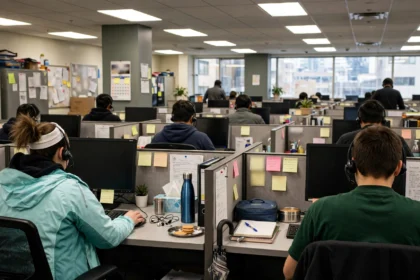

IBM has given some of its US-based employees on H-1B visas and green cards three weeks to decide: take a job with IBM in another country, or leave the company by December 31. The ultimatum, reported this week, turns a policy change from earlier this month into a hard deadline for workers whose right to live and work in the US depends on their employer.
IBM Consulting, the company’s largest division, is ending visa and green card sponsorship for most of its US roles. Bloomberg first reported the change on November 10. What is new this week is the timetable and the exit package, which force a quick choice, with family, pay and immigration status all hanging on the answer.
What IBM told its staff
Rest of World, Business Standard and the Economic Times report that affected employees were called into one-to-one meetings with their managers and told they had about three weeks to decide. Those who accept a role outside the US stay with IBM. Those who decline get three months of severance pay, with December 31, 2026, as their last working day.
IBM has not said how many employees are affected, and it has not publicly confirmed the three-week window or the severance terms. IBM Consulting employs more than 150,000 people worldwide, and the change applies to most roles in that division, not to IBM as a whole. The company said its use of US high-skilled visa programmes had been falling for years.
India is where most of the overseas jobs are
For employees weighing relocation, one destination dominates the list. Rest of World reported that IBM’s careers portal listed 1,278 consulting vacancies outside the US as of November 19. Of those, 1,125 were in India, with 23 in Singapore and 18 in the United Kingdom. Almost nine in ten of the overseas roles IBM is advertising are in India.
That makes the decision brutally concrete for Indian professionals in the US: relocating keeps the job but means a very different pay packet. One employee, writing on the anonymous forum Blind, estimated a move to India would mean an 80 percent pay cut. That figure is one employee’s account, not verified by IBM, but it captures the trade-off: the job survives, the salary does not.

Why it matters
IBM is a bellwether. Its consulting arm is one of the largest employers of H-1B workers in the US, and its rivals run on the same model: large teams of Indian engineers and consultants on client projects under employer-sponsored visas. If IBM’s approach becomes the template, thousands of Indian professionals at other firms could face the same choice in the months ahead.
The timing matters too. The move comes amid a wider tightening of US immigration policy, and it lands on a group with little room to manoeuvre. Many Indian H-1B holders have waited years in the green card queue, and leaving an employer can set that clock back. With only a 60-day grace period after H-1B employment ends, an employee without a new sponsor by December 31 has about two months to change status, find a new employer, or leave the country.
There is also a quiet signal for India. The concentration of IBM’s overseas consulting vacancies in India, 1,125 of 1,278, shows where the company expects its consulting work to be done next, and could mean more roles opening up at home, even as it means leaner pay for those who return from the US.
What affected workers can do now
The most important step is to get advice before choosing. Workers should speak to an immigration lawyer about their own status and check the expiry date on their I-94 record. A second sponsor can file a new H-1B petition while the worker is still employed, so starting that search now keeps more options open.
Anyone considering the India move should compare the full offer, not just the headline salary, and keep a written record of every meeting and message about the decision, including dates.
FAQs
What exactly has IBM decided?
IBM Consulting is ending H-1B visa and green card sponsorship for most of its US roles. The policy was first reported on November 10, and staff now have a deadline to act on it.
What is the deadline?
Affected employees have about three weeks to choose between relocating to an IBM role outside the US or leaving, with three months of severance and December 31, 2026, as their last working day.
What happens to H-1B status if the job ends?
H-1B status depends on employment. When a job ends, the worker generally has up to 60 days to find a new sponsor, change status or depart. Confirm your own position with an immigration lawyer.
Why is India the main option?
Of the 1,278 IBM consulting vacancies listed outside the US on November 19, 1,125 were in India, far ahead of Singapore with 23 and the UK with 18.
Does this affect all of IBM?
No. The change covers most roles in IBM Consulting, the company’s largest division. Other IBM businesses are not part of this decision.
For thousands of Indian tech workers in the US, the next three weeks will decide whether their careers continue in America or restart in India. IBM has set the clock running, and the rest of the industry is watching.