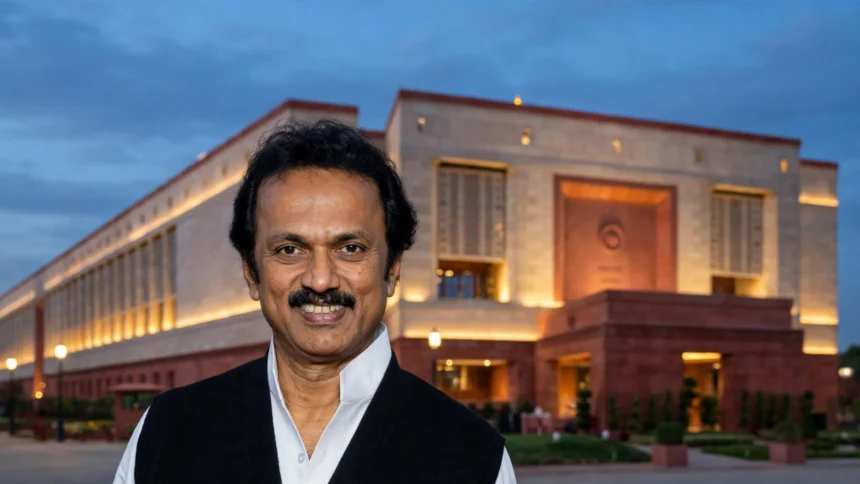
The Dravida Munnetra Kazhagam has decided to support the Centre’s revised delimitation bills, handing the government a major boost just two days before Parliament meets for a special sitting on Monday, November 30. The party’s 22 Lok Sabha MPs will vote for the Constitution (132nd Amendment) Bill and the Delimitation (Second) Bill, 2026, a decision the DMK leadership announced in Chennai on Saturday, November 28.
Until Saturday, the DMK had been one of the loudest critics of delimitation. The party feared that redrawing Lok Sabha seats on the basis of population would punish southern states that controlled population growth, and reward northern states. The revised bill, cleared by the Union Cabinet on Friday, November 27, changed that calculation. It offers a uniform 50 per cent increase in seats for every state, while freezing each state’s relative share of seats until 2051.
What the DMK decided
The decision was taken at a meeting of the DMK’s Lok Sabha and Rajya Sabha MPs at the party headquarters, Anna Arivalayam, chaired by party president and Tamil Nadu Chief Minister M.K. Stalin. The party adopted a resolution supporting both bills and called the outcome a victory for its long campaign to protect Tamil Nadu’s representation in Parliament.
DMK MP A. Raja said the revised formula would take Tamil Nadu’s share of Lok Sabha seats from 7.18 per cent to 7.21 per cent, a change the party does not count as a loss. The DMK also said it would press its remaining demands during the parliamentary debate, including that the share of representation based on the 1971 Census be protected for another 25 years.
Under the same formula, the Tamil Nadu Assembly would grow by 50 per cent, from 234 seats to 351. The party’s campaign on the issue goes back to February 14, 2024, when Stalin moved a resolution in the Tamil Nadu Assembly against population-based delimitation.
The numbers that now matter
A Constitution amendment needs a special majority: at least two-thirds of the members present and voting, plus a majority of the total membership of the House. The Lok Sabha has a sanctioned strength of 543, with an effective strength of 540 after three vacancies. If all 540 members vote, the government needs at least 360 votes.
The ruling National Democratic Alliance is estimated to have around 320 MPs, which left it short on its own. The DMK’s 22 votes close much of that gap, and the government has said it is confident of securing the required majority, with what it called some surprises in store. The Business Advisory Committee meets at 10 am on Monday to finalise the legislative business, and voting in the Lok Sabha is expected to take five to six hours on Tuesday, December 1.
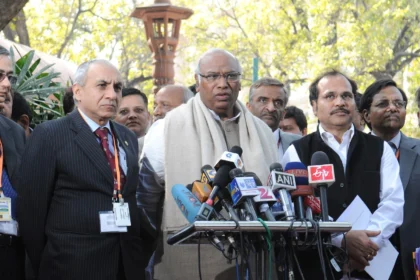
The INDIA bloc, meanwhile, has decided to oppose the bills jointly. Congress president Mallikarjun Kharge, after a meeting of bloc leaders at his residence on Saturday, alleged that expanding the Lok Sabha to 850 seats was an attempt to keep the BJP in power indefinitely. The DMK’s decision to break ranks has deepened the rift inside the opposition alliance, drawing sharp criticism from its former partners.
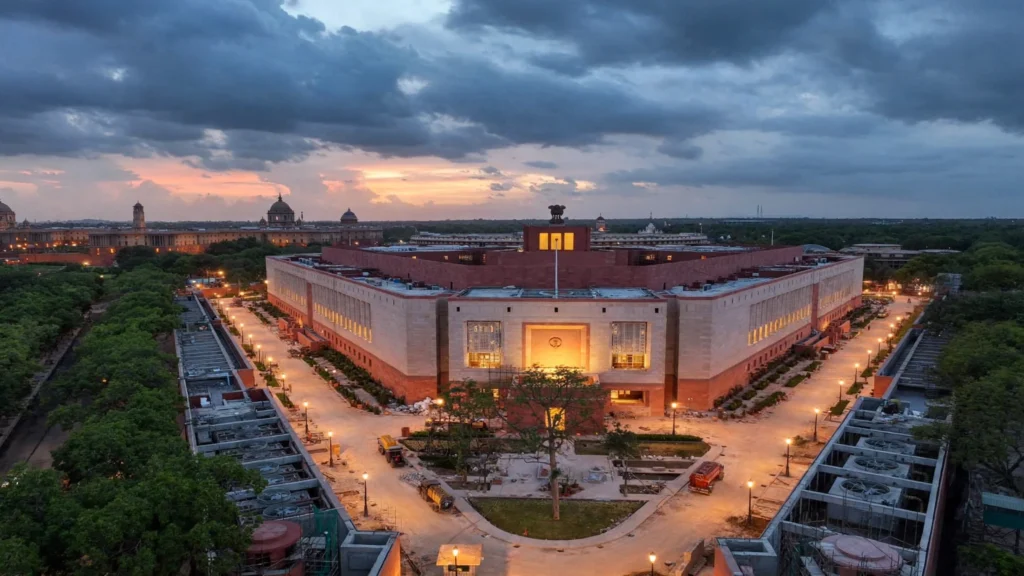
What the bill actually does
- 850 seats: The maximum strength of the Lok Sabha rises from 550 to 850, with every state and Union Territory getting a 50 per cent increase in seats.
- Frozen shares till 2051: The existing relative allocation of seats among states is protected until the first Census conducted after 2051, so no state loses its share.
- 2011 Census for boundaries: Constituencies within each state will be redrawn using the 2011 Census figures, delinked from the ongoing 2026 Census.
- Women’s reservation unlocked: The 33 per cent reservation for women in Parliament and state assemblies, passed as law in 2023, can finally take effect once delimitation is done. At 850 seats, around 283 Lok Sabha seats would be reserved for women on rotation.
The bill is not new. A version introduced in April 2026 failed to secure the required two-thirds majority in the Lok Sabha. The government has reworked the proposal and is making a second attempt, with the special sitting of Parliament running from November 30 to December 3. The Lok Sabha meets on Monday, November 30, and the Rajya Sabha convenes on Wednesday, December 2.
Why it matters
This is the most consequential parliamentary arithmetic in years, and the DMK’s switch is what changed it. A month ago, the delimitation bill looked like a government proposal that would stall on numbers. Today it looks like a bill with a realistic path to passage, because the party that had the most to lose from it has decided the revised formula protects its interests.
For readers, the stakes go beyond seat counts. If the bills pass, the Lok Sabha that Indians vote for in 2029 will look very different: up to 850 members, a third of them women by reservation, and every state assembly expanded by half. Tamil Nadu keeps its share, which was the DMK’s red line, and the same formula protects other southern states that kept population growth in check. The freeze till 2051 is the compromise that made this possible, and it will shape Indian politics for a generation.
The opposition’s argument deserves a hearing too. Critics say a bigger House does not fix the underlying question of whether representation should follow population at all, and some former civil servants and constitutional experts have asked for at least 30 days of public consultation before the bills are taken up. That tension, between speed and scrutiny, will dominate the debate on Monday.
What happens next
The government plans to complete the delimitation exercise within two years, well before the 2029 general elections. A Delimitation Commission would be set up to redraw constituency boundaries for the Lok Sabha and state assemblies. The immediate test comes this week: the Business Advisory Committee meeting on Monday morning, the debate and vote in the Lok Sabha expected on December 1, and the Rajya Sabha sitting on December 2.
Watch two things. First, whether more opposition parties follow the DMK or stay with the INDIA bloc’s decision to oppose. Second, whether the government tables the amendments the DMK has promised to press, on protecting the 1971 Census-based shares. Either answer will tell us how durable this new alignment really is.
FAQs
What is the delimitation bill?
It is a legislative package to redraw Lok Sabha and state assembly constituencies and raise the Lok Sabha’s maximum strength from 550 to 850 seats, with a uniform 50 per cent increase for every state.
Why did the DMK support the bill?
The revised bill protects each state’s relative share of seats until 2051 and gives every state a uniform 50 per cent rise, so Tamil Nadu’s share moves from 7.18 per cent to 7.21 per cent instead of falling.
How many votes does the government need?
At least 360 votes in the Lok Sabha if all 540 members vote, a two-thirds majority. The NDA has around 320 MPs, so support from parties outside the alliance, including the DMK’s 22 MPs, is crucial.
When will Parliament vote on the bills?
The special sitting begins on Monday, November 30. Voting in the Lok Sabha is expected on Tuesday, December 1, and the Rajya Sabha meets on Wednesday, December 2.
What does delimitation mean for women’s reservation?
The 33 per cent reservation for women passed in 2023 can only take effect after delimitation. At 850 Lok Sabha seats, around 283 seats would be reserved for women on rotation.
The special sitting that begins on Monday will decide whether India’s electoral map is redrawn on the government’s terms. The DMK’s support has made that outcome far more likely than it looked a week ago.