




Just days before a landmark change to India’s most popular payment system, the plan has hit a wall of uncertainty. The rollout of merchant charges on large UPI transactions, due to begin on October 15, now hangs in the balance after a key National Payments Corporation of India (NPCI) steering committee meeting did not take place on Friday.
- What was supposed to change on October 15
- The Friday meeting that never happened
- Why merchants and fintechs pushed back
- Markets swing on the uncertainty
- What else is on the table
- Frequently Asked Questions
- Will I pay MDR charges as a UPI user?
- Which UPI transactions would attract the fee?
- Is the October 15 rollout confirmed?
- Why is the fee controversial?
- What happens next?
With October 15 days away and no final word from the payments body, merchants, fintech companies and investors are left guessing whether the 0.4 per cent fee will kick in as scheduled, or get pushed to January 2027.
What was supposed to change on October 15
Under the framework announced last month, a Merchant Discount Rate (MDR) of 0.4 per cent was to apply to eligible person-to-merchant UPI transactions above Rs 2,000. The fee would be capped at Rs 300 per transaction, and consumers would not pay anything.
Certain categories such as bill payments, utilities, education and fuel were to attract a flat Rs 5 per transaction above Rs 2,000. Person-to-person transfers and payments to small merchants covered by the zero-MDR framework were to remain completely free.
The Finance Ministry has maintained that around 96 per cent of person-to-merchant UPI transactions would stay untouched, since payments up to Rs 2,000 and the small-merchant exemption fall outside the charge.
The Friday meeting that never happened
The UPI Steering Committee, which brings together representatives of major payment apps, banks and fintech firms, had been expected to meet on Friday, October 9, to discuss the proposed charges and clarify aspects of the framework. According to reports, that meeting did not take place.
NPCI has not announced a revised meeting date, nor confirmed whether the October 15 implementation will proceed. The payments body had held discussions with industry representatives earlier in the week, but no final decision on the postponement has been communicated.
The silence is telling. Reports earlier this week said a proposal to defer the rollout to January 1, 2027 was under consideration, with a final decision expected within days. That timeline is now colliding with the calendar.
Why merchants and fintechs pushed back
The pushback has been loud and sustained. Retail traders’ associations had planned a ‘No UPI Day’ on October 2 to protest the fee, though they withdrew the call after meeting the Union Finance Minister last month.
Merchant bodies, fintech firms and payment aggregators have all petitioned NPCI for more time, warning that a new fee structure during the peak festive season could strain margins and dampen spending.
The committee is also considering widening the exemption: businesses with annual turnover of up to Rs 40 lakh could be spared the fee, a significant expansion from the current framework, which only exempts small merchants receiving up to Rs 1 lakh a month through UPI QR codes directly into bank accounts.
RBI Governor Sanjay Malhotra has said a small MDR fee is unlikely to hurt UPI volumes. Separately, the Supreme Court has refused to stay the framework while issuing notices to the government, the RBI and NPCI.
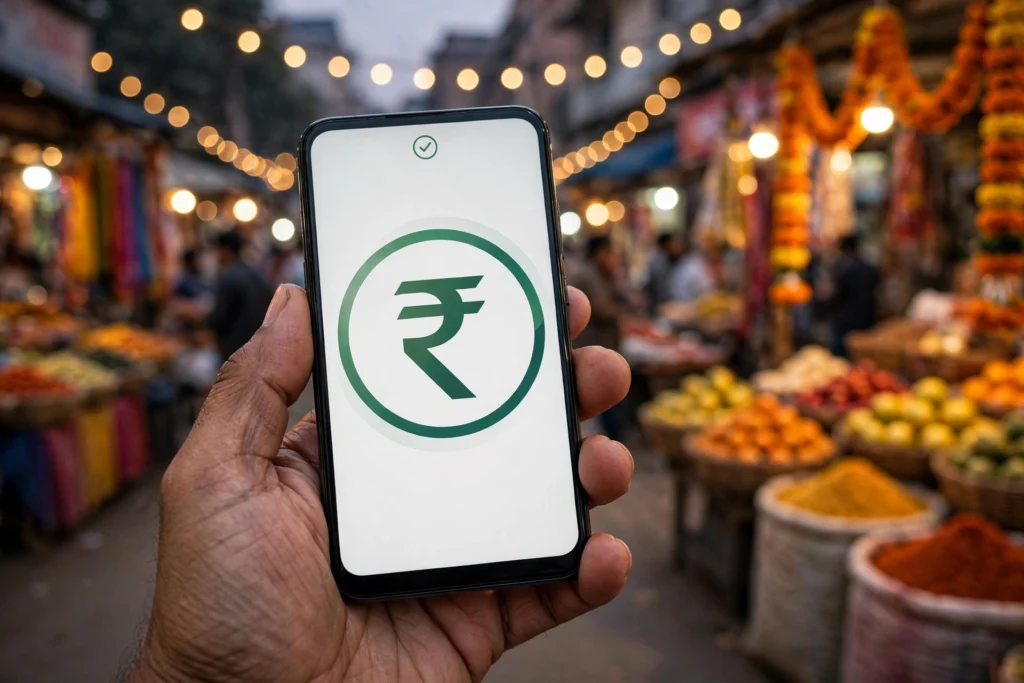
Markets swing on the uncertainty
Dalal Street is watching closely. On Friday, shares of Paytm climbed more than 2 per cent to Rs 1,682 and MobiKwik surged around 8 per cent to Rs 263 as investors bet that a deferral would protect transaction volumes and fee income in the near term. Pine Labs, meanwhile, traded lower amid the uncertainty over the fee framework.
Whether that relief rally holds depends entirely on what NPCI decides, and when.
What else is on the table
- A festive-season reprieve: Deferring the MDR to January 1, 2027 would keep UPI payments free for merchants through the festival season, which runs up to Christmas.
- Bigger exemption: Spared businesses could extend to those with annual turnover up to Rs 40 lakh.
- Higher transaction limits: Authorities are separately considering raising the daily UPI transaction limit for certain categories to Rs 2 lakh from Rs 1 lakh.
For now, the ball is in NPCI’s court. With October 15 just days away and no meeting on the calendar, merchants across India are refreshing their news feeds as nervously as investors are watching the ticker.
Frequently Asked Questions
Will I pay MDR charges as a UPI user?
No. The proposed MDR is a merchant discount rate paid by merchants to banks and payment companies processing the transaction. Consumers are explicitly exempt from the charge.
Which UPI transactions would attract the fee?
Eligible person-to-merchant transactions above Rs 2,000 would attract 0.4 per cent, capped at Rs 300. Bill payments, utilities, education and fuel would carry a flat Rs 5 above Rs 2,000.
Is the October 15 rollout confirmed?
Not anymore. Reports say NPCI is weighing a deferral to January 1, 2027, and a steering committee meeting expected on October 9 did not take place. No final decision has been announced.
Why is the fee controversial?
Merchant associations fear it will squeeze margins during the festive season and could be passed on to customers through higher prices. Fintech firms worry about volume drops and confusion over which categories the charge covers.
What happens next?
Everyone is waiting on NPCI. A fresh meeting date and an official statement on whether the October 15 date holds will decide whether merchants get a festive-season reprieve until January 2027.
The UPI MDR story is moving fast. Stay with informeia.com for updates as the decision lands.