Remember when wearing second-hand clothes was something families kept quiet about? That era is officially over. This week, Google India revealed that searches for “thrifting” have hit an all-time high in the country, with numbers staggering enough to make even fast-fashion giants sit up.
Over the past year, searches for “how to thrift” jumped 850 percent, while “thrift store near me” rose 600 percent. Even more telling, searches for “what is thrift store” shot up by 1,000 percent, which means a whole wave of first-time shoppers is discovering the category right now. This is not a niche hobby anymore. It is a full-blown shift in how India shops for clothes.
What the numbers say about India’s thrift obsession
The data tells a story of curiosity turning into action. An 850 percent jump in “how to thrift” suggests people want guidance, while the 600 percent rise in “thrift store near me” shows they are ready to walk into actual stores.
And what a market it could be. According to Mobility Foresights, India’s second-hand apparel market is projected to grow from USD 5.20 billion in 2025 to USD 17.90 billion by 2031, at a yearly growth rate of 22.8 percent.
Clothing sits at the centre of the boom. Jackets emerged as the most-searched thrift item over the past year, followed by tops, shoes and jeans. The hunt is spilling beyond wardrobes too: searches for thrifted tops, jeans and even furniture recorded breakout growth, suggesting Indians are extending the pre-loved habit to their living rooms.
From Bengaluru to Guwahati: where the hunt is hottest
The curiosity is not limited to the metros, though the big cities lead the pack. The top ten cities searching for thrift stores are Bengaluru, Delhi, Mumbai, Hyderabad, Chennai, Kolkata, Kochi, Dehradun, Guwahati and Jaipur. Google flagged Guwahati and Jaipur as breakout markets in particular, which hints that thrifting is moving well beyond the traditional fashion hubs.
Vintage clothing is riding the same wave: searches for vintage jerseys, sarees, t-shirts, jackets and bags have seen surges in the past month alone.
Why Gen Z is leading the charge
Talk to young thrifters and three reasons keep coming up: price, individuality and the planet.
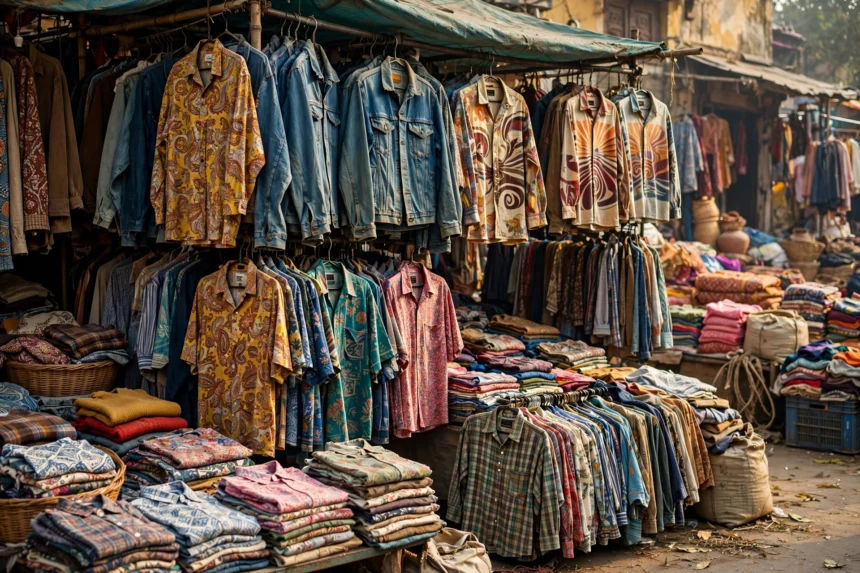
Affordability is the obvious draw. In Delhi’s Sarojini Nagar market, shoppers routinely walk away with three layered pieces for the price of one fast-fashion top. In Mumbai, Hill Road, Linking Road and Colaba Causeway offer lightweight shirts, vintage dresses and relaxed separates suited to the city’s humid climate. Unlike American thrift stores with neatly sorted racks, Indian thrifting is raw and kinetic: piles to dig through, no size charts, flexible pricing. The unpredictability is the charm.
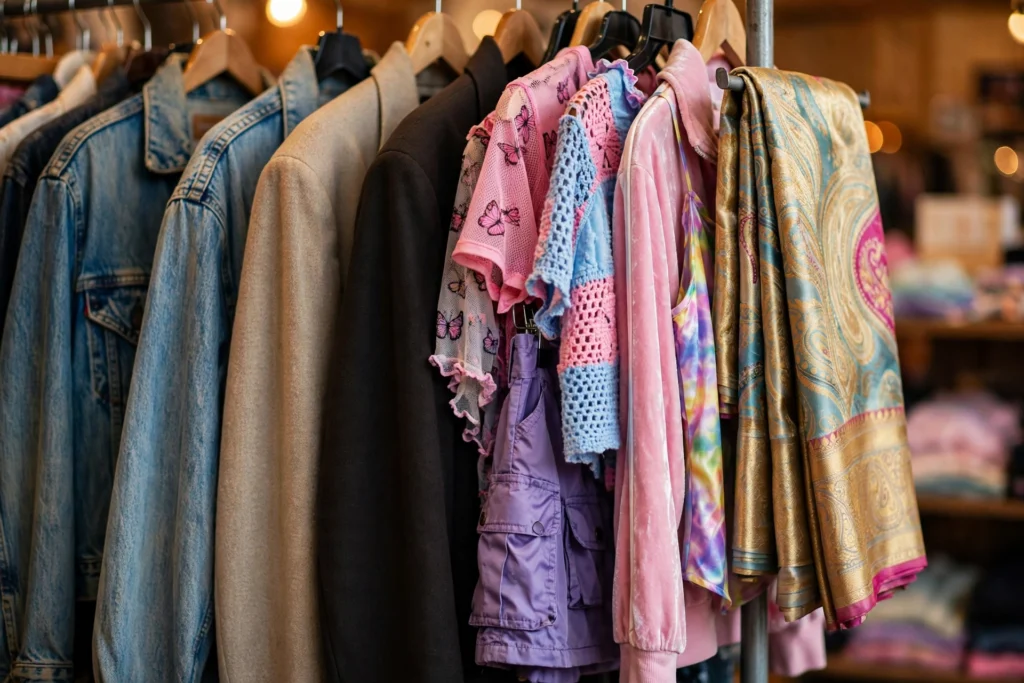
Individuality matters just as much. Vintage jackets, distinctive denim, graphic T-shirts and traditional garments let young shoppers build a personal style that does not look like everyone else’s feed. Several Indian thrift brands say many Gen Z customers walk in precisely because they know the environmental cost of fast fashion.
The digital layer has accelerated everything. Curated sellers on Instagram now run niche stores offering pre-styled bundles and vintage knits, which is thrifting with a taste filter for those who want the aesthetic without the digging.
How to start thrifting, the smart way
- Start with outer layers. Jackets, shirts and vests transform basic outfits instantly and are the easiest pieces to thrift well.
- Check fabric, not tags. Cotton, denim and linen age gracefully; a worn look on these fabrics is a feature, not a flaw.
- Size up for flexibility. Oversized pieces layer better, and fit in thrift piles is famously unpredictable, so try everything on.
- Wash and tailor. A small alteration, a hem here, a button there, elevates a thrift find from bargain to wardrobe staple.
- Bargain, but fairly. Street-market prices are flexible, but remember that rising thrift prices can push out lower-income buyers who genuinely depend on cheap second-hand clothes.
The road ahead for Indian thrifting
Still, the direction of travel is clear. A country that has always practised reuse through hand-me-downs and repurposed clothes has now given the habit a name, a hashtag and a market. The 850 percent jump in “how to thrift” is not just a search stat. It is a generation asking for directions to a different way of dressing.
FAQs
What does thrifting mean?
Thrifting means buying second-hand or pre-owned items, usually clothes, from thrift stores, flea markets or online sellers. In India it also covers vintage pieces and surplus-export finds sold in street markets.
Why is thrifting trending in India?
Google data shows searches for “thrifting” at an all-time high in India, driven by Gen Z’s interest in affordable, unique and sustainable fashion, plus the spread of curated thrift sellers on Instagram.
Which Indian cities are best for thrifting?
Bengaluru, Delhi and Mumbai lead search interest, with breakout growth in Guwahati and Jaipur. Delhi’s Sarojini Nagar and Lajpat Nagar, and Mumbai’s Hill Road and Colaba Causeway, are well-known hunting grounds.
Is thrifting in India cheaper than fast fashion?
Usually, yes. Shoppers often buy multiple pre-loved pieces for the price of one new fast-fashion item, though rare vintage finds can cost more.
Is second-hand clothing sustainable?
Buying pre-loved keeps garments in use longer and reduces textile waste.
Found a great thrift spot in your city? The hunt is half the fun, and the racks are waiting.