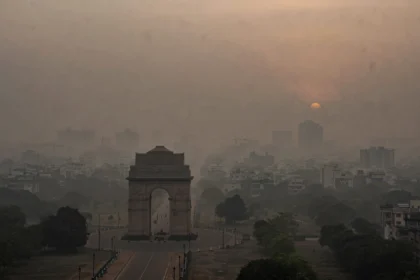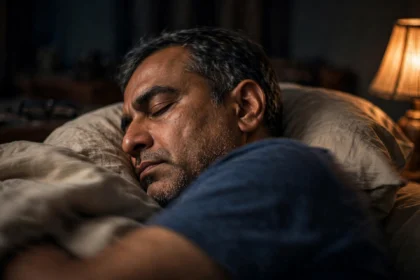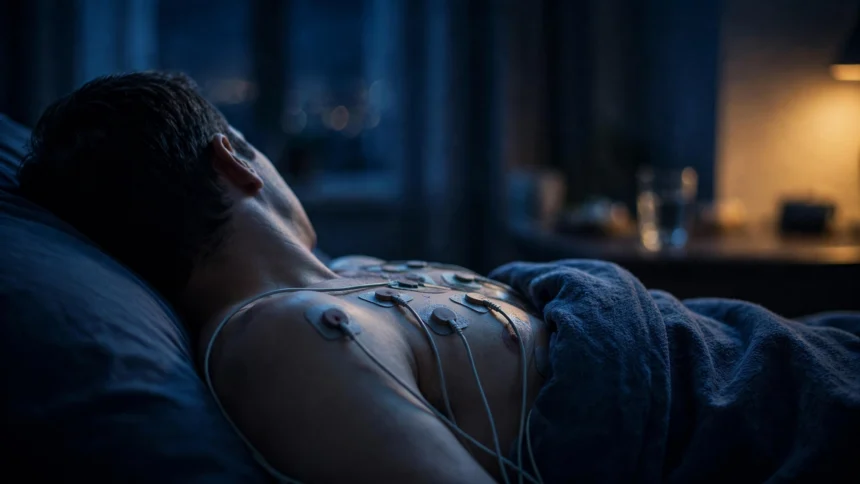
Snoring is a joke at family dinners in India. But at a major medical conference this week, some of the country’s top sleep doctors delivered a message nobody was laughing at: the country’s snoring habit could be quietly costing the economy as much as Rs 2-3 lakh crore every single year.
The warning came from the sidelines of the International Surgical Sleep Society (ISSS) 2026 conference, chaired by Dr Vikas Agrawal, widely regarded as the father of sleep surgery in India. The consensus among the specialists present was blunt. Sleep apnea, a condition that leaves people starved of oxygen all night, is fully treatable, and much of that staggering GDP loss could be recovered if treatment, including surgery, were brought under insurance coverage.
The numbers that shocked the conference hall
According to data discussed at the conference, roughly one-third of India’s population suffers from sleep apnea, and an AIIMS study puts the figure for working-age Indians alone at around 104 million people. The economic damage, the doctors said, comes from three directions: lost productivity, workplace and road accidents, and excess mortality.
- Untreated sleep apnea can cause 77 percent productivity drops, with roughly 13 extra sick days per worker every year
- Poor sleep is tied to 40 percent of India’s road accidents
- When extrapolated to over 100 million cases, the lifetime productivity loss from foregone wages and absenteeism alone tallies Rs 1-2 lakh crore a year, before counting cardiovascular disease and other linked conditions
The conference also drew a chilling connection to occupational safety. For medical residents working 80-hour weeks, error rates from sleep deprivation can mimic those of drunk driving. For pilots and heavy-vehicle drivers, the chain reaction can be fatal: the 2023 Mumbai crane collapse, which killed six people, was cited as an example of how fatigue can compound catastrophic failures.
“Fully treatable,” but ignored
Perhaps the most frustrating part of the story, according to the specialists, is that this is not an unsolvable problem. Obstructive sleep apnea can now be diagnosed precisely with in-clinic CT scans, sleep studies and sleep endoscopy. The surgical treatment is a day-care procedure, described by Dr Agrawal as painless, bloodless and even child friendly.
The conference was inaugurated via video by Justice Chandrachud, and was also attended by Padma Shri Milind Kirtane, Padma Shri Mohan Kameswaran and Dr Maria Suurna, President of the International Surgical Sleep Society.
Yet awareness remains the biggest hurdle. “It is not just the economic cost. It is also the quality of life cost of sleep apnea,” Dr Agrawal said, raising awareness that a blocked nose, habitual snoring and sleep apnea can be life threatening if not treated. These symptoms should not be ignored, he stressed.
What should you watch for?
Doctors say most Indians with sleep apnea never get diagnosed because the symptoms are normalised. Here are the red flags specialists want people to take seriously:
- Loud, chronic snoring, especially with pauses in breathing
- Waking up tired even after 7-8 hours in bed
- Daytime drowsiness, dozing off at work or behind the wheel
- Morning headaches and a dry mouth on waking
- High blood pressure that is hard to control, which can be linked to untreated apnea
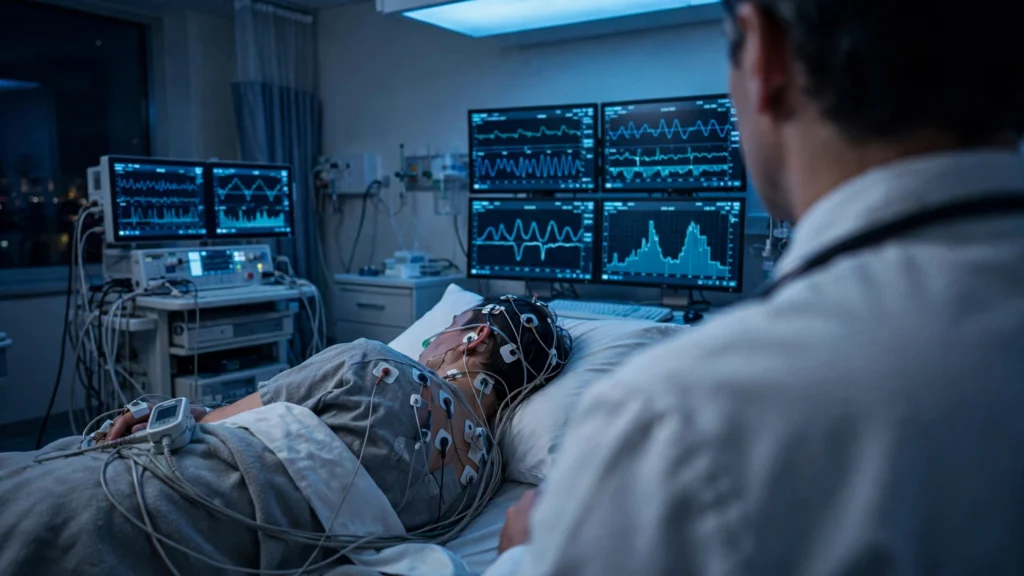
A proper diagnosis requires a sleep study, usually done overnight, which tracks breathing, oxygen levels and sleep stages. Treatment ranges from CPAP machines and oral appliances to surgical options that correct blocked airways.
FAQs
What is sleep apnea?
Sleep apnea is a disorder in which breathing repeatedly stops and starts during sleep, starving the body of oxygen. The most common type, obstructive sleep apnea, happens when throat muscles relax and block the airway.
How common is it in India?
According to conference data and an AIIMS study, around one-third of Indians suffer from it, including roughly 104 million working-age adults.
Is sleep apnea really dangerous?
Yes. Beyond fatigue, it raises the risk of heart disease, stroke, high blood pressure and diabetes, and is linked to 40 percent of India’s road accidents.
Is there a cure?
Doctors at the ISSS 2026 conference stressed that sleep apnea is fully treatable, through CPAP, oral devices or surgery, and called for insurance coverage of all treatment modalities.
When should I see a doctor?
If you snore loudly, feel exhausted despite sleeping enough, or doze off during the day, ask your doctor about a sleep study.
The next time someone in your family snores through the night, the ISSS doctors have a message: do not just turn up the fan. Get it checked. The country’s economy, quite literally, cannot afford the nap.