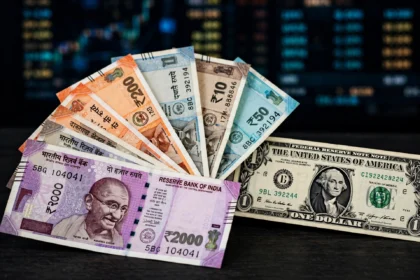
India’s biggest bank sale is finally happening. On Wednesday, the Union Cabinet cleared the sale of a 60.72 per cent stake in IDBI Bank to Canadian billionaire Prem Watsa’s Fairfax Financial Holdings for ₹52,878 crore, ending a disinvestment saga that has dragged on for four years and setting up the largest foreign direct investment ever in India’s financial sector.
The announcement, made after the Cabinet Committee on Economic Affairs (CCEA) meeting on October 14, marks one of the most significant banking transactions in the country’s history. Fairfax’s arm, 10955230 Canada Inc, emerged as the winning bidder out of two final contenders, agreeing to pay ₹81 per share.
How the deal is structured
The combined 60.72 per cent stake comes from two sellers. The government is offloading 30.48 per cent of its holding, which should fetch it more than ₹26,500 crore, while Life Insurance Corporation of India (LIC) is selling 30.24 per cent for over ₹26,300 crore. After the transaction closes, the government will retain a 15 per cent stake and LIC about 19 per cent.
What makes this deal interesting is how carefully both sides have been positioned. Neither the government nor LIC will have a seat on the bank’s board after the sale, and neither will carry any contingent liability. It is a genuine transfer of management control, which is exactly what Fairfax needs to run the bank on its own terms.
Finance Minister Nirmala Sitharaman was careful with the language, describing it as “strategic restructuring” rather than strategic disinvestment. “This process has been brought to its logical conclusion,” she said. “We are calling it strategic restructuring as we are still invested in IDBI Bank.”
Why Fairfax wanted this bank
Fairfax is no stranger to Indian banking. The Toronto-headquartered group already holds a stake in CSB Bank, a Kerala-based lender. But the IDBI acquisition is on a completely different scale and comes with strings attached: Fairfax will have to either merge its CSB Bank holding with IDBI Bank or exit it within two years.
The group also faces an open offer obligation to IDBI Bank’s minority shareholders, as required under takeover regulations, which means the final payout could go higher.
The winning bid of ₹81 per share was comfortably above the benchmark fair value of ₹75.99 per share determined by two independent valuation agencies, the government said. DIPAM Secretary Arunish Chawla noted that the offer was “above the benchmark price, as well as the fair value estimates of both the independent valuation agencies,” and was therefore judged reasonable.
A long road from PCA to profit
IDBI Bank’s journey to this point has been anything but smooth. The lender, once a development finance institution, suffered from poor asset quality for years and was placed under the Reserve Bank of India’s Prompt Corrective Action (PCA) framework in 2017.
In January 2019, LIC stepped in with a rescue, infusing ₹21,624 crore and taking preferential shares. The move pushed the government’s holding below 51 per cent, and the RBI reclassified IDBI as a private sector bank. Since then, the bank has steadily cleaned up its books, and today’s valuation tells the story of that turnaround.
The government first approved the divestment back in 2021 and invited expressions of interest in October 2022. Five parties came forward, four qualified, and two ultimately submitted techno-financial bids. Only parties that cleared the RBI’s “fit and proper” test and received security clearance from the Home Ministry were allowed to bid.

What it means for investors and employees
For the markets, this is a big signal. It is the government’s biggest strategic stake sale since Air India, and it puts India’s banking privatisation story back on the map at a time when the financial sector is attracting record foreign interest.
For the bank’s employees, the finance minister offered direct reassurance. She said the DIPAM Secretary had spoken to every union over the past year and a half. “Employees have nothing to worry,” she said, adding that service conditions are determined by the board and will remain unchanged. Pensions are paid out of a dedicated fund, and that mechanism will continue.
What happens next
- RBI clearance: The central bank’s “fit and proper” assessment of Fairfax is the next key hurdle for the proposed controlling shareholder.
- Open offer: Fairfax will need to make an offer to minority shareholders under takeover rules.
- CSB Bank decision: Fairfax must either merge CSB Bank with IDBI or exit the stake within two years.
- Timeline: The government expects the deal to close within the current financial year.
- LIC’s residual stake: LIC will need to dilute 4 per cent of its remaining stake within two years to retain ownership of LIC Housing Finance.
IDBI Bank shares jumped 13 per cent after the announcement, with CSB Bank also gaining around 6 per cent, as investors cheered the end of uncertainty. After four years of waiting, India’s banking sector finally has its headline deal.
FAQs
Who is buying IDBI Bank?
Prem Watsa’s Fairfax Financial Holdings, through its arm 10955230 Canada Inc, is acquiring a 60.72 per cent controlling stake for ₹52,878 crore.
How much does the government get from the sale?
The government expects more than ₹26,500 crore from its 30.48 per cent stake, while LIC gets over ₹26,300 crore from its 30.24 per cent. Both retain minority holdings of 15 per cent and 19 per cent respectively.
Is this the largest FDI in India’s financial sector?
Yes. Once completed, it will be the largest foreign direct investment in India’s financial sector and the government’s biggest strategic stake sale since Air India.
What was the per-share price?
Fairfax’s winning bid was ₹81 per share, above the independent benchmark valuation of ₹75.99 per share.
When will the deal close?
The government expects completion within the current financial year, subject to RBI’s fit and proper assessment and the mandatory open offer to minority shareholders.
Stay with Informeia for the latest on the IDBI Bank deal and every major business story shaping India’s economy.