A 66-year-old man from Ranchi travelled all the way to Rohtak with what looked like an ordinary fever. It turned out to be an infection around his pacemaker, and the treatment he received this week has made Haryana’s medical history. Doctors at the Pt BD Sharma Post Graduate Institute of Medical Sciences (PGIMS) have implanted a leadless pacemaker in him, the first time the procedure has been done at a government hospital in the state.
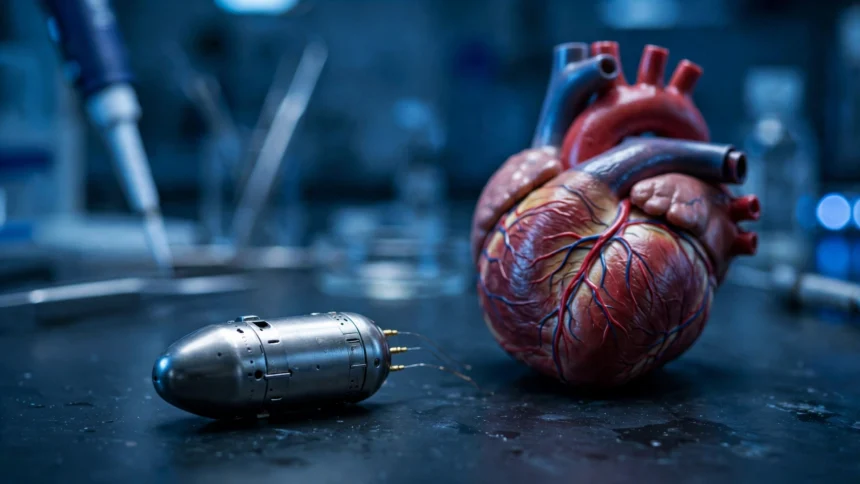
The device is roughly the size of a large vitamin capsule, shaped like a tiny bullet, and it sits directly inside the heart. There are no wires snaking through veins, no battery box tucked under the collarbone, and no surgical pocket cut into the chest. For a patient who had just battled a pocket-site infection, that last detail mattered most.
A fever that pointed to the pocket
The patient had originally received a conventional dual-chamber pacemaker on July 11 this year after being diagnosed with sick sinus syndrome, a condition in which the heart’s natural pacemaker misfires and the heart beats too slowly. Three months later, he walked into the cardiology OPD on October 7 with a fever that had already lasted ten days.
Medical evaluation traced the fever to an infection at the site of the pacemaker pocket. A PET-CT scan was done to map how far the infection had spread. The cardiology team admitted him, started intravenous antibiotics, and waited. Once the fever settled and his white blood cell count returned to acceptable levels, the infected pacemaker system was removed and he received another round of intravenous antibiotics.
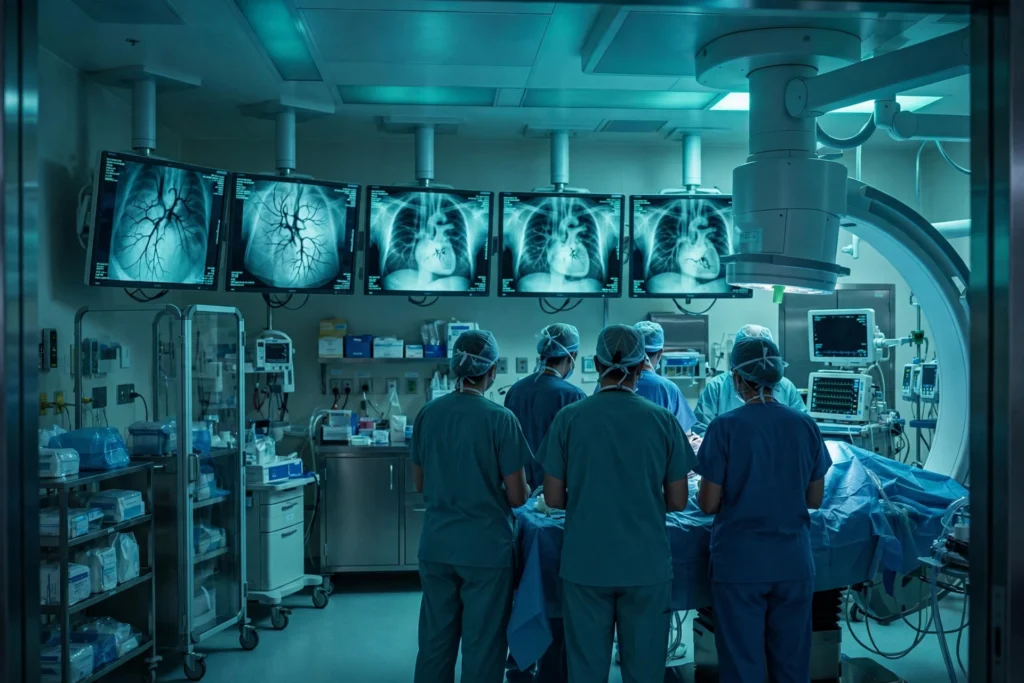
That is when the team sat down with the patient and his family and suggested a different route: a leadless pacemaker, implanted directly inside the heart through a catheter, with no pocket under the skin at all. The procedure was carried out on Wednesday and went through smoothly.
What exactly is a leadless pacemaker?
A conventional pacemaker has two parts: a pulse generator, the battery box about the size of a matchbox, and one or two long leads threaded through a vein under the collarbone into the heart’s chambers. The box sits in a pocket created by an incision below the collarbone, and the leads carry the electrical pulses that keep the heart beating steadily.
A leadless pacemaker packs the battery and the electronics into a single capsule roughly three centimetres long. It is threaded through a catheter inserted into the femoral vein in the leg and anchored directly into the right ventricle. There is no incision on the chest, no pocket, and no leads.
That design removes a whole family of problems. Leads can fracture over the years. Pockets can get infected, as this patient’s case showed. Chest incisions leave scars and need stitches and healing time. With the leadless version, patients can often go home the very next day, and the device’s battery is built to last around sixteen years, longer than most conventional pacemakers.
Why this first matters
Leadless pacemakers arrived in India in 2018 and have so far been implanted mostly in private hospitals in big cities, where the technology and the trained hands are concentrated. A government medical college pulling off the procedure changes the picture: it signals that advanced cardiac care is no longer fenced off by hospital type or pin code.
Dr Ashwani, head of the department of cardiology at PGIMS Rohtak, said the procedure was the first of its kind at a government healthcare institution in Haryana. The hospital’s cardiology team handled the full arc of the case, from diagnosing the pocket infection and clearing it with antibiotics to selecting and implanting the new device.
Who can get one, and who cannot
Leadless pacemakers are a strong option for several kinds of patients:
- People with slow heart rhythms such as sick sinus syndrome or bradycardia.
- Patients with permanent atrial fibrillation accompanied by a slow heart rate.
- Patients at high risk of infection, for whom avoiding a chest pocket is a clear advantage.
- Elderly patients with multiple health conditions who benefit from a shorter, less invasive procedure.
But the device is not for everyone. Most leadless pacemakers pace only a single chamber of the heart, so patients who need dual-chamber pacing will still need a conventional system. They also cost significantly more than traditional pacemakers, which puts them out of reach for many families unless covered by insurance or a government scheme. The call has to be made by a cardiologist, case by case.
FAQs
How is a leadless pacemaker different from a regular one?
A regular pacemaker has a battery box under the collarbone connected to the heart by wires called leads. A leadless pacemaker is a single small capsule placed directly inside the heart through a vein in the leg, with no wires and no chest incision.
Is the leadless option safer?
It removes lead-related complications such as fractures and dislodgement, and pocket-related infections, since there is no pocket. No device is risk-free, but studies and clinical experience show a strong safety profile for suitable patients.
How long does its battery last?
Around sixteen years in typical use, which is longer than most conventional pacemaker batteries. When it runs out, a new device can be implanted alongside the old one.
Can the device be removed if needed?
Yes, leadless pacemakers are designed to be retrievable with a catheter, though in many cases doctors simply switch the old device off and implant a new one next to it.
Who is eligible for a leadless pacemaker?
Typically patients with slow heart rhythms who need single-chamber pacing, including those with sick sinus syndrome or atrial fibrillation with bradycardia. A cardiologist decides based on the patient’s heart condition, anatomy, and overall health.
For the 66-year-old from Ranchi, the fever that brought him to Rohtak ended up giving him something better than a fix: a second chance with a device a fraction of the size of the old one, and no scar to show for it.