Artificial intelligence could soon be doing the rounds in India’s clinics, diagnostic labs and even remote ICUs. Speaking at a technology conclave in Varanasi on Sunday, Ministry of Electronics and Information Technology (MeitY) Secretary S. Krishnan said AI has the potential to make healthcare more accessible, affordable and effective, particularly for communities where doctors and hospitals are in short supply.
The conclave, titled “AI for Health & Assistive Technologies”, was jointly organised by the Software Technology Parks of India (STPI), which works under MeitY, and the Centre for Innovation, Incubation and Entrepreneurship (CIIE) at IIT BHU. It brought together policymakers, academics, healthcare professionals, researchers and startup founders to talk about how AI can solve practical, everyday health problems in India.
What the MeitY secretary said
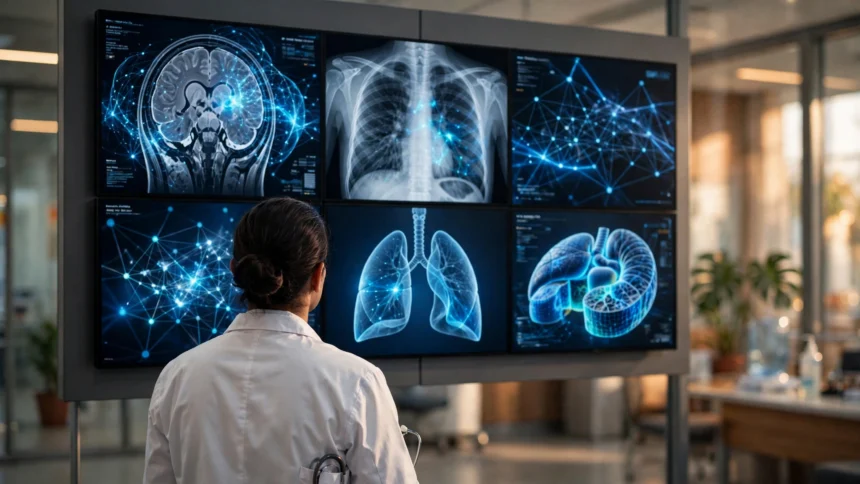
Delivering the keynote address, Krishnan listed the areas where AI is already showing real promise: disease screening, medical diagnostics, remote patient monitoring, remote ICU monitoring and AI-assisted surgical planning. The idea, he said, is to strengthen clinical decision-making so that even a small clinic in a remote district can benefit from the kind of analysis that was once possible only in large urban hospitals.
“Artificial intelligence can play an important role in making healthcare more accessible, strengthening clinical decision-making and improving service delivery, particularly for communities with limited access to healthcare services,” he said.
He also underlined that AI should not stay confined to computer science classrooms. The technology needs to be woven into teaching across disciplines, from medical science to public health, so that the next generation of doctors, researchers and administrators knows how to work with it.
Startups, institutions and the IndiaAI Mission
One of the big themes of the conclave was collaboration. Krishnan called for stronger links between IIT BHU, STPI, industry players and startups so that research does not remain stuck in labs but turns into scalable products that hospitals and patients can actually use.
He pointed to the support available under the IndiaAI Mission and other MeitY initiatives, which are meant to encourage startups and researchers to build AI applications for Indian conditions. The pitch is simple: the government will back innovation, but the innovation has to work for the country’s realities, from patchy connectivity in rural areas to the sheer scale of patients needing care.
STPI Director General Arvind Kumar echoed the point, saying India should build on its long experience in the information technology and IT-enabled services industry to drive indigenous AI innovation and entrepreneurship. STPI, he noted, also helps startups connect with investors, venture capital networks and market opportunities, so that good ideas can grow into sustainable businesses.
Why healthcare, and why now
India’s healthcare challenge is really a numbers problem. There are not enough doctors, specialists and diagnostic facilities for a population of over 1.4 billion, and the gap widens the further you travel from the big cities. This is where AI tools are finding their niche.
- Screening at scale: AI models can flag early signs of diseases like diabetic retinopathy, tuberculosis and certain cancers from scans and images, letting a handful of specialists cover far more patients.
- Remote care: With remote ICU monitoring and AI-assisted triage, critical patients in district hospitals can be watched over by specialists sitting in another city.
- Faster diagnostics: AI-powered analysis of X-rays, pathology slides and lab reports can cut down waiting times and reduce errors.
- Assistive technology: Speech, vision and mobility aids powered by AI can make daily life easier for people with disabilities.
What happens next
Conclaves like this one rarely change the world on their own, but they do set the tone. The message from Varanasi was that AI in Indian healthcare is moving from pilot projects to policy conversations. The real test will be whether startups working in this space can navigate regulation, earn the trust of doctors and patients, and build tools that work in a government district hospital as well as they do in a demo.
For now, the direction is clear. The government wants AI working in clinics, not just in code repositories, and it wants Indian startups to build it. If the collaboration the speakers called for actually materialises, the next wave of Indian health innovation may not come from a hospital at all, but from a startup demo at a conclave like this one.
FAQs
What did MeitY Secretary S. Krishnan say about AI in healthcare?
He said artificial intelligence can make healthcare more accessible, affordable and effective, improving clinical decision-making and service delivery, especially for communities with limited access to medical facilities.
Where was the AI for Health conclave held?
In Varanasi, organised by STPI under MeitY and the CIIE at IIT BHU, with policymakers, academics, doctors, researchers and startup founders in attendance.
What AI applications in healthcare were discussed?
Disease screening, medical diagnostics, remote patient monitoring, remote ICU monitoring and AI-assisted surgical planning, along with assistive technologies for people with disabilities.
What is the IndiaAI Mission?
It is the government’s flagship programme to support AI innovation in India, including funding and support for startups and researchers building AI applications for Indian conditions.
How will startups benefit?
Through MeitY’s initiatives and STPI’s networks, startups can access funding, investors, venture capital networks and market opportunities to build and scale healthcare AI products.
From Varanasi’s conclave halls to district hospitals across India, the hope is that AI will close the gap between where good healthcare exists and where it is needed.