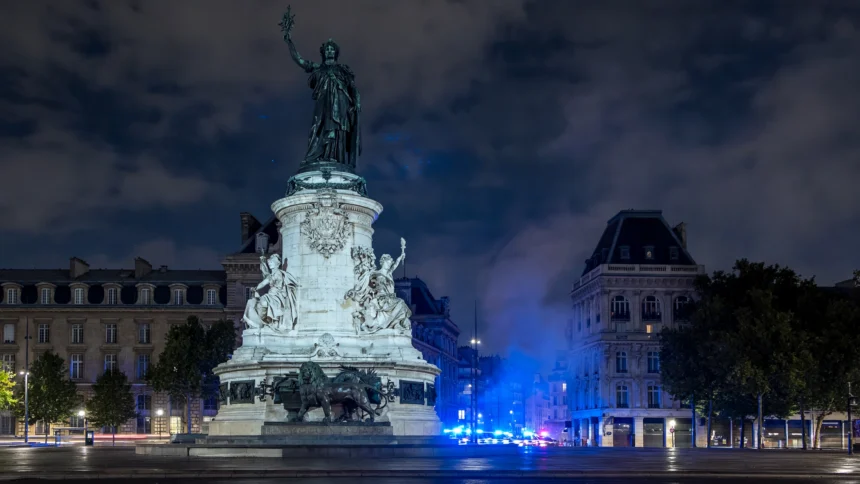
Paris spent its first quiet night in days on Monday, under a curfew that would have been unthinkable a month ago. At 11 p.m., police emptied the streets around Place de la République. A helicopter circled overhead, its searchlight sweeping the square where, just 48 hours earlier, looters had smashed shopfronts and torched cars. By dawn, the square was calm, and workers were pressure-washing graffiti off the central monument.
That calm is fragile, and France knows it. The curfews rolled out across Paris, Lille, Nice and other cities this week follow a weekend of violence that officials are calling the country’s worst rioting in years, with damage running into the hundreds of millions of euros and a political crisis unfolding six months before a presidential election.
What happened over the weekend
Nearly half a million people marched across France on Saturday, October 17, in rallies against the rising cost of living that had been building for four weeks. The demonstrations had started with high school students demanding better school facilities and grown into a nationwide movement joined by labour unions, with protesters angry about food, fuel and rent prices.
Around those peaceful marches, masked groups went on the rampage. Rioters clashed with police, set vehicles on fire, stormed town halls and looted shops across dozens of cities. In Limoges, the 19th-century city hall was engulfed in flames and its roof collapsed. Across France, an estimated 3,000 shops were damaged or ransacked over Saturday and Sunday.
The police response was massive. Around 60,000 officers were deployed on Saturday alone. Interior Ministry figures show 2,397 arrests on Saturday, with the nationwide total since the weekend crossing 2,500. Roughly 1,000 security personnel were injured in the clashes.
Curfews and the crackdown
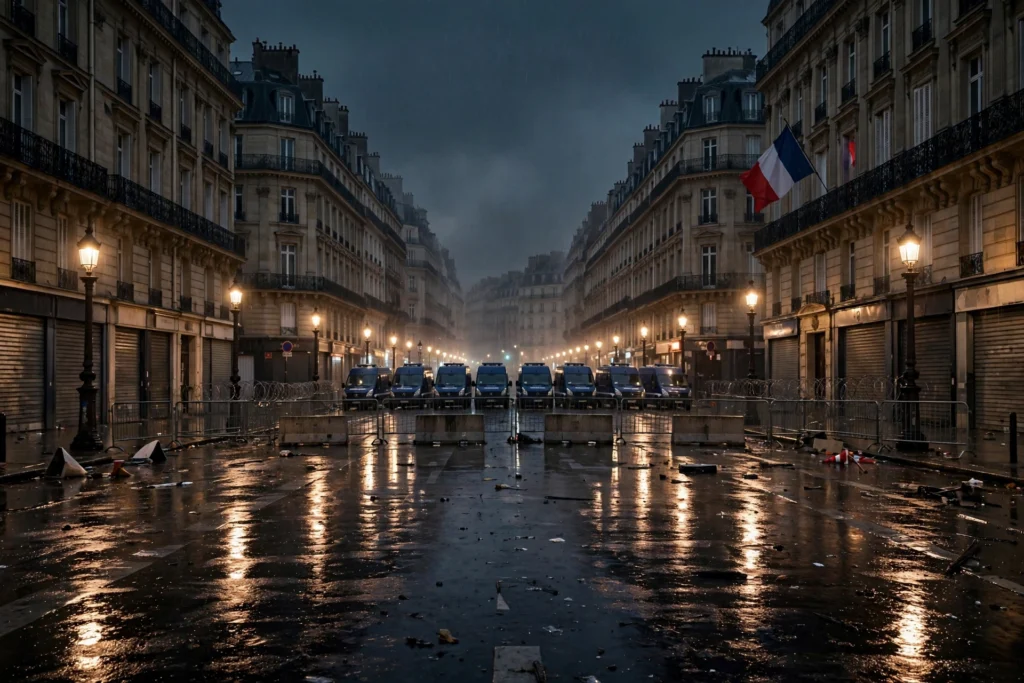
On Monday evening, the Paris police imposed an overnight curfew from 11 p.m. to 6 a.m. in central zones including Place de la République, where the weekend’s worst violence erupted, and Les Halles, the shopping hub looters had targeted. In about 10 areas around the presidential palace and parliament, all assemblies were banned from 8 p.m. Several provincial cities, including Lille and Nice, restricted nighttime movement, with Lille enforcing an 8 p.m. to 6 a.m. curfew.
The measures worked, at least on their first night. “The targeted curfews helped keep last night calm,” Prime Minister Sébastien Lecornu wrote on X on Tuesday morning, adding that curfews would be reimposed “wherever the situation requires,” decided locally by prefects and mayors.
Justice Minister Gerald Darmanin, speaking in Lille, said 149 people had been jailed nationwide as of Tuesday noon. More than 800 of those arrested have been sent before prosecutors, most facing immediate trial. In Lille, three men aged 20 to 25 with no criminal record were each sentenced to 10 months for looting a video game store.
Political fallout
The security lapses have shaken the government. Interior Minister Laurent Nuñez offered his resignation, but President Emmanuel Macron refused it and ordered an inquiry instead. The National Assembly is launching its own parliamentary inquiry into the October 17 violence and the policing strategy, with findings expected by the end of the year.
The timing could hardly be worse. France votes for a new president in the spring of 2027, and Macron is set to depart after a decade in office. The scenes at Place de la République carried echoes of the Yellow Vests movement that shook his first term: on Tuesday morning, workers used a crane to remove a giant fluorescent yellow vest draped over the square’s central statue, a deliberate reference to the 2018 fuel-price protests.
The economic bill is also rising. Marcos Alvarez, global head of insurance at Morningstar DBRS, estimated the total cost of the riots should remain below 1 billion to 1.2 billion euros, assuming no further violence, calling it “a manageable earnings event rather than a capital event” for the country’s major insurers.
What happens next
- Tuesday night: curfews will be reimposed in areas where local authorities judge the risk remains high.
- October 24: Yellow Vests organisers have called a “second act” mobilisation, raising the risk of fresh unrest.
- November 5: unions have set new nationwide demonstration dates, keeping the protest calendar active.
- End of year: the National Assembly inquiry is expected to deliver findings on the violence and the police response.
Frequently asked questions
Which parts of Paris are under curfew? Central zones including Place de la République and Les Halles, 11 p.m. to 6 a.m. Assemblies are banned from 8 p.m. near the presidential palace and parliament.
How many people have been arrested? More than 2,500 nationwide since the weekend, with 2,397 arrests on Saturday alone.
What started the protests? The movement began about four weeks ago with students demanding better school facilities, then grew as unions joined in over rising food, fuel and housing costs.
Is a state of emergency possible? The prime minister said he would not exclude it if unrest returns, though the government is relying on local curfews for now.
How bad is the damage? Around 3,000 shops were damaged or looted nationwide, with the total cost estimated below 1 to 1.2 billion euros.
France has seen street movements before, but the scale of this one has given the country a jolt. Whether the curfews hold the line through the coming protest dates will decide how deep this crisis runs.