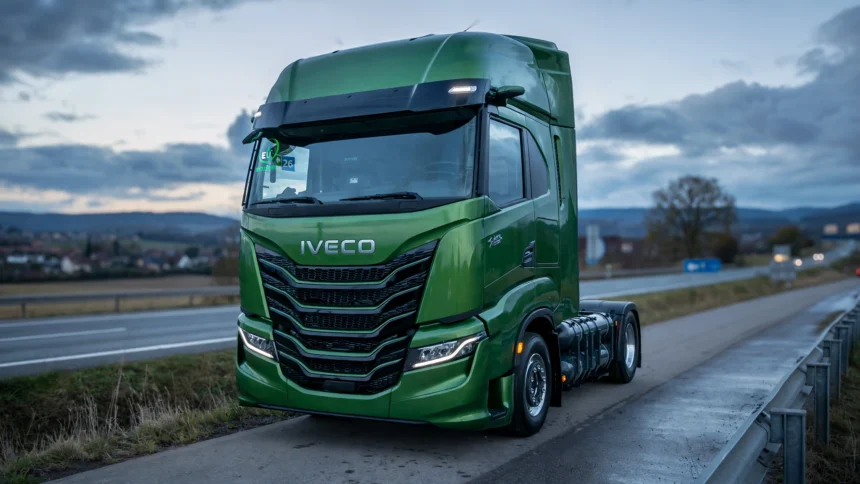
Turin and Mumbai are watching the same clock today. Tata Motors’ €14.40-a-share offer for Italian truckmaker Iveco closes on Monday, October 26, and the final hours will decide whether one of India’s biggest cross-border bets in years goes through or stalls at the last hurdle.
The arithmetic, at last count, looks tight. Only about 35 per cent of Iveco’s shares had been tendered as of October 22, against the 80 per cent acceptance threshold Tata needs. Tata Motors says that is normal: in a tender offer, most shareholders wait until the final day or two. Today will prove whether that confidence is justified.
“As is typically seen in tender offer processes, a significant proportion of shares tend to be tendered towards the very end of the acceptance period, particularly in the final 24 to 48 hours,” managing director Girish Wagh told analysts. “We therefore remain confident of a successful completion of the acquisition.”
The deal on the table
Tata Motors announced its plan to acquire Iveco in July 2025. The all-cash offer, made through TML CV Holdings B.V., covers Iveco’s commercial vehicle business and excludes its defence operations, sold separately to Leonardo in a deal that closed in March 2026.
The price was revised once. On October 9, Tata raised its bid to €14.40 per share from €14.10, saying the increase compensated shareholders for a four-month delay in securing regulatory approvals. Wagh has since described €14.40 as last and final, ruling out any further increase even under pressure from minority shareholders.
At that price, the offer covers 271,215,400 common shares, a maximum payout of about €3.91 billion. If it succeeds, the combination would create a commercial vehicle group spanning India, Europe and the Americas, with roughly €21 billion in annual revenue and sales of more than 590,000 vehicles.
Why 80 per cent matters
The threshold itself was the subject of a crucial vote earlier this month. At an extraordinary general meeting in Amsterdam on October 16, Iveco shareholders approved all board-proposed resolutions, including cutting the minimum acceptance threshold from 95 per cent to 80 per cent.
Exor, Iveco’s largest shareholder, has irrevocably committed to tender shares representing about 27.06 per cent of the common shares and 43.19 per cent of the voting rights.
Three investors, Davidson Kempner, Syquant Capital and Petrus Advisers, collectively hold about 20.4 per cent of Iveco’s common shares, according to reports. If none of them tender, their combined holding alone could keep Tata short of the threshold.
The holdouts and their case
Petrus Advisers has been the most vocal critic. The group, which says it holds about 3.8 per cent of Iveco’s common shares, argued that the original €14.10 offer undervalued the company. It has since put its estimate of fair value at around €18 per share, roughly 25 per cent above Tata’s bid, and has urged shareholders not to tender at the current price.
“Our ask is a simple one: fair value for all of Iveco’s shareholders,” Petrus said in a September statement.
Italy’s industrial question
Beyond the shareholder maths, the deal has a political dimension in Italy. Industry Minister Adolfo Urso has pressed Tata for a concrete industrial plan for Iveco’s Italian plants. Iveco has outlined investments of more than €76 million across four Italian factories, while unions seek employment safeguards beyond two years.
Tata’s counter-argument is its own track record: Jaguar Land Rover, acquired in 2008 and turned around into a global luxury success. Analysts say the parallel is real but not exact.
“Tata Motors has demonstrated through Jaguar Land Rover that it can acquire and turn around a global automotive business. Iveco presents a similar opportunity, but weak European demand, acquisition debt and integration costs pose significant risks,” said Kranti Bathini, director of equity strategy at WealthMills Securities.
What happens next
- If the 80 per cent threshold is crossed: settlement is expected on October 30, and Tata can move to integrate Iveco’s truck, bus and powertrain operations.
- If it falls short: the offer could be extended, with a possible reopening window scheduled for November 2 to 6.
- For Tata Motors shareholders: the outcome shapes the company’s global commercial vehicle footprint and its balance sheet.
- For European rivals: a completed deal creates a new heavyweight alongside Traton, Volvo and Daimler Truck.
For now, the market’s attention is on a single number: how many shares arrive before the window shuts tonight.
FAQs
What is Tata Motors offering for Iveco?
€14.40 per share in cash, raised from €14.10 on October 9 and described by Tata as last and final. The maximum payout is about €3.91 billion.
When does the Iveco tender offer close?
The acceptance period runs from September 7 to October 26, 2026. Settlement is expected on October 30 if the deal completes.
What acceptance threshold must Tata Motors reach?
80 per cent of Iveco’s common shares, after shareholders voted on October 16 to lower the threshold from 95 per cent.
Why are some Iveco investors opposed?
Petrus Advisers argues the offer undervalues Iveco, estimating fair value at around €18 per share.
Does the deal include Iveco’s defence business?
No. The defence business was sold separately to Leonardo, and that transaction closed in March 2026.
Tata Motors’ Iveco bid is the biggest test yet of its global commercial vehicle ambitions. This is a developing story and will be updated as the final tender numbers emerge.