

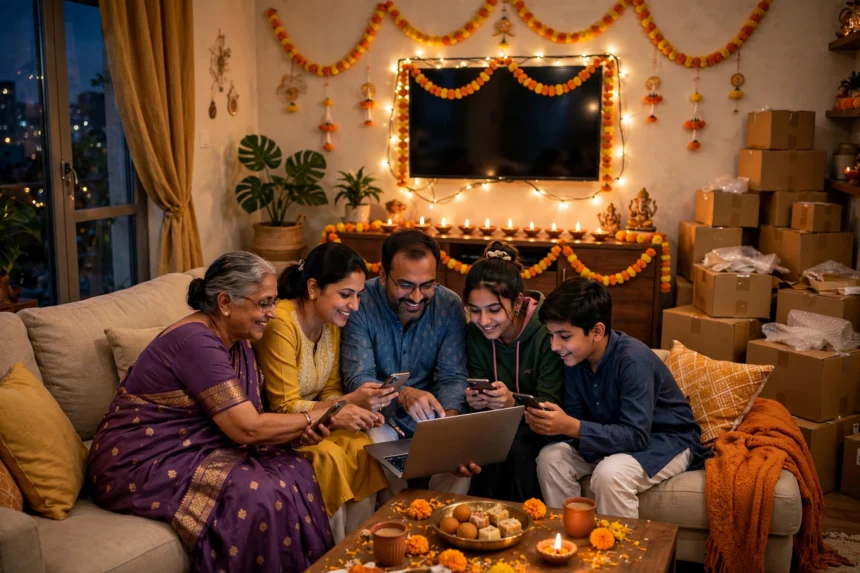
This year’s Diwali season shopping rush began with a bang. Within hours of the festive sales going live, India’s biggest e-commerce platforms reported numbers that surprised even their own executives. Flipkart, Amazon, Myntra and Meesho all say their 2026 festive events opened stronger than ever before, with smaller towns leading the charge and premium products flying off the virtual shelves.
- The small-town surge
- Going premium, on EMI
- Speed is the new discount
- What the season could be worth
- Frequently asked questions
- When did the 2026 festive sales begin?
- Which platform reported the strongest opening?
- Why is demand from smaller towns so high this year?
- Are quick commerce platforms part of the festive sales?
- How much could online festive sales grow this year?
The data tells a striking story. Flipkart recorded 6.3 million concurrent users in a single minute during the first hour of its Big Billion Days sale. Amazon says the opening of its Great Indian Festival was the biggest in the event’s history, with products ordered rising over 100 percent year on year. Myntra saw demand surge four times over normal levels in the first 24 hours, while Meesho’s Day 1 orders jumped around 75 percent compared to last year.
The small-town surge
The most interesting part of this year’s numbers is not how much people bought, but where they bought it from. Nearly one in two visits on Flipkart in the opening hour came from Tier-3 towns and beyond, and customers outside the metros accounted for roughly 60 percent of total demand. Amazon logged over 440 million visits between October 8 and 9, with more than 72 percent coming from beyond the top nine metros.
Meesho, which built its business around value-conscious buyers in smaller cities, saw Tier-3-plus customers on its branded storefront nearly triple. This is no longer a metro phenomenon. The festive sale has become a truly national event, with shoppers from every pin code placing orders, as Amazon put it.
Local languages, voice search and video shopping played a big role in pulling in these buyers. Flipkart said 64 percent of its voice search users came from Tier-2-plus markets, with lifestyle and makeup among the most searched categories. Over 1,000 hours of live commerce and more than five lakh short-format videos drew 12.7 million users to Flipkart’s video experiences during early access.
Going premium, on EMI
While discounts pulled people in, the carts looked more aspirational than bargain hunting. Premium Android smartphone sales on Amazon grew 70 percent year on year in the opening phase. MacBook Neo laptops sold at 65 times a regular day’s rate, and premium wearables clocked 80 times their usual daily sales. Televisions of 55 inches and above made up 65 percent of all TVs sold, and large appliance sales were 50 times a normal day’s level.
Flipkart reported 30 percent year-on-year growth in large appliance sales in the opening hour, with tablet sales up 73 percent. The company also noted strong demand for both premium smartphones and entry-level 5G devices, showing that the market is growing at both ends at once.
Much of this premium buying was powered by financing. Amazon said one in two customers used EMI options in the first 12 hours, while one in three units purchased came with cashback offers. Shoppers are no longer waiting to save up for big-ticket items. Exchange offers, no-cost EMI and instant bank discounts have turned the festive sale into the country’s biggest credit-fuelled shopping window.
Speed is the new discount
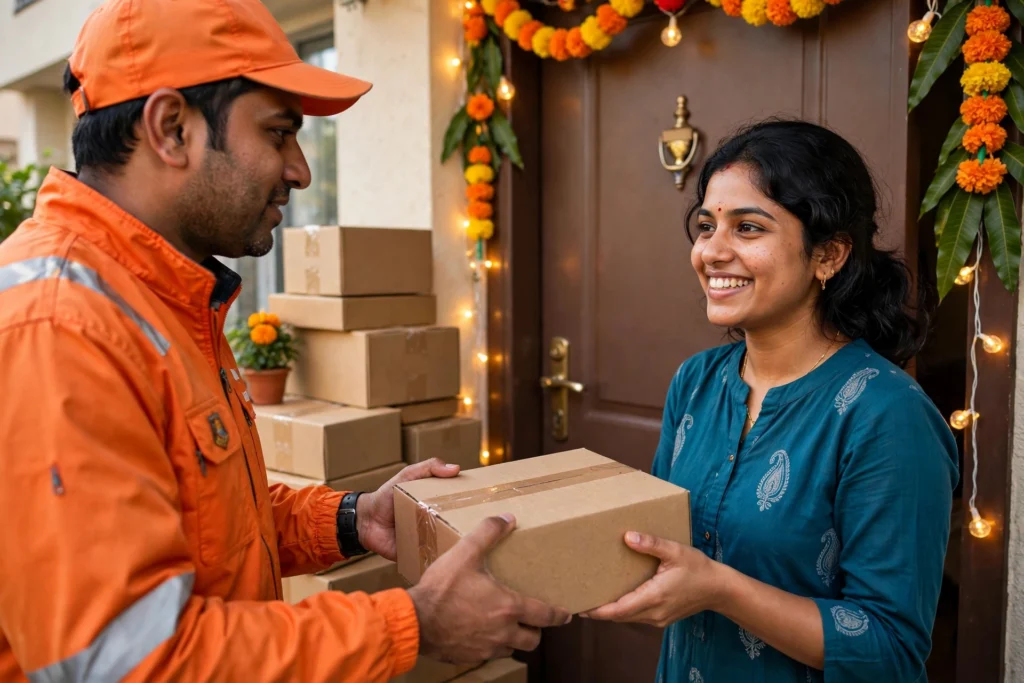
Quick commerce has changed the rules of the festive sale. Flipkart Minutes, the company’s ultra-fast delivery service, saw order volumes rise 3.5 times over regular days, with new customers growing 11 times in the first hour. During early access, an iPhone 17 reached a customer in New Delhi in just 3.4 minutes through the service.
The numbers suggest shoppers now expect festive deals with near-instant delivery. At peak, Flipkart sold over 1,600 men’s perfume units a minute. Meesho’s orders peaked at more than 75,000 a minute within 15 minutes of its sale going live. The sale is no longer just about the lowest price. It is about the lowest price, right now, at your doorstep.
What the season could be worth
Early indicators point to a blockbuster season for online retail. Online festive sales are projected to grow as much as 29 percent this year, reaching up to Rs 1.55 trillion from Rs 1.20 trillion in 2025, according to Datum Intelligence. Quick commerce, which promises delivery within minutes, is expected to account for about 16 percent of festive sales, up from 12 percent last year.
Saurabh Srivastava, Vice President at Amazon India, said early customer engagement, order volumes and delivery speeds had exceeded the company’s expectations. Discounts, bank offers, exchange programmes and financing options were helping customers make purchases across cities and smaller towns, he added.
The sellers are celebrating too. On Flipkart’s early access day, 51 percent of transacting sellers recorded twice the sales of regular days. Sellers in Tier-2-plus India, including MSMEs and small businesses, grew 2.9 times, with Bhiwandi, Panipat, Tirupur and Hisar leading the growth.
Frequently asked questions
When did the 2026 festive sales begin?
Amazon’s Great Indian Festival opened to all customers on October 8, 2026. Flipkart’s Big Billion Days started early access on October 8 and opened for all shoppers on October 9. Myntra’s Big Fashion Festival began on October 8, and Meesho’s Mega Blockbuster Sale went live on October 9.
Which platform reported the strongest opening?
Amazon called its opening the biggest in the history of the Great Indian Festival, with products ordered up more than 100 percent year on year. Flipkart reported 6.3 million concurrent users in a minute. All platforms reported record or near-record starts, so there is no single winner yet.
Why is demand from smaller towns so high this year?
Better internet access, regional language interfaces, voice search, affordable 5G devices and easy EMI financing have pulled millions of first-time shoppers from Tier-2 and Tier-3 cities into online festive shopping.
Are quick commerce platforms part of the festive sales?
Yes. Quick commerce is expected to account for about 16 percent of festive sales this year, up from 12 percent in 2025. Flipkart Minutes saw order volumes rise 3.5 times in the opening phase.
How much could online festive sales grow this year?
According to Datum Intelligence, online festive sales could grow up to 29 percent this year to reach Rs 1.55 trillion, up from Rs 1.20 trillion in 2025.
This Diwali, the checkout page has become India’s loudest economic indicator. The next few weeks will show whether the opening-day records translate into a record season. For now, the message from the numbers is clear: India is shopping online like never before, and it is not waiting for anyone to catch up.