Bajaj Auto has delivered the strongest quarter in its history. The Pune-based two-wheeler maker on Tuesday reported a 35 percent jump in standalone profit after tax to Rs 3,354 crore for the September quarter, as revenue crossed Rs 20,000 crore for the first time. Exports did most of the heavy lifting, while the electric Chetak scooter kept gathering pace at home.
The result beat market expectations. Analysts had pencilled in a profit of around Rs 3,168 crore, according to data compiled by LSEG and reported by Reuters. Bajaj Auto shares rose about 2.5 percent to Rs 10,331 in afternoon trade on the NSE after the numbers landed.
A record quarter in numbers
Standalone profit after tax rose 35.2 percent year on year to Rs 3,353.76 crore, from Rs 2,479.74 crore in the same quarter last year. Revenue from operations grew 34 percent to Rs 20,003.43 crore, from Rs 14,922.05 crore a year ago. The company said revenue has now doubled over the past three years.
- Profit after tax: Rs 3,354 crore, up 35 percent year on year
- Revenue: Rs 20,003 crore, up 34 percent, crossing Rs 20,000 crore for the first time
- EBITDA: above Rs 4,000 crore, up more than 37 percent, with operating margin steady at 20.9 percent
- Total vehicle sales: 15,48,884 units, up 19 percent
- Consolidated profit: Rs 3,436 crore, up nearly 62 percent, on consolidated revenue of Rs 25,126 crore
Profit before tax rose 35 percent to Rs 4,457.49 crore. Total expenses climbed 33 percent to Rs 15,965.28 crore, driven by higher production volumes and raw material costs, which rose to Rs 13,227.93 crore from Rs 9,717.71 crore a year earlier.
Exports carried the quarter
The clearest story in the results is the gap between overseas demand and the domestic market. Total export billings across two-wheelers and commercial vehicles reached 7,78,528 units, up 40 percent from a year ago, led by recoveries in African and Latin American markets.
Export two-wheeler billings surged 43.21 percent to 6,76,545 units. Domestic two-wheeler sales, by contrast, grew just 1.82 percent to 6,07,416 units. Two-wheeler sales overall rose 20 percent to 12,83,961 units, while commercial vehicle volumes expanded 17 percent to 2,64,923 units.
Favourable currency movements also helped, the company said, alongside record volumes, a better product mix and pricing measures. Revenue growth topped 20 percent across powertrains, markets and vehicle categories, including two-wheelers and three-wheelers.
Chetak and premium bikes add momentum
The electric portfolio, made up of Chetak electric scooters and electric three-wheelers, closed in on 2,00,000 units in the quarter and contributed about one-third of domestic sales revenue. Chetak quarterly revenue crossed Rs 2,000 crore, with sales volumes more than doubling year on year despite the supply constraints the company flagged.
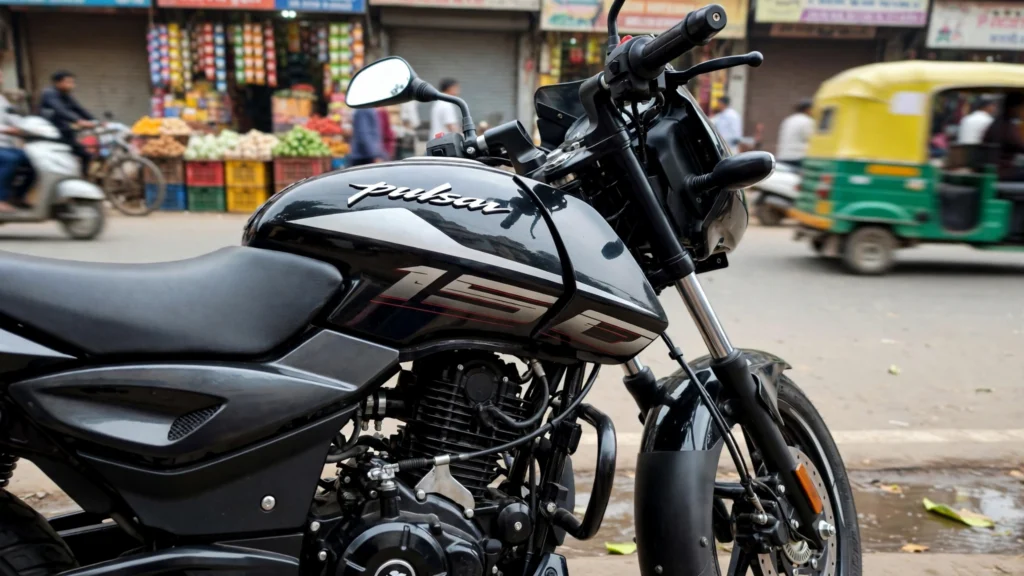
The premium end also moved up a gear. Combined domestic revenues for the KTM and Triumph motorcycle brands grew 45 percent year on year, on volumes of more than 40,000 units. That mix of mass-market scale, premium bikes and electric scooters is now doing much of the work in holding margins steady.
For the first half of the financial year ended September 30, 2026, standalone revenue rose 35.41 percent to Rs 37,247.15 crore and standalone net profit grew 38.48 percent to Rs 6,336.60 crore. The company held surplus cash of Rs 15,500 crore at the end of September, after capital expenditure, growth investments and shareholder payouts through dividends and buybacks.
Costs held in check, margins steady
Holding the operating margin at 20.9 percent mattered as much as the headline growth. Input costs rose sharply and commodity prices stayed volatile through the quarter, yet EBITDA still crossed Rs 4,000 crore. The company credited pricing, product mix and currency gains for protecting profitability while volumes scaled up.
The test from here is whether the domestic market picks up. Exports have carried this quarter, but a recovery in home demand would take some pressure off overseas markets. The other watchpoint is the electric business: Chetak demand is clearly there, and easing supply constraints would let Bajaj Auto convert more of it into sales in the coming quarters.
For now, though, the September quarter sets a high bar. Record revenue, record profit and a cash pile of Rs 15,500 crore give Bajaj Auto room to invest, and the export engine that powered this result shows little sign of slowing.
FAQs
When did Bajaj Auto announce its Q2 results?
Bajaj Auto reported its September quarter results on Tuesday, October 27, 2026.
How much profit did Bajaj Auto make in Q2 FY27?
Standalone profit after tax rose 35.2 percent to Rs 3,353.76 crore, from Rs 2,479.74 crore a year earlier.
What drove the strong quarter?
Exports were the main driver, with total export billings up 40 percent, supported by strong electric vehicle sales, premium KTM and Triumph volumes, favourable currency movements and pricing measures.
How did the Chetak electric scooter perform?
Chetak quarterly revenue crossed Rs 2,000 crore and sales volumes more than doubled year on year, with the wider electric portfolio nearing 2,00,000 units in the quarter.
How did Bajaj Auto shares react?
Shares rose about 2.5 percent to Rs 10,331 on the NSE in afternoon trade after the results were announced.
Bajaj Auto will hope the export momentum and electric growth carry into the second half. The numbers suggest it starts that half from its strongest position yet.