New Delhi woke up on Wednesday to a decision that could quietly change how India moves its goods. The Union Cabinet has cleared a Rs 10,000 crore scheme to build shipping containers at home, at a scale the country has never attempted before. The aim is simple to state and hard to deliver: make India a serious container maker, not just a container user.
The Container Manufacturing Promotion Scheme, approved on October 28, will run up to financial year 2039-40. It was first announced in the Union Budget for 2026-27. Now, with Cabinet approval in place, the focus shifts from announcement to factories, orders and delivery.
What the Cabinet cleared
The scheme will support new container manufacturing facilities and the expansion of existing units. It is designed to create a globally competitive manufacturing base in India and to strengthen maritime and logistics supply chains.
The headline target is ambitious. India aims to raise annual container manufacturing capacity nearly tenfold, to 7.5 lakh twenty-foot equivalent units, or TEUs. A TEU is the standard measure used for container capacity, based on a 20-foot container. Reports put current Indian capacity at roughly 70,000 to 75,000 TEUs a year, which shows how large the jump would be if the target is reached.
Information and Broadcasting Minister Ashwini Vaishnaw announced the decision after the Cabinet meeting, chaired by Prime Minister Narendra Modi. He underlined the strategic case for the move, noting that about 95 percent of global container production is concentrated in one country. Developing India as an alternative manufacturing destination, he said, would diversify global supply chains, improve resilience and strengthen India’s maritime and logistics infrastructure.
How the Rs 10,000 crore will work
The scheme has three parts, and most of the money is tied to actual production rather than promises.
- Operational expenditure assistance, Rs 8,891 crore: Support for containers manufactured in India to global shipping standards and sold by eligible manufacturers. The idea is to bridge the cost gap with imported containers and help Indian-made boxes compete on price.
- Interest subvention assistance, Rs 859 crore: Support of 3 percent per annum on eligible term loans for setting up new greenfield facilities or expanding existing brownfield capacity.
- Testing and certification assistance, Rs 150 crore: Support for common facilities, including dynamic longitudinal impact testing, which containers must pass to meet international requirements.
The design rewards makers who build plants and then produce and sell containers that meet global standards. That matters because a container must survive stacking, lifting, sea journeys and repeated handling, and buyers will only trust it if testing and certification are credible.
Why containers, and why now
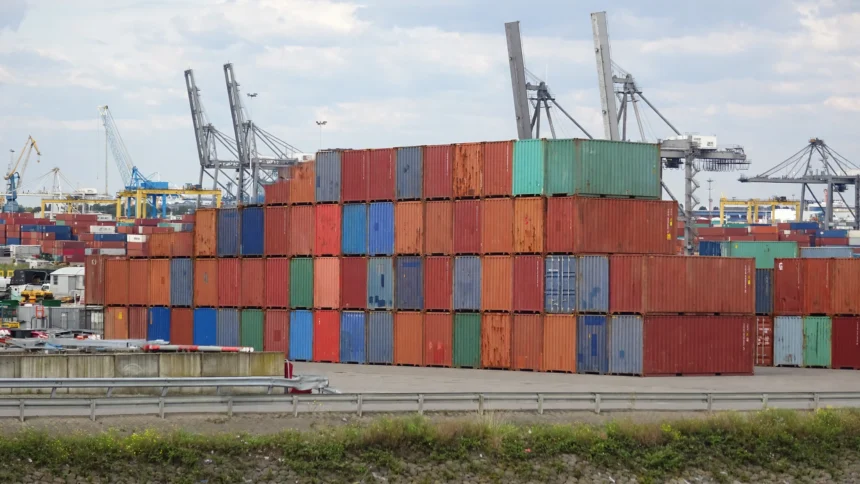
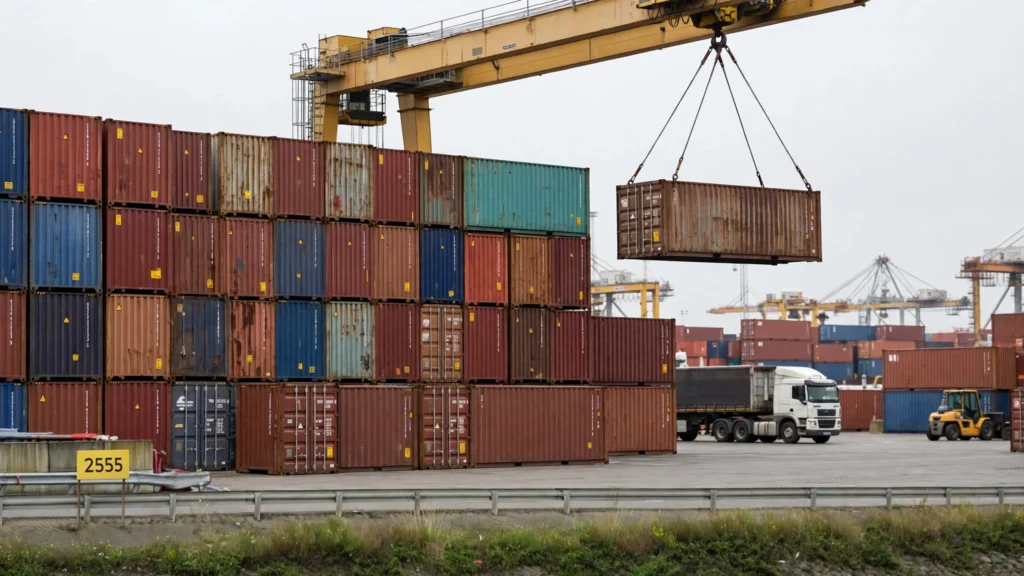
Containers are easy to overlook and hard to replace. Almost everything that moves by sea, from electronics and garments to machinery and food products, travels in them. When routes are disrupted, ships take longer detours, boxes pile up in the wrong ports and availability tightens. Recent global conflicts have disrupted maritime trade in exactly that way, forcing longer journeys and putting pressure on container availability.
India’s bet is that domestic capacity will act as a buffer, giving exporters fewer sudden shortages and importers more predictable supply. Over time, the government also wants India to become an export hub for containers.
What it could mean for jobs and factories
The government estimates the scheme will generate about 3,000 direct jobs and more than 50,000 indirect jobs. Those indirect jobs are expected to come through ancillary industries that supply container makers, including corner castings, specialised steel, wooden frames and paints.
None of this is guaranteed by approval alone. Manufacturers will still need land, power, skilled workers, port access and buyers willing to place orders at competitive prices.
What to watch next
The next signals will be practical rather than ceremonial. Watch for the detailed guidelines on eligibility, the first manufacturers to seek support, and the locations chosen for new plants. Watch also for orders from shipping lines and exporters, because a factory without buyers is only a building.
Capacity figures will be the clearest test. If annual production moves steadily toward 7.5 lakh TEUs, and Indian-made containers start appearing regularly in export and import trade, the scheme will have done its job. For now, the Cabinet has put serious money behind a simple idea: India should make more of the boxes its trade depends on.
FAQs
What is the Container Manufacturing Promotion Scheme?
It is a Rs 10,000 crore scheme approved by the Union Cabinet to build a competitive container manufacturing industry in India, support new and existing plants, reduce import dependence and strengthen supply chains.
What is the capacity target?
The scheme aims to raise India’s annual container manufacturing capacity nearly tenfold to 7.5 lakh TEUs.
How long will the scheme run?
The budgetary outlay is up to financial year 2039-40. The scheme was announced in the Union Budget for 2026-27 and approved by the Cabinet on October 28, 2026.
How many jobs could it create?
The government estimates about 3,000 direct jobs and more than 50,000 indirect jobs, including work in ancillary industries such as specialised steel, corner castings, wooden frames and paints.
Why does container manufacturing matter for India?
Containers carry most seaborne trade. Making more of them at home should improve availability, reduce dependence on imports, support exporters and make supply chains more resilient when global routes are disrupted.
Informeia will track the scheme’s guidelines, factory announcements and production figures as they emerge.