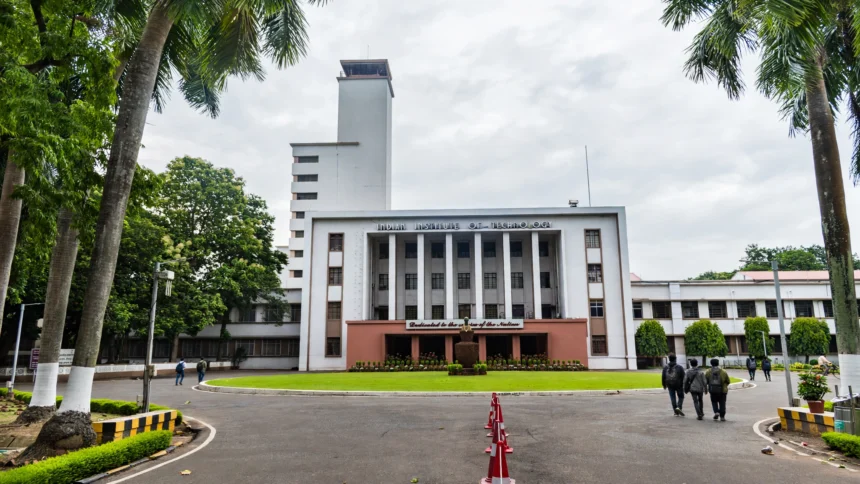
IIT Kharagpur has announced India’s first dedicated school for Physical Artificial Intelligence, with Rs 35 crore investment. The Benjamin Gupta School of Physical AI will bring together engineering, science, medicine and AI research.
The announcement came this week through an institute statement. Most AI courses today focus on data, models and software. This school starts from a different question: how can an intelligent system understand and work safely in the real, physical world?
That question matters beyond the classroom. A robot on a factory floor or a medical device in a hospital cannot afford the kind of mistakes a chatbot can shrug off. It has to sense its surroundings, respect the laws of physics, and act in ways people can trust.
Who is funding the Rs 35 crore school?
The Benjamin Gupta School of Physical AI will be set up under a memorandum of understanding signed by IIT Kharagpur, distinguished alumnus and philanthropist Vinod Gupta, and the IITKGP Foundation USA. The project will receive Rs 12.5 crore from the Vinod Gupta family and Rs 10 crore from an anonymous alumnus. IIT Kharagpur will provide the remaining funds to reach Rs 35 crore.
The school has been named in memory of Vinod Gupta’s late son, Benjamin Gupta. Reports of the signing said the agreement was signed by IIT Kharagpur Director Professor Suman Chakraborty and Vinod Gupta, in the presence of deans, alumni, faculty and staff.
The funding will support infrastructure for the institute’s Department of Artificial Intelligence. The new school will house the department, so teaching and research can grow together.
What is Physical AI, and why is it different?
Conventional AI mainly works with data, algorithms and digital systems. It can spot patterns, predict outcomes and generate text, images or code. Physical AI goes a step further. It aims to build intelligent systems that understand and interact with the physical world by combining AI with scientific principles, real-world sensing and intelligent control.
In practice, an AI system must read sensors, understand forces and movement, cope with messy real-world conditions, and make decisions where safety matters. A small error in a simulation is a learning moment. The same error in an autonomous vehicle or an industrial robot can be serious.
The school will put reliability, explainability and responsibility at the centre of its work, so systems can be trusted in safety-critical settings.
What will the school focus on?
The institute has listed a broad research and teaching agenda. The main areas include:
- Physics-informed machine learning, where AI models are built with the laws of physics in mind, not just trained on data.
- Scientific AI, using intelligent systems to support experiments and discovery across the sciences.
- Digital twins, detailed virtual copies of machines and systems that can be tested safely before changes are made in the real world.
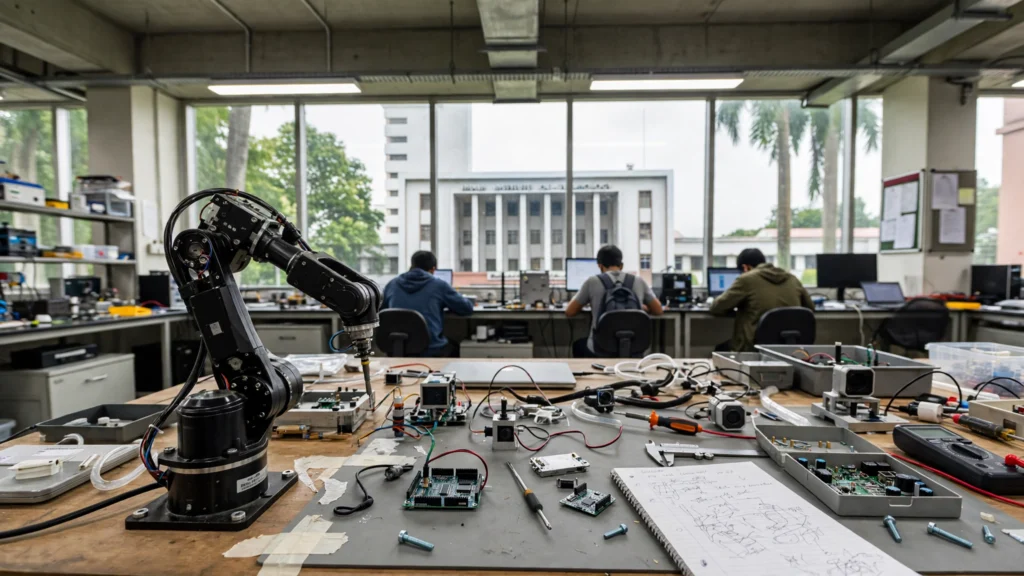
- Intelligent robotics and autonomous systems that can sense, decide and move in physical spaces.
- Advanced sensing and AI-based experimentation, linking instruments, data and control in real time.
The work is expected to reach engineering, medicine, agriculture, energy, healthcare and intelligent infrastructure: AI that works with real materials and machines, not only files on a screen.
Who will study there?
Academic programmes are expected to begin from the upcoming academic session, subject to the necessary approvals. The institute has said the programmes will cater to students, researchers and working professionals from engineering, physical sciences, life sciences and medicine, with a focus on combining domain knowledge with modern AI skills.
That mix is deliberate. A doctor who understands AI or an engineer who understands biology brings something a purely software-trained graduate may not. For working professionals, the appeal is practical: employers need people who can bridge the gap between a model in a notebook and a machine on the shop floor.
Why this matters for India’s AI push
India already has a large pool of software-focused AI talent. The harder part is building expertise in systems that operate reliably in complex physical environments. A dedicated school does not solve that overnight, but as AI moves into robots, vehicles, clinics and plants, teaching will need physics and engineering alongside code. IIT Kharagpur is betting Physical AI is where that teaching should begin.
FAQs
What is the Benjamin Gupta School of Physical AI?
It is the proposed dedicated school for Physical Artificial Intelligence at IIT Kharagpur, named in memory of Benjamin Gupta, the late son of alumnus and philanthropist Vinod Gupta. It will house the institute’s Department of Artificial Intelligence.
How much is being invested in the school?
Rs 35 crore in total. The Vinod Gupta family will contribute Rs 12.5 crore, an anonymous alumnus will contribute Rs 10 crore, and IIT Kharagpur will provide the remaining funds.
What is Physical AI?
Physical AI focuses on systems that understand and interact with the physical world, combining AI with scientific principles, sensing and control, unlike conventional AI that mainly works with data and digital systems.
When will programmes begin?
From the upcoming academic session, subject to approvals. Admission schedules and eligibility are yet to be announced.
Who can apply?
Students, researchers and working professionals from engineering, physical sciences, life sciences and medicine, as per the official notification when it is issued.
The first test will be what the school builds next: courses, labs and research that turn Physical AI into systems people can use, and trust, outside the campus.