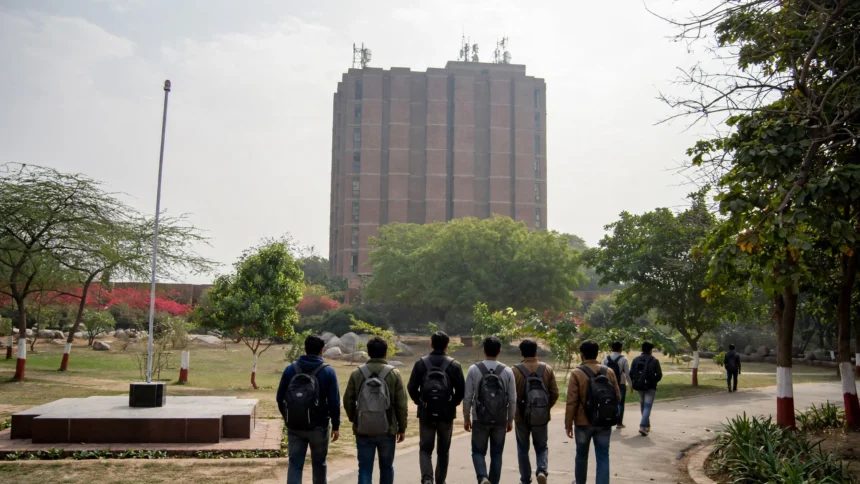
The Students’ Federation of India (SFI) has accused Jawaharlal Nehru University (JNU) of advertising fewer reserved seats than the rules require for its PhD admissions for 2026-27. The National Commission for Scheduled Castes (NCSC) has now given the university seven days to explain itself, after its first notice went unanswered.
According to SFI, the shortfall touches Scheduled Tribe (ST), Scheduled Caste (SC) and persons with benchmark disabilities (PwBD) applicants across 711 regular PhD seats. JNU had not responded to the allegations when the reports emerged on Wednesday.
SFI says it complained to the NCSC on September 29. The commission wrote to the JNU registrar in early October, seeking facts and details of the action taken. When no reply came by the October 23 deadline, it sent a reminder on October 27, asking for a response within seven days. The National Commission for Scheduled Tribes (NCST) has also taken cognisance of the matter, according to SFI.
The numbers at the centre of the row
JNU advertised 711 regular seats through three channels: UGC-NET, UGC-NET-JRF and GATE. SFI says the reserved share falls short in all three categories it examined, when measured against the university’s own prospectus.
- ST seats: 38 advertised against about 53 required at 7.5 per cent, a shortfall of around 15 seats.
- SC seats: 103 advertised against about 107 required at 15 per cent, a shortfall of four seats.
- PwBD seats: 17 advertised against about 36 estimated as required at 5 per cent, a shortfall of 19 seats.
The figures were first flagged by the Birsa Ambedkar Phule Students’ Association (BAPSA) and repeated by SFI at a press conference at the Press Club of India in New Delhi on Wednesday. Former Rajya Sabha MP Brinda Karat, former West Bengal minister Debalina Hembram, JNUSU vice-president Gopika Babu, SFI All India president Adarsh M Saji, former JNUSU president Aishe Ghosh and SFI JNU secretary Sagar Singal addressed the press conference.
Why SFI says the shortfall happened
SFI blames the method, not a typing error. It says JNU calculates reservation centre by centre, and sub-discipline by sub-discipline, instead of against the total intake. Many centres take only a handful of research scholars in a cycle, so reserved seats can vanish in the rounding when percentages are worked out on such small numbers.
It claims 29 centres advertised no seats at all for SC or ST candidates this cycle. A separate analysis cited in the coverage puts it more starkly: of 84 programmes offering PhD seats this year, 56 have no ST seats, two thirds of the total. That figure has risen from 35 in 2021-22 to 56 in 2026-27, with a dip to 32 in 2024-25 in between. Splitting seats across the NET, NET-JRF and GATE channels made it worse, SFI says, because each channel was treated as its own small unit.
Backlog seats and an unanswered RTI plea
The row also reaches back into earlier cycles. SFI has raised concerns over what it calls the de-reservation of vacant reserved seats in previous years, and wants a special drive to fill backlog vacancies. It filed a Right to Information application on September 23 seeking details of PhD admissions for 2025-26, but says the university described the information as voluminous and did not hand it over. Student organisations have taken the matter to the vice-chancellor, seeking a review of the reservation roster and transparent programme-wise allocation. The press conference comes days after JNUSU ended a hunger strike over related campus demands.
What SFI wants now, and what happens next
SFI wants JNU to correct the alleged shortfalls in the ongoing process, publish a transparent reservation roster and category-wise data, and fill backlog seats through a special drive. If viva-voce examinations go ahead, it says the special drive should be announced at once. Otherwise, admissions should be paused until the reserved seats are properly advertised.
The NCSC reminder of October 27 gives JNU until around November 3 to respond. What the university says, and whether it revises the prospectus, will decide whether this year’s intake proceeds as advertised or is reworked mid-course. The university has so far not commented publicly. This is an allegation by a student organisation, backed by its reading of the prospectus and by two national commissions taking note, not yet a finding against the university.
FAQs
How many PhD seats has JNU advertised?
According to SFI, 711 regular seats across UGC-NET, UGC-NET-JRF and GATE.
What is the alleged ST shortfall?
38 seats advertised against about 53 required at 7.5 per cent, a shortfall of around 15.
What about SC and PwBD seats?
SC seats are put at 103 against about 107 required, and PwBD seats at 17 against about 36 estimated as required.
What has the NCSC done?
It wrote to JNU in early October after SFI’s September 29 complaint, then sent a reminder on October 27 giving seven days to respond. The NCST has also taken cognisance, SFI says.
What does SFI want?
A corrected prospectus, a transparent roster and category-wise data, a special drive for backlog seats, and a pause in admissions if the seats are not advertised.
With the NCSC deadline days away, all eyes are on JNU’s reply. Informeia will update this story when the university responds.