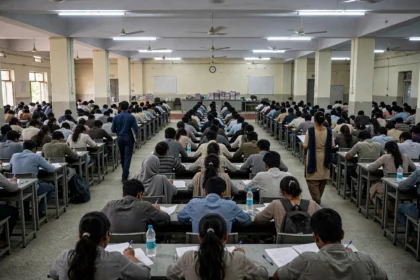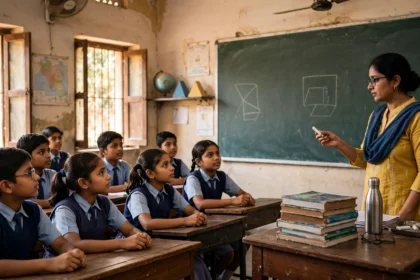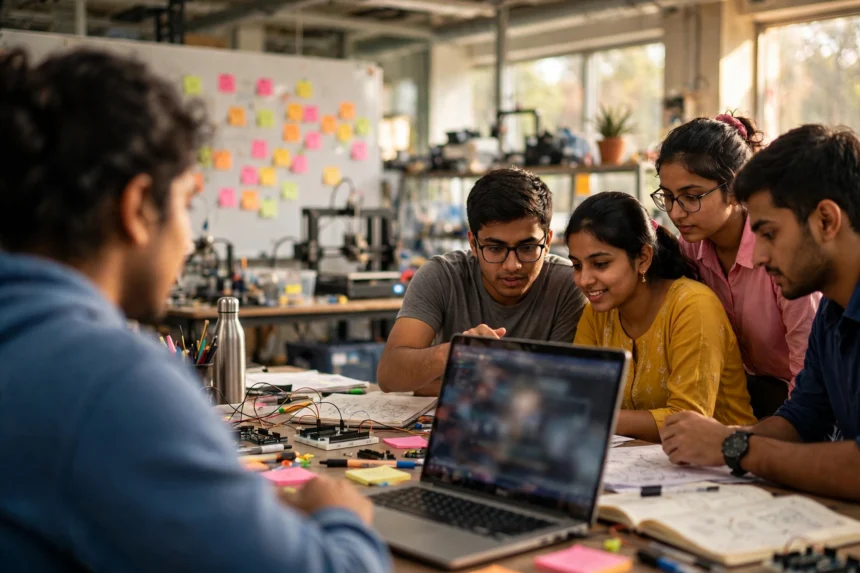
Walk into any Indian college canteen today and you are as likely to overhear a pitch deck discussion as an exam strategy. A landmark new survey says the shift is real and measurable: 22 per cent of Indian college students have already started a business, a figure that puts the country almost on par with the global average of 23 per cent. And far from being side hustles that fizzle out, more than a third of these student-run ventures already earn regular sales, doing better than their global peers.
- Ambition is no longer the outlier
- Those who start are building real businesses
- The gaps that still hold students back
- What universities are being asked to do
- Frequently asked questions
- What is the GUESSS India 2025 survey?
- How many Indian college students run a business?
- Are students choosing startups over government jobs?
- What holds student founders back the most?
- What does the report recommend for colleges?
The findings come from the GUESSS India 2025 National Survey Report, titled “How do we make student entrepreneurs”, released on October 21, 2026 by the Indian Institute of Technology (IIT) Mandi in partnership with REVA University, Bengaluru. It is part of GUESSS India, the Indian chapter of the Global University Entrepreneurial Spirit Students’ Survey, one of the world’s largest research projects on student entrepreneurship. The survey covered 25,783 students across more than 1,200 higher education institutions in 34 states and Union Territories, and was conducted between September and December 2025.
Ambition is no longer the outlier
Perhaps the most striking number in the report is not about those who have started, but those who want to. 43 in 100 Indian students say they want to start a business, exactly the same as the global average. The old ladder, study hard, get placed, maybe try the UPSC, is losing its hold. The share of students who want to run their own business right after their studies has risen from 14 per cent in the 2023 survey to 16.2 per cent in 2025.
The flip side of that shift is telling. The share of students who want a government job right after studies fell from 12.7 per cent to 10.1 per cent over the same period. Preference for jobs in large companies dropped from 31.3 per cent to 27.4 per cent. In other words, the sarkari naukri dream and the big-corporate placement are both quietly giving way to a generation that would rather build.
Those who start are building real businesses
The report pushes back on the idea that student ventures are just dorm-room experiments. Of the students who started something, 35.5 per cent already earn regular sales, a notch above the global figure of 33 per cent. Indian student founders are also quick to act and quick to try again: 31 per cent of student businesses with regular sales were founded in 2025 alone, compared with 18 per cent globally. 41 per cent of the founders have already closed an earlier business and started again, and 42 per cent run two or more businesses at once.
“India’s students are as ambitious as any in the world, and those who start are building real businesses that already hire people,” said Dr Puran Singh, Associate Professor at the School of Management, IIT Mandi, and Country Delegate for GUESSS India, who led the report. He added that courses, dedicated programmes and campus incubators are clearly working, and the opportunity now is to put more founders in students’ lives and help them take a real first step early.
The gaps that still hold students back
But the report is honest about where ambition stalls. Only 51 in 100 students who want to start a business have actually started one. The conversion gap is sharpest around the first sale: only 10 per cent of nascent founders have made their first sale, compared with 23 per cent globally. Half of Indian students know no entrepreneur beyond their parents, and the data shows students with founders in their circle are three times more likely to start.
There is also a gender gap in the leap from intent to action. While women expressed an interest in starting businesses at nearly the same rate as men, 45 per cent of women aspirants had actually started a venture, compared with 53 per cent of men. And while IT, AI and digital are the most common areas students want to build in, only one in ten of the businesses already running is digital, a mismatch the report flags.
What universities are being asked to do
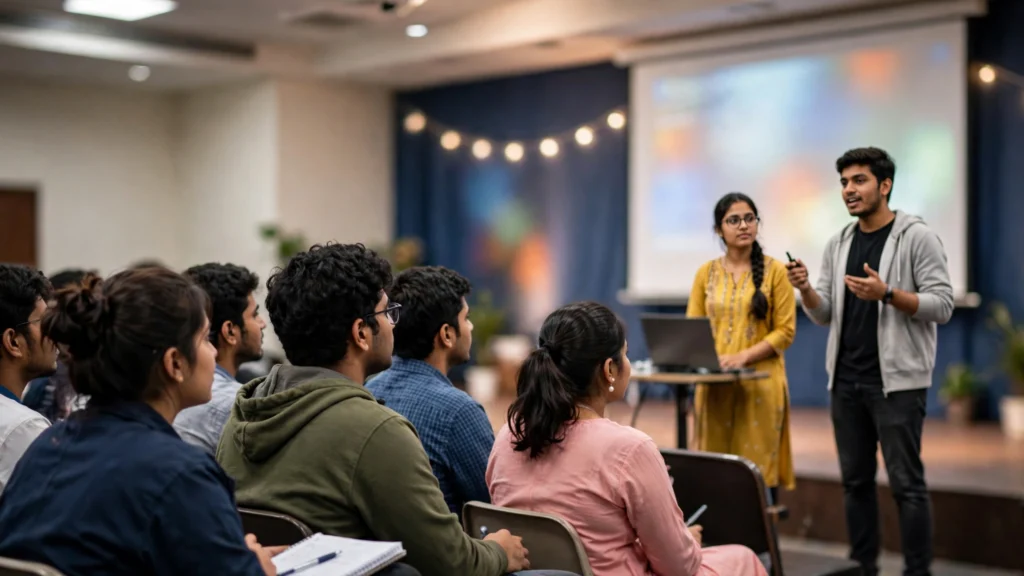
The report, launched recently at ISBACON 2026 in Mohali, asks universities, incubators and governments to change how they support campus founders. Three recommendations stand out:
- Measure conversion, not intention: track how many students who want to start a business actually start one, instead of counting startup plans.
- Push for the first customer, not the perfect plan: reward first sales, registrations and prototypes over business-plan contests.
- Put founders in students’ path: bring alumni founders, founder-faculty and student entrepreneurs into classrooms and hostels.
“A university’s task is no longer only to educate students for jobs. It is to educate them for enterprise, so that they create the jobs,” said Dr P Shyama Raju, Chancellor of REVA University, the national partner for GUESSS India 2025. Prof Anjan Swain, Chair of the School of Management at IIT Mandi, added that student entrepreneurship is central to the school’s approach: “We want our students to build ventures and organisations, not only to manage them.”
Frequently asked questions
What is the GUESSS India 2025 survey?
It is the Indian chapter of the Global University Entrepreneurial Spirit Students’ Survey, one of the world’s largest research projects on student entrepreneurship. The 2025 national report was released by IIT Mandi in partnership with REVA University on October 21, 2026.
How many Indian college students run a business?
22 per cent of Indian college students surveyed have already started a business, nearly matching the global average of 23 per cent. 35.5 per cent of those student ventures already earn regular sales.
Are students choosing startups over government jobs?
The trend is shifting that way. Students wanting to start their own business right after studies rose from 14 per cent in 2023 to 16.2 per cent in 2025, while preference for government jobs fell from 12.7 per cent to 10.1 per cent.
What holds student founders back the most?
The report flags the first sale as the hardest step, with only 10 per cent of nascent founders having made one. Limited access to founder networks and a gap between women’s intent and action are other key barriers.
What does the report recommend for colleges?
It asks universities to measure conversion rather than intention, put founders in students’ path through alumni and founder-faculty engagement, and reward first sales and prototypes over polished business plans.
The hostel room startup is no longer the exception in Indian higher education; the survey says it is the fastest-growing norm. Whether campuses can turn that ambition into revenue-generating companies at scale is the question the next survey will answer.