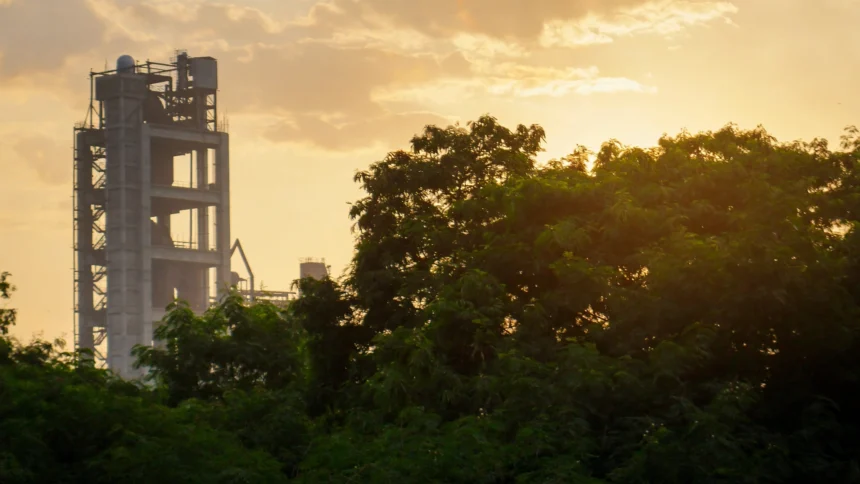
Ambuja Cements has firmed up one of the biggest expansion bets in Indian cement in recent years. The Adani Group company announced on Monday that it will invest around Rs 14,500 crore to add about 30 million tonnes per annum (MTPA) of cement capacity, taking its total capacity to 155 MTPA by FY30.
The programme mixes new greenfield plants and brownfield expansions across the East, West and North of India. It builds on a current capacity of 113.5 MTPA spread over 24 integrated plants and 24 grinding units, and it comes at a time when the company says demand from housing and infrastructure work remains strong across its key markets.
For investors, the headline is the scale. Thirty MTPA is roughly a quarter of what Ambuja produces today, added in a single programme. For the construction sector, the more interesting detail is where the capacity lands: six states, three clusters, and a cost target that management says will keep the new tonnes competitive.
Where the new capacity is coming up
The expansion is split across three clusters. The West gets the largest share, with about 15.5 MTPA of new grinding capacity. The East follows with 11.6 MTPA, and the North adds 2.9 MTPA. Alongside the grinding units, the programme includes about 10.3 MTPA of new clinker capacity, the intermediate material that grinding units turn into finished cement.
The new sites read like a map of India’s high-growth construction belt:
- East: Rangia and Hojai in Assam, Godda in Jharkhand, and Muzaffarpur in Bihar
- West: Mundra and Hazira in Gujarat, and Raigad, Kalyan, Dahanu and Amravati in Maharashtra
- North: Dadri Line 2 in Uttar Pradesh
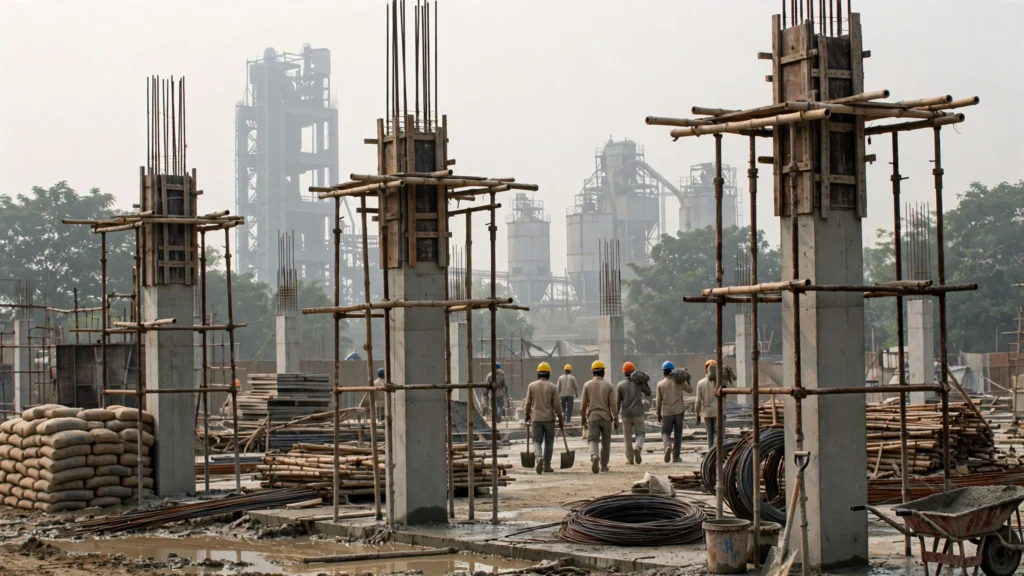
Spreading the plants this way matters for cement economics. Cement is heavy and expensive to move, so producing closer to where it is consumed cuts freight costs and delivery times. Vinod Bahety, CEO of the cement business at the Adani Group, said the phase focuses on the quality of growth and on building a more balanced manufacturing network.
The road to 155 MTPA by FY30
The programme does not arrive all at once. Ambuja expects total capacity to reach 119 MTPA by the end of March 2027, up from 113.5 MTPA now. The company commissioned 4.6 MTPA in the first half of FY27, with another 5.6 MTPA expected in the second half.
That steady ramp is part of a longer run. Since the Adani Group acquired the company, Ambuja has completed 11 capacity expansion projects, adding 16.3 MTPA of cement capacity and 9.0 MTPA of clinker capacity as of September 30, 2026. The new 30 MTPA programme is the next leg of that same build-out, ending at 155 MTPA by FY30.
Management has also set a cost marker to watch: bringing manufacturing cost down to Rs 4,000 per metric tonne by FY28 through higher efficiency and lower logistics expense. In a business where a few hundred rupees a tonne can decide who wins a tender, that target is as important as the capacity number itself.
Why this expansion matters now
Cement demand in India tracks housing construction, roads, railways and urban infrastructure, and all four have stayed busy through 2026. The government capex push and private housing demand have kept order books healthy for large producers, and capacity additions announced now will come on stream just as today’s under-construction projects need material.
There is also a competitive angle. Ambuja, headquartered in Ahmedabad and one of India’s leading building materials companies, is racing peers who are also adding tonnes. Scale brings bargaining power on limestone, fuel and freight, and a plant in every major demand pocket makes it harder for regional rivals to undercut on delivered price.
The risks are familiar ones for the sector: project execution delays, limestone availability, fuel price swings and the pace of demand itself. The company has not disclosed the funding split for the Rs 14,500 crore programme, so shareholders will watch upcoming filings for how much of it is funded from internal accruals and how much from debt.
What to watch next
- Quarterly commissioning updates: whether the 5.6 MTPA planned for the second half of FY27 lands on schedule
- Progress at the named sites in Assam, Bihar, Jharkhand, Gujarat, Maharashtra and Uttar Pradesh
- Movement towards the Rs 4,000 per tonne manufacturing cost target by FY28
- Any fresh disclosure on how the Rs 14,500 crore programme is funded
For now, the message from Ambuja is unambiguous: it is betting big, and early, on India’s next construction cycle.
FAQs
How much is Ambuja Cements investing in the new expansion?
Ambuja has firmed up a growth capex programme of around Rs 14,500 crore to add about 30 MTPA of cement capacity.
What will Ambuja’s total capacity be after the expansion?
The company targets total capacity of 155 MTPA by FY30, up from 113.5 MTPA currently. It expects to reach 119 MTPA by the end of March 2027.
Which states will get the new cement capacity?
New capacity is planned in Assam, Bihar, Jharkhand, Gujarat, Maharashtra and Uttar Pradesh, across the East, West and North clusters.
Who leads Ambuja’s cement business?
Vinod Bahety is the CEO of the cement business at the Adani Group, which owns Ambuja Cements.
When was the expansion announced?
Ambuja announced the firmed-up expansion programme on November 2, 2026, through a media release and stock exchange filing.
Ambuja’s expansion will be one to track quarter by quarter. If the tonnes arrive on time and the cost target holds, the Rs 14,500 crore bet could reshape the pecking order in Indian cement well before FY30.