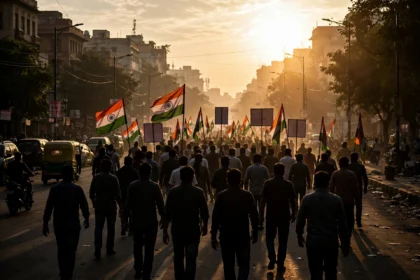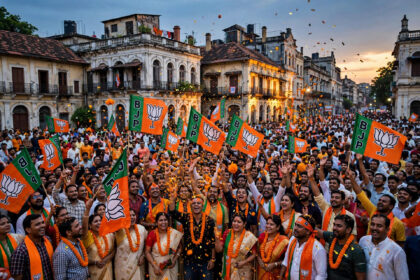
New Delhi, Nov 4: The BJP took its newest political campaign to the streets across several states on Wednesday, with senior leaders leading Loktantra Bachao, Arajakta Hatao (Save Democracy, Remove Anarchy) marches in Gorakhpur, Bhopal and Delhi. The marches come in the middle of a bitter confrontation between the ruling party and the opposition over electoral rolls and the Election Commission.
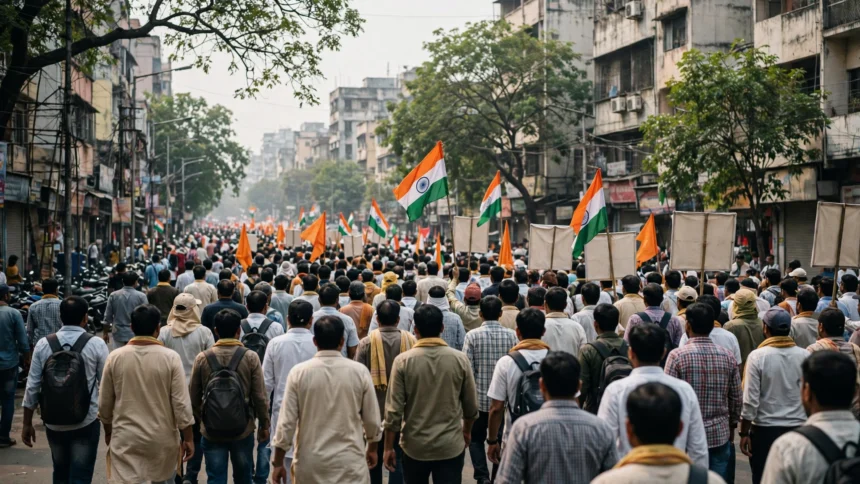
The loudest march of the day was in Gorakhpur, where BJP national president Nitin Nabin walked alongside Uttar Pradesh Chief Minister Yogi Adityanath. It was Nabin’s first visit to Gorakhpur since taking over the party’s top post, and the party said workers from all 12 districts of the Gorakh region joined in.
Nabin and Yogi lead the Gorakhpur march
The Gorakhpur march began at noon from Maharana Pratap Inter College, where Nabin formally launched the campaign at a public meeting in the presence of Yogi Adityanath and state BJP president Pankaj Chaudhary. From there, the procession moved towards the Mata Kali Temple near the Sardar Patel statue.
Addressing participants, Yogi Adityanath accused the Congress and the INDIA bloc of undermining constitutional bodies and turning protests into a threat to democracy itself. He said the opposition had misled young people and incited them to protest in Delhi, and described the march as the voice of the citizens of India, the voice of the common people.
State BJP president Pankaj Chaudhary echoed the charge, accusing the opposition of misleading the youth and the public about democratic processes. The march also saw participation from members of the minority community carrying placards bearing the slogan “Modi Hai, Modi Rahega”.
After the march, Nabin was scheduled to interact with prominent members of society at Annexe Bhawan in Taramandal and to attend a meeting of the Uttar Pradesh BJP Core Committee in the evening. His two-day visit continues on Thursday with prayers at the Baba Gorakhnath Temple and meetings with former and current party functionaries.
Nadda walks in Bhopal, Delhi march in East Delhi
Union Health and Family Welfare Minister J P Nadda led the march in Bhopal, walking from Atal Path to Roshanpura Square. A day earlier, Nadda had addressed a similar yatra in Bareilly, where he accused the Congress, the INDIA bloc and the Samajwadi Party of undermining the credibility of the Election Commission.
Nadda defended the ongoing Special Intensive Revision (SIR) of electoral rolls, saying it aims to purify the rolls by removing the names of deceased, shifted, absent and duplicate voters. The SIR has become the central flashpoint of the current fight, with the opposition alleging it risks excluding eligible voters.
In Delhi, a similar march was held in East Delhi, with Union Minister Arjun Ram Meghwal, Chief Minister Rekha Gupta and Union Minister of State Harsh Malhotra scheduled to participate.
15,000 students claimed for Delhi University rally
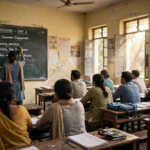
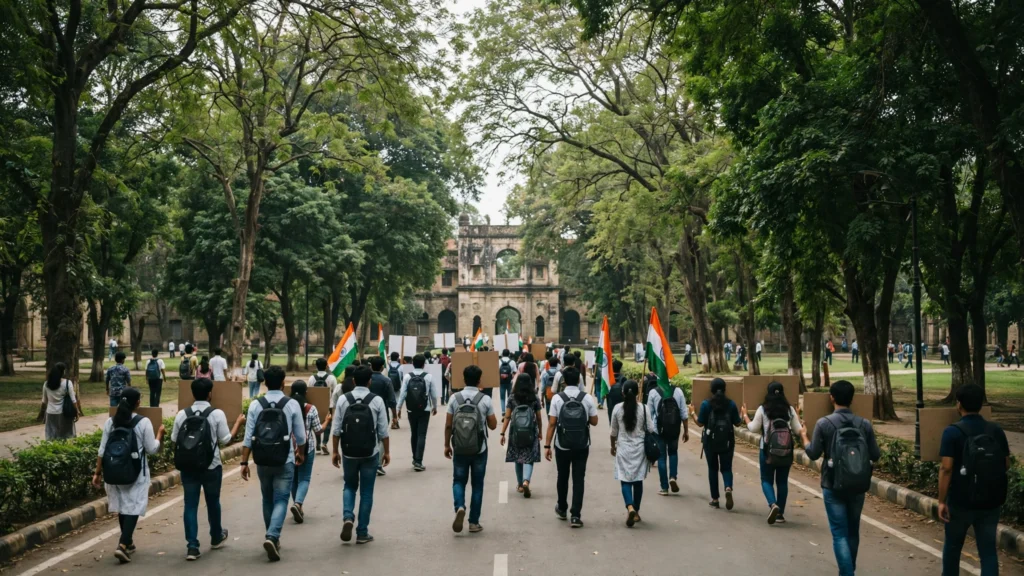
Alongside the main marches, the BJP’s student wing, the Akhil Bharatiya Vidyarthi Parishad (ABVP), organised a mega student rally at the University of Delhi under the “Remove Anarchy, Save Democracy” campaign. The ABVP said more than 15,000 students would participate, marching from the university’s Rugby Ground towards Kranti Chowk, in what it called a united march of student power against forces attempting to destabilise the country.
Why the marches, and why now
The campaign comes amid an escalating confrontation over electoral integrity. On Sunday, the INDIA bloc held a rally at Delhi’s Ramlila Maidan, demanding accountability from Chief Election Commissioner Gyanesh Kumar and claiming that the BJP formed governments with a “stolen” mandate. Congress leader Rahul Gandhi asserted at that rally that the CEC will be removed and sent to jail for “treason” in the future.
The BJP hit back on Tuesday, with spokesperson Gaurav Bhatia demanding an investigation into the recent opposition-led protests and their alleged links with foreign organisations.
On Wednesday, the war of words continued. Congress president Mallikarjun Kharge hit back at Prime Minister Narendra Modi’s “Dimaagi Naxal” jibe, saying the Prime Minister had no answer on the alleged vote theft or on Rahul Gandhi’s renewed challenge for an open debate. Finance Minister Nirmala Sitharaman responded that Parliament, not social media, is the right forum for such a debate.
For the BJP, Wednesday’s marches serve two purposes at once: a counter to the opposition’s street mobilisation and a warm-up for the election season ahead, particularly in Uttar Pradesh, where assembly elections are due in 2027. The voter-list war that began in Parliament has now firmly moved to the streets.
FAQs
What is the Loktantra Bachao, Arajakta Hatao campaign?
It is the BJP’s nationwide march campaign, translated as Save Democracy, Remove Anarchy, against what the party calls attempts to create political instability.
Who led the marches on November 4?
Nitin Nabin led the Gorakhpur march with Yogi Adityanath, J P Nadda marched in Bhopal, and Delhi Chief Minister Rekha Gupta joined the East Delhi march.
How many students joined the Delhi University rally?
The ABVP, which organised the rally from the Rugby Ground to Kranti Chowk, said more than 15,000 students participated.
What is the SIR at the centre of the row?
The Special Intensive Revision is the Election Commission’s revision of electoral rolls. The BJP says it removes dead, shifted, absent and duplicate voters; the opposition alleges it risks excluding eligible voters.
Why does the Gorakhpur march matter?
It marks Nabin’s first visit to Gorakhpur as BJP president and comes as the party steps up organisation in Uttar Pradesh ahead of the 2027 assembly elections.
Stay with Informeia for the latest updates on the SIR debate and the road to the 2027 Uttar Pradesh elections.