If you have been planning to buy a new phone, laptop or television, the price tag may surprise you. The Finance Ministry has said that a global shortage of memory chips, driven by the rush to build artificial intelligence data centres, is pushing up electronics prices in India. The numbers in its latest monthly review are stark: the price of DRAM, the memory inside almost every gadget, was about 112 per cent higher than a year ago in mid-November.
It is an unusual kind of inflation. This one does not start in a mandi or at a petrol pump. It starts in the server farms that power AI chatbots, and it ends in the electronics shop in your neighbourhood.
What the Finance Ministry found
The Department of Economic Affairs flagged the problem in its Monthly Economic Review for November 2026. Inflation in the information and communication equipment category, which covers smartphones, laptops, tablets, televisions and other electronic accessories, rose to 7.75 per cent in October, up from 4.94 per cent in September.
The climb has been steady. The same category was in deflation of 0.66 per cent in April. Six months later, it is running at 7.75 per cent. The review pins the blame squarely on memory chips: “Global shortages of consumer-grade DRAM memory chips, diverted primarily to support the artificial intelligence data centre expansion, has pushed up consumer electronics prices.”
The pressure is visible elsewhere too. Producer price inflation for batteries rose to 5 per cent in October from 4 per cent in September, while inflation for electrical appliances increased to 7 per cent from 6 per cent. Headline retail inflation rose to 6.09 per cent in October from 5.54 per cent in September, and the ministry cautioned that demand during the wedding season could push prices higher still in the coming months.
Why memory chips suddenly cost so much
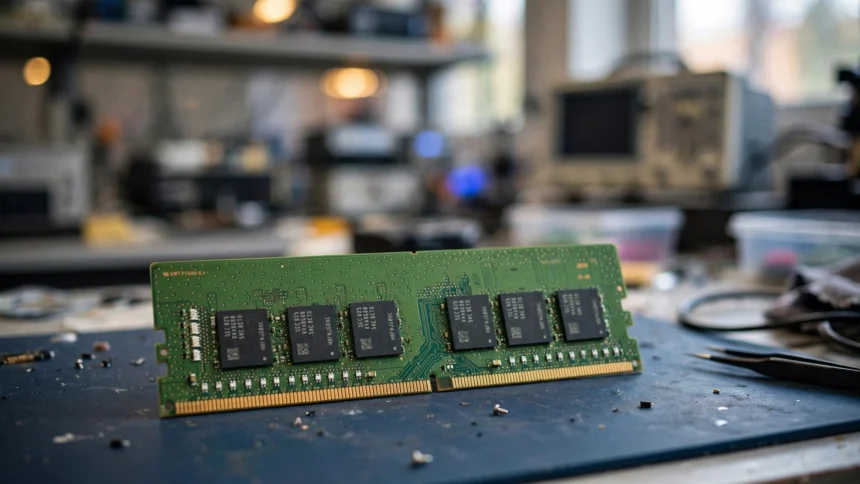
DRAM, or dynamic random access memory, is the short-term memory inside phones, computers and servers. For years it was one of the cheapest components in a gadget. That has changed because the AI boom has rewritten who gets the chips first.
AI data centres need enormous quantities of high-bandwidth memory to train and run large models. Chipmakers such as Samsung, SK Hynix and Micron have shifted production towards that lucrative server memory, leaving less conventional DRAM for smartphones and personal computers. Demand from AI has outrun supply, and the price of what is left has shot up.
The squeeze is worst at the budget end. Market research firm Counterpoint Research estimates that memory now accounts for about 43 per cent of the total bill of materials for smartphones priced under Rs 20,000, and that the whole bill of materials for such phones may climb by as much as 25 per cent in 2026. Gartner expects combined DRAM and solid-state drive prices to surge 130 per cent by the end of 2026, pushing PC prices up 17 per cent and smartphone prices up 13 per cent compared with 2025. Reports say memory prices have more than tripled since October 2025.
What it means for buyers in India
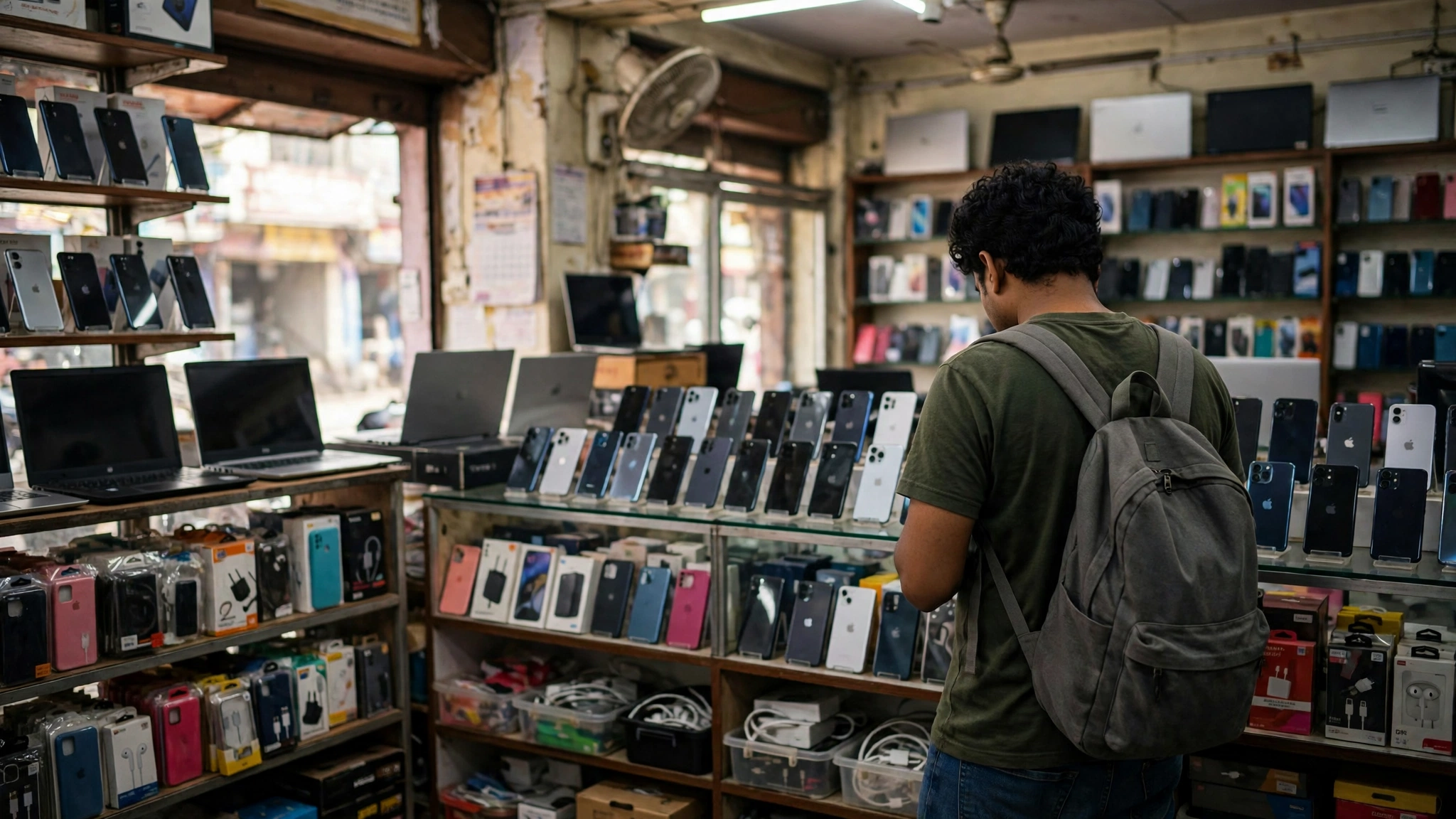
For shoppers, the effect is already showing up in two ways: higher prices, and quieter compromises. Some brands have raised prices on phones, laptops and televisions. Others have held the sticker price but trimmed the memory in base models, bringing back lower configurations such as 4GB RAM with 64GB storage to keep the price point intact.
Television makers are feeling it acutely. Avneet Singh Marwah, chief executive of Super Plastronics, which makes Blaupunkt and Kodak televisions in India, has said memory prices have risen by more than 300 to 400 per cent, and that television prices are expected to rise by around 7 to 10 per cent.
If you are buying a gadget in the next few weeks, the practical advice is simple. Compare the RAM and storage on offer, not just the headline price, and check whether a model launched a few months ago still offers better memory for the same money. Do not rush into a panic purchase, but do not assume that waiting a month will bring the price down either. This is a supply problem, not a sale.
Why it matters
This is the first time the AI boom has landed directly on an Indian household budget. Until now, artificial intelligence felt like something happening in American data centres and stock market rallies. The Finance Ministry review makes the link plain: the same build-out that lifts chip stocks is quietly taxing every Indian family buying its next phone or its first laptop for a child going to college.
The timing is awkward. India imports most of the components that go into its electronics, so a global chip shortage reaches Indian shops with almost no buffer. That is why the review also points to the domestic response. The Ministry of Electronics and Information Technology approved 12 more applications under the Electronics Component Manufacturing Scheme in November, involving projected investments of Rs 7,503 crore and production of Rs 39,045 crore. With those, total approvals under the scheme have reached 118, with expected investments of Rs 77,051 crore. Applications have also opened under Semicon 2.0 for semiconductor equipment, materials and fabrication.
That is a long-term answer to a short-term problem, though. Building chip capacity takes years, while the shortage is biting now. The honest picture for readers is that electronics will stay expensive until either AI demand cools or new memory capacity comes online, and neither looks close. Micron expects the shortage to continue through 2027, with improvement only gradually emerging in 2028.
The trend to watch is not just the price of chips. It is whether Indian brands keep absorbing the cost, pass it on openly, or quietly cut the memory in the phones they sell. The next Monthly Economic Review, and the December launches from phone makers, will show which way it goes.
What happens next
- December: wedding-season demand adds to the pressure the Finance Ministry has already flagged, and new phone launches will test how much of the higher chip cost brands pass on.
- Early 2027: the next rounds of the Monthly Economic Review will show whether electronics inflation keeps climbing from the 7.75 per cent recorded in October.
- Through 2027: memory supply stays tight, according to Micron, so expect more price rises or lower memory configurations in budget gadgets.
- Longer term: approvals under the Electronics Component Manufacturing Scheme and Semicon 2.0 build domestic capacity, but that relief is measured in years, not months.
FAQs
Why are electronics getting expensive in India?
A global shortage of DRAM memory chips is pushing up costs. AI data centres are buying up memory production, leaving less for phones, laptops and televisions. The Finance Ministry says electronics inflation hit 7.75 per cent in October.
What is DRAM and why does it matter?
DRAM is the short-term memory inside almost every electronic device. It holds the data a phone or laptop is actively using. When DRAM gets expensive, every device that uses it gets more expensive to build.
How much have chip prices risen?
Spot prices of DRAM memory chips were about 112 per cent higher year on year as of November 16, 2026, according to the Finance Ministry. Reports say memory prices have more than tripled since October 2025.
Will prices come back down soon?
Not soon. Micron expects the shortage to continue through 2027, with improvement only gradually emerging in 2028. Gartner expects PC prices to rise 17 per cent and smartphone prices 13 per cent by the end of 2026.
Should I buy a phone or laptop now or wait?
There is no clear case for waiting, since prices are more likely to rise than fall in the near term. Compare RAM and storage carefully, and consider models launched a few months ago, which may still offer better memory for the same money.
For Indian buyers, the AI revolution now has a price tag, and it is printed on the next phone, laptop and television they buy.