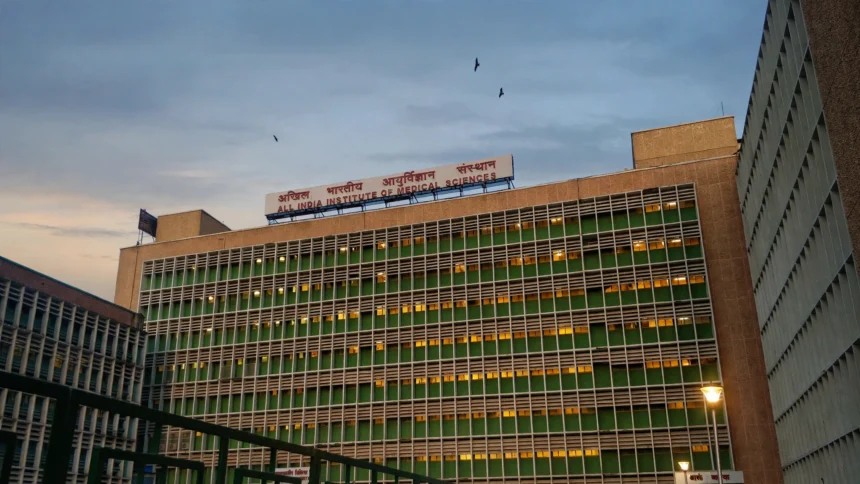
Doctors at the All India Institute of Medical Sciences (AIIMS) in New Delhi have performed India’s first robotic-guided deep brain stimulation procedure for a patient with Parkinson’s disease. The hospital announced the milestone on Saturday, 28 November 2026, calling it a first for the country and congratulating the team behind it.
The procedure was carried out in collaboration with Tel Aviv University in Israel, led by Prof. P. Sarat Chandra of AIIMS and Prof. Ido Straus of Tel Aviv University, with Prof. Ela Varsi and Prof. Manjari Tripathi and teams from the institute’s neurosurgery and neurology departments.
A robot guides the surgeon’s hand
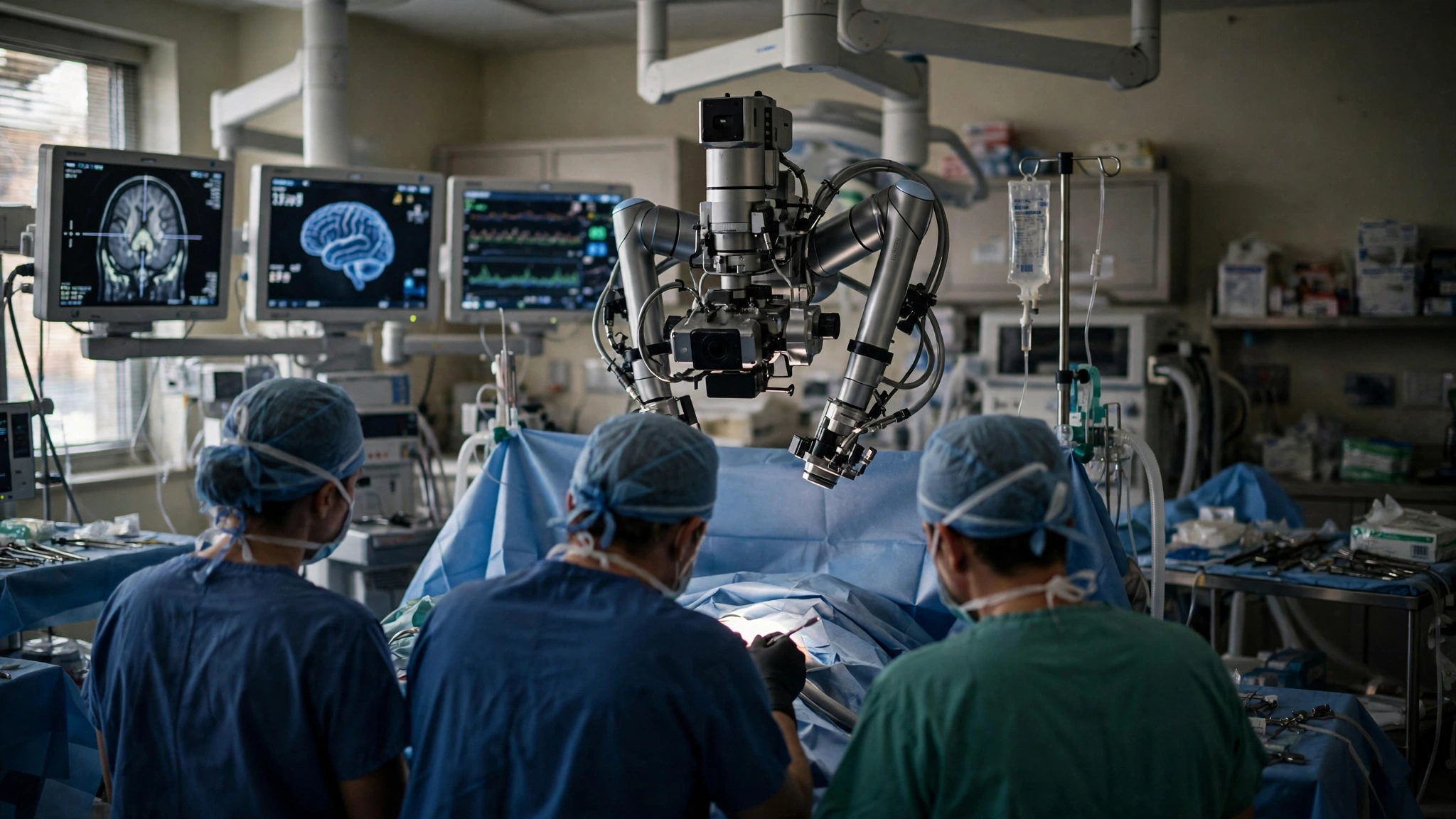
Deep brain stimulation, or DBS, only works if the electrodes land in exactly the right spot. The targets are tiny regions deep inside the brain, and a placement off by a few millimetres can change the result. The robotic system helps doctors position the electrodes precisely, and AIIMS said the guidance supports accurate placement in very specific areas of the brain.
AIIMS shared the news in a post on X, describing the procedure as a milestone, and did not share any details about the patient.
How deep brain stimulation works
In deep brain stimulation, thin electrodes are implanted in specific parts of the brain. They deliver electrical impulses that alter brain activity, easing the symptoms of the condition being treated.
The impulses are controlled by a small pacemaker-like device under the skin in the upper chest. A wire running beneath the skin connects the device to the electrodes in the brain. Doctors can adjust the stimulation after surgery, tuning it to the patient’s symptoms.
DBS does not cure Parkinson’s disease. It is for carefully selected patients, usually when medicines no longer control symptoms well enough. Most patients still need specialist follow-up and, in many cases, medicines.
Doctors also use DBS for essential tremor and for dystonia, a group of conditions in which muscles contract involuntarily, such as Meige syndrome, as well as for epilepsy, obsessive-compulsive disorder and Tourette syndrome, which causes repetitive movements and sounds.
Why it matters
The headline here is a first, but the real story is what it signals for patients in India. Parkinson’s disease is a growing burden. Published estimates based on the Global Burden of Disease study put the number of Indians living with the condition at roughly 5.8 lakh, and modelling from the same study projects India’s caseload could reach about 2.8 million by 2050, one of the largest increases anywhere in the world. As India’s population ages, more families will face this disease.
For those patients, precision is everything. Medicines help for years, but over time their effect wears off or brings side effects. Surgery becomes an option for some, and the difference between a good outcome and a poor one often comes down to where the electrodes sit. A robot that steadies that placement makes the operation more repeatable, and repeatability is what turns a one-off achievement into a routine service.
It also matters that this happened at AIIMS, a public hospital. Advanced neurosurgery in India is often associated with expensive private centres. A public institute showing it can do robotic-guided brain surgery brings that standard of care closer to patients who cannot pay private rates, even if the equipment and the trained teams will take time to spread to other hospitals.
AIIMS has been building in this area. Earlier this month, its neurosurgery department reported a pilot study on a technique to slow the progression of glioblastoma, a fast-growing adult brain tumour, while patients wait for surgery. The DBS milestone adds to that record.
What happens next
One procedure does not make a programme. What matters now is whether robotic-guided DBS becomes a regular option at AIIMS and whether other public hospitals follow. That will depend on equipment, training and patient selection, since DBS suits only some people with Parkinson’s.
For patients and families, the practical step is unchanged: talk to a movement-disorder specialist about whether DBS fits, rather than assuming surgery is the answer. For the wider system, Saturday’s procedure sets a marker: India’s largest public hospital has shown it can do brain surgery with a robot guiding the way.
Frequently asked questions
What is deep brain stimulation?
It is a neurosurgical treatment in which thin electrodes are implanted in specific areas of the brain. They deliver controlled electrical impulses that alter brain activity and ease symptoms of conditions such as Parkinson’s disease.
Does DBS cure Parkinson’s disease?
No. DBS manages selected symptoms, and patients generally continue to need medicines and specialist follow-up. It is considered when medicines no longer control symptoms well enough.
What makes this procedure a first for India?
It is the first time in the country that the placement of DBS electrodes was guided by a robotic system. AIIMS performed it in collaboration with Tel Aviv University.
Who performed the procedure?
Prof. P. Sarat Chandra of AIIMS and Prof. Ido Straus of Tel Aviv University, along with Prof. Ela Varsi and Prof. Manjari Tripathi and teams from AIIMS’ departments of neurosurgery and neurology.
Was the patient identified?
No. AIIMS did not share any details about the patient.
India’s first robotic-guided brain stimulation procedure is a milestone for AIIMS and for Parkinson’s care in the country. The test now is turning a first into a service that more patients can reach.