Look up over Coimbatore, Salem or Erode this week and you may catch one of south India’s quietest spectacles in full flow. Lakhs of blue tiger butterflies are drifting west across Tamil Nadu, a living river of wings moving from the Eastern Ghats towards the Western Ghats as the north-east monsoon sets in. Reports highlighted again on Saturday, October 24, say western districts are still filling with them, and watchers are out counting them.
It is not a single-day event. This seasonal journey builds in waves, and some of India’s biggest wildlife moments need no ticket or safari. Sometimes, they pass right over a busy road.
A sky full of wings
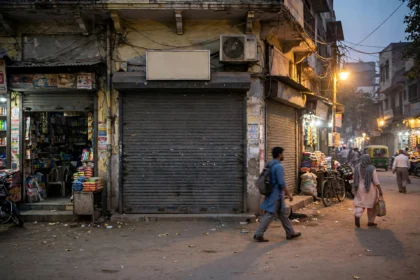
The Hindu’s account from Coimbatore captures the scene best. On Ayudha Pooja day, Tiruchy Road was at its busiest, with makeshift shops selling flowers and puffed rice. Above the traffic, a few blue tiger and dark blue tiger butterflies appeared, then a few more, and then many more. Soon, the writer realised, they were right on the migratory route itself.
That is how this migration often reveals itself: not as one dramatic cloud, but as a steady stream that grows until you cannot ignore it. Butterfly watchers in cities along the path have been on high alert all week. Alerts on the WhatsApp group Butterfly Migration India have invited people in Salem, Erode, Tiruppur, Coimbatore and Madurai, as well as Kerala, to step outside and count. It is citizen science at its simplest, and it helps researchers build a clearer picture of a movement that is easy to miss if you are not looking up.
Why they are moving now
The timing is no coincidence. The butterflies are moving away from heavy north-east monsoon rain affecting Chennai and surrounding districts, and towards host plants in the forests of the Western Ghats. The New Indian Express reported that a second wave of migration was recorded across western Tamil Nadu after an earlier movement in mid-September, and that this second wave is larger than the first.
It gained momentum after fresh north-east monsoon rains and the withdrawal of the south-west monsoon in mid-October. Once they reach the west, the butterflies feed, mate and lay eggs in forest habitats. The journey is not one-way either. Around April and May, before the south-west monsoon, they generally begin a reverse migration towards the eastern plains, with later generations making the return trip timed with pre-monsoon showers.
Four species to look for
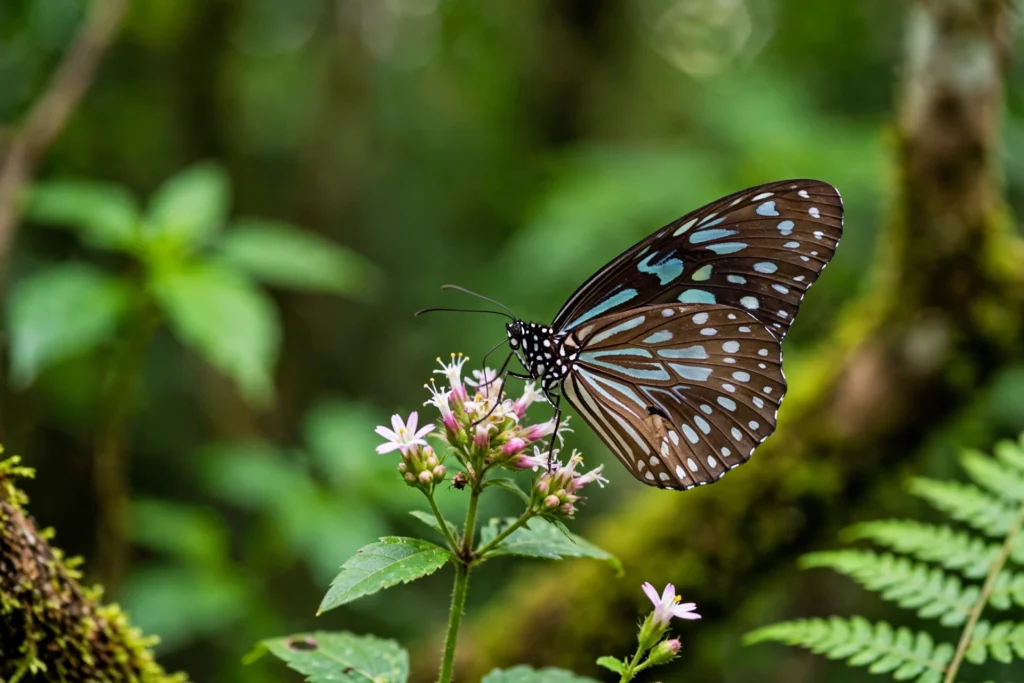
Most of the butterflies in this movement belong to the milkweed butterfly group, and four species dominate the counts:
- Blue tiger (Tirumala limniace): the star of the show, with pale blue markings on dark wings.
- Dark blue tiger (Tirumala septentrionis): similar at a glance, but darker and richer in tone.
- Common crow (Euploea core): a dark, glossy butterfly that often travels with the tigers.
- Double-branded crow (Euploea sylvester): another crow species recorded in large numbers this season.
Where watchers are counting
The movement has been recorded across Salem, Namakkal, Erode, Tiruppur and Coimbatore districts, with sightings stretching from Mettupalayam to Singanallur in Coimbatore district. Counts last weekend were striking. Between 8.30 am and 4 pm on Saturday, October 17, observers in Coimbatore district recorded between 5 and 135 butterflies per minute at different locations.
At Kalapatty Main Road, 120 individuals were counted per minute at 9.50 am on October 18, according to The Nature and Butterfly Society (TNBS). At Rasipuram, another observer recorded blue tigers passing at 72 per minute. Sightings continued on October 18 in Erode and Tiruppur districts, including Udumalpet. TNBS president A. Pavendhan has described the westward and south-westward movement as consistent with the pattern expected during the onset of the north-east monsoon.
What this migration tells us
Butterflies are sensitive to weather, and their movements are an early signal of how seasons are shifting. A strong migration suggests healthy host plants, suitable breeding grounds and a rainfall pattern that still allows these delicate insects to travel long distances. The counts matter: they show where butterflies pause and which forest patches they use.
If you spot the migration, the best thing to do is simple: watch from a safe spot, do not try to catch or handle the butterflies, and let them pass. If you are driving where butterflies are crossing, slowing down helps. Their journey is long, their wings are fragile, and they have a forest to reach.
FAQs
Which butterflies are migrating in Tamil Nadu right now?
Mainly blue tigers and dark blue tigers, along with common crows and double-branded crows, moving from the Eastern Ghats towards the Western Ghats.
Why are they migrating in October?
They are moving away from heavy north-east monsoon rain in the east and towards host plants in the Western Ghats, where they can feed, mate and lay eggs.
Where has the migration been seen?
Salem, Namakkal, Erode, Tiruppur and Coimbatore districts, with watchers also alerted in Madurai and parts of Kerala.
When will they return?
The reverse migration towards the eastern plains generally begins in April or May, before the south-west monsoon.
How can I watch safely?
Find a safe open spot, look up during daylight hours, and avoid disturbing or catching the butterflies. Sharing a count with a local nature group can help researchers too.
For now, Tamil Nadu’s skies are doing the talking. Step outside this week, look up, and let a river of blue tigers pass overhead.