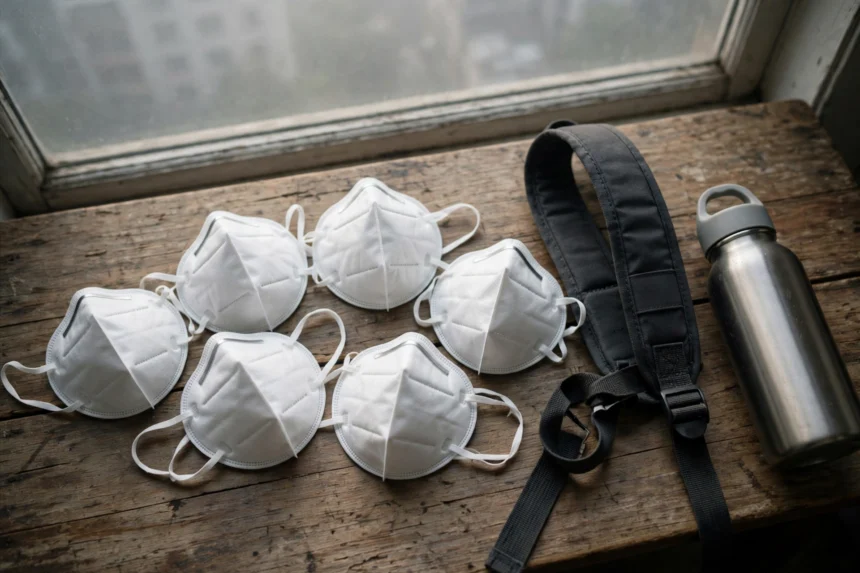
Delhi-NCR parents have a familiar question back this week: with the air turning worse again, which mask actually protects a child? Doctors say the answer is less about the brand on the packet and more about two things: the right filter and the right fit.
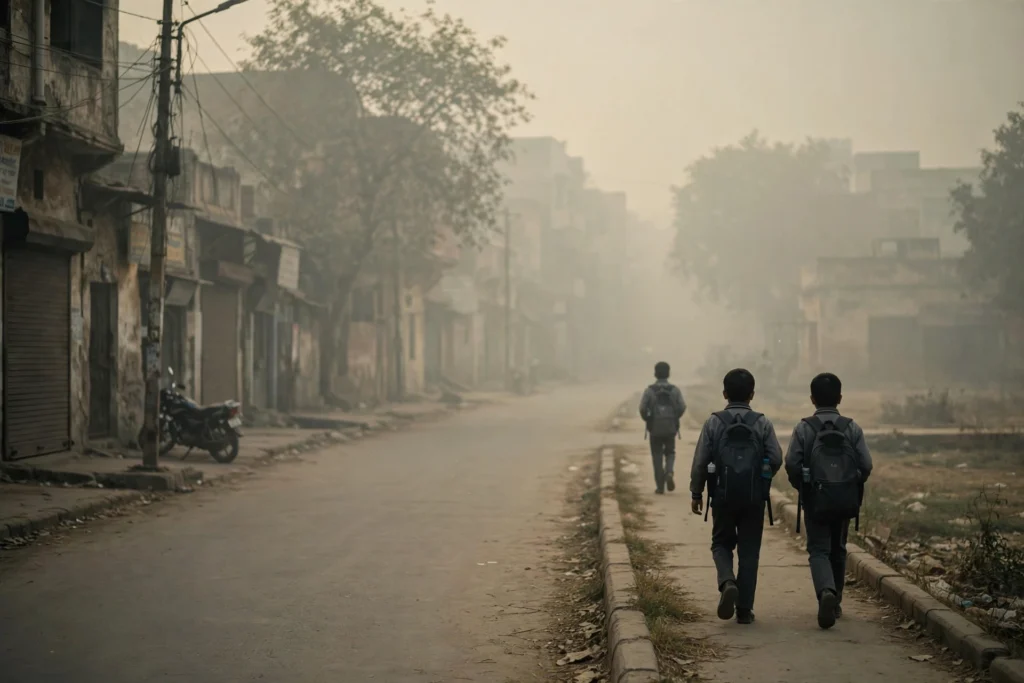
As pollution climbs, children face the exposure on school commutes, in playgrounds and on the walk home. Their lungs are still developing, and fine particles can travel deep into the airways, triggering coughing, wheezing and asthma flare-ups. A mask can cut that exposure, but only when it seals well and suits the child’s age and face size.
Why N95 masks come out on top
According to Dr Shivakumar K, MD Respiratory Medicine and Chief Consultant Pulmonologist at Kauvery Hospital, Bengaluru, a well-fitting N95 or equivalent certified KN95 respirator protects better against fine particulate matter than a surgical or cloth mask. These respirators filter airborne particles, including PM2.5, which can penetrate deep into the lungs.
An N95 respirator filters at least 95 percent of airborne particles as small as 0.3 microns. Dr Amish Vora, Director, Medical Oncology at H.O.P.E Oncology, New Delhi, agrees: cloth and surgical masks protect less against fine pollution, partly because air slips in through gaps around their edges.
Fit matters as much as filtration
Doctors stress this: even a high-quality respirator gives limited protection if polluted air enters through gaps around the nose, cheeks or chin. Pick a child-sized mask that covers the nose and mouth securely without slipping.
- Choose a child-size N95 or KN95, not an adult mask folded to fit. Adult masks often fail to seal on a smaller face.
- Press the nose clip firmly so the top edge hugs the nose, then check for gaps at the cheeks and chin.
- Ask the child to breathe normally and talk briefly. If the mask slips or slides down, the fit is wrong.
- Replace a mask that is damp, damaged or no longer holds its shape. A loose, soggy mask is a false sense of security.
A mask that a child constantly pulls down or wears under the nose cannot do its job. If a child cannot keep it on correctly, rethink the size or style rather than forcing the same mask.
Who should not wear an N95
Not every child can safely wear a respirator. Dr Shivakumar cautions that masks should not be used on children below two years of age because of breathing difficulties and suffocation risk. Children with respiratory conditions, or those who feel dizzy or short of breath in a mask, should be assessed by a healthcare professional.
For toddlers, the safer plan is to reduce exposure itself: stay indoors on the worst days, avoid busy roads, and keep indoor air cleaner, rather than relying on a mask that could become a breathing risk.
A mask alone is not enough
Both doctors are clear that a mask is only one part of a wider plan. Dr Shivakumar recommends cutting outdoor exposure during severe episodes, avoiding strenuous outdoor exercise, keeping windows closed when outdoor air is poor, and using air purifiers indoors. Dr Vora advises tracking the AQI, keeping children indoors when pollution turns extreme, and considering HEPA purifiers at home.
The indoor side of the plan has numbers behind it: HEPA purifiers indoors can reduce exposure by 50 to 80 percent, according to recent reporting on Delhi’s air quality and child health. Under Delhi’s Graded Response Action Plan, Stage I kicks in when the AQI crosses into the 201 to 300 range, the band families were warned about over the October 24 to 26 weekend.
What to buy: a quick checklist
Before buying in bulk, test one or two child-size options first. Look for a certified N95 or KN95 in a child size, with an adjustable nose clip and soft straps. Be wary of unbranded packets that claim N95 protection without certification details. Pack a spare in the school bag and agree on one rule: if breathing feels hard, the child should tell an adult straight away.
FAQs
Is an N95 mask better than a surgical mask for children in Delhi’s pollution?
Yes, when it fits well. A child-size N95 or certified KN95 filters fine PM2.5 far better than a cloth or surgical mask, which leak air around the edges.
Can my toddler wear an N95 mask?
No. Masks should not be used on children below two years of age because of breathing and suffocation risks. Stay indoors on bad-air days instead.
How do I know if my child’s mask fits?
It should cover the nose and mouth fully, seal at the nose clip, cheeks and chin, and stay in place while the child talks.
Does a mask protect against all pollution?
No. Masks cut fine-particle exposure but cannot filter every pollutant. Limiting outdoor time on severe days and using HEPA purifiers indoors matter just as much.
When should I keep my child indoors?
When the AQI is poor or worse, and especially during severe episodes. Shorten outdoor play and skip strenuous exercise outside.
Delhi’s bad-air season tests every family’s routine, and no single product solves it. But a certified, well-fitting, child-sized respirator, used alongside cleaner indoor air and shorter outdoor exposure, gives children real protection when they need it most. Check the fit, check the AQI, and when the air turns severe, staying in is the strongest shield of all.