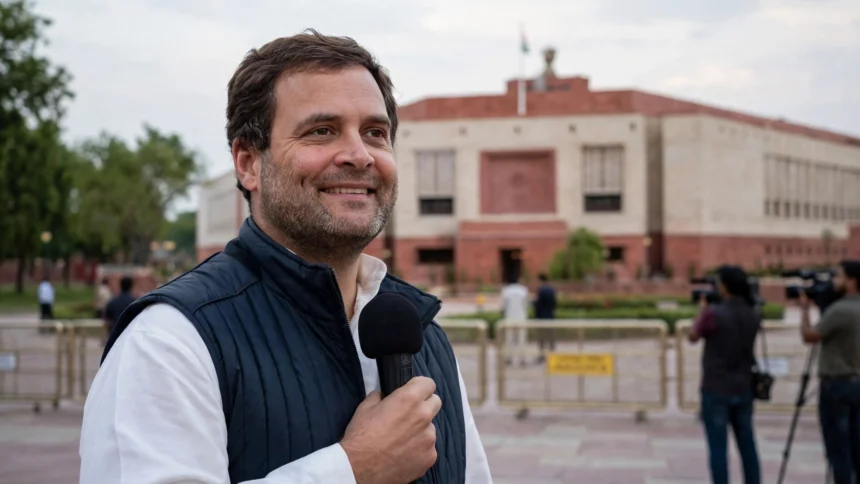
The Opposition spent its last hours before Monday’s Parliament vote trying, and failing, to stop a sitting that could redraw India’s electoral map. A 21-member delegation of INDIA bloc leaders flew to Chennai on Sunday to persuade DMK chief M. K. Stalin to withdraw his party’s support for the government’s delimitation bills. After a 90-minute meeting, Stalin said no.
Hours later, the same leaders landed in Mumbai to make a similar appeal to NCP(SP) chief Sharad Pawar at Breach Candy Hospital, where he is admitted. Both men intend to back the bills when the Lok Sabha takes them up on Monday, November 30. The government is confident: sources told News18 that at least 371 Lok Sabha MPs are expected to back the bill, comfortably above the 356 needed for a two-thirds majority.
What happened in Chennai on Sunday
Congress president Mallikarjun Kharge led the delegation, with Sonia Gandhi, Rahul Gandhi, Mamata Banerjee and the Congress chief ministers of Karnataka, Kerala and Telangana walking into Stalin’s Alwarpet residence at 4.35 pm.
The ask was simple: reconsider the DMK’s decision, announced on Saturday, to support the Centre’s revised delimitation proposals. Stalin did not budge. “If the bill is defeated, we will lose the minimum protection for Tamil Nadu,” he told reporters afterwards.
Rahul Gandhi’s warning
At Chennai airport, Rahul Gandhi said the delegation had warned Stalin that an 850-seat Lok Sabha shaped by the BJP would damage the country and South India. “Delimitation is a threat to Tamil culture, language and people,” he said.
In a post on X later on Sunday, he went further: “First they stole votes. Now they want to steal the map. If they succeed, elections will be decided before a single vote is cast. It will be the death of democracy in India.”
Why the DMK and NCP(SP) broke ranks
The DMK’s decision followed a meeting of its MPs chaired by Stalin on Saturday, November 28. The party said the Centre had met its two demands: Tamil Nadu’s 7.18 per cent share of Lok Sabha seats would not fall, and seat shares based on the 1971 Census would be maintained.
Under the revised package, every state and Union Territory gets a uniform 50 per cent increase in seats, so no state loses its existing representation. The Lok Sabha’s maximum strength rises to 850, and inter-state proportions stay frozen until the first Census after 2051. The package also lets the 33 per cent women’s quota take effect immediately after the delimitation exercise, ahead of the 2029 general election.
Sharad Pawar’s NCP(SP) has taken a similar line, and the YSRCP had already backed the bill in April after the Centre assured a 50 per cent seat increase. That realignment changed the arithmetic since April, when an earlier version, the Constitution (131st Amendment) Bill, failed to clear the two-thirds mark.
What happens in Parliament today
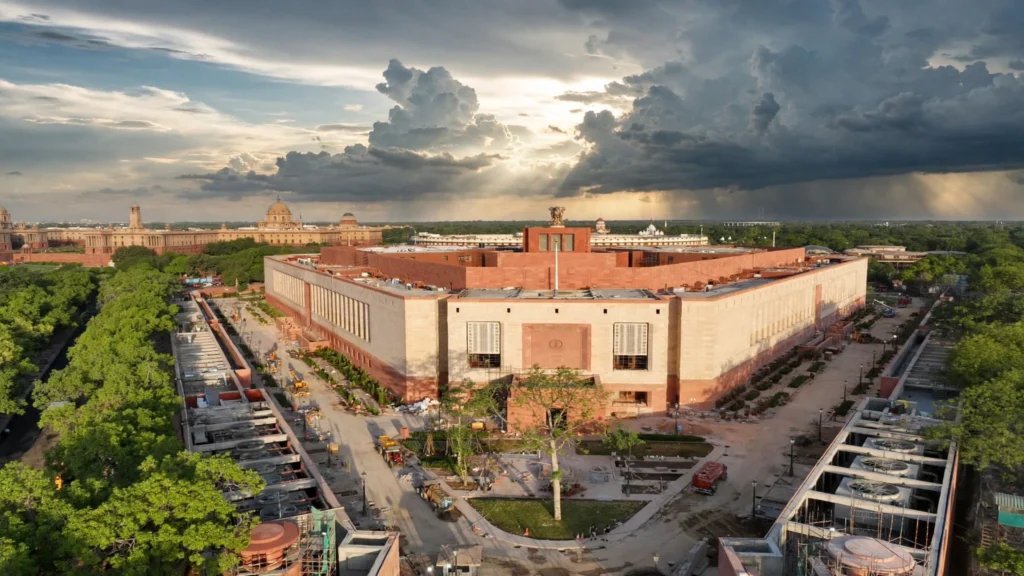
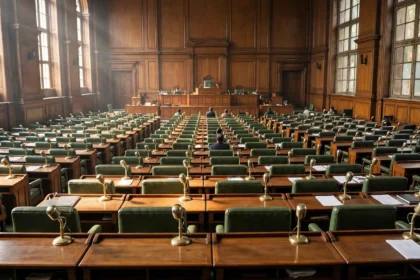
The special sitting begins at 11 am on Monday. The Lok Sabha will sit from November 30 to December 3, and the Rajya Sabha from December 2 for two days. Home Minister Amit Shah and Law Minister Arjun Ram Meghwal will seek leave to introduce three bills: the Constitution (132nd Amendment) Bill, 2026, the Delimitation (Second) Bill, 2026, and the Union Territories Laws (Amendment) Second Bill, 2026.
Why it matters
Sunday’s failed mission matters for two reasons. First, it has exposed a genuine split inside the INDIA bloc on the eve of a constitutional vote. The DMK, the NCP(SP) and the YSRCP are now voting with the government on a bill the Congress calls an existential threat to democracy.
Second, the vote will settle for 25 years how many MPs each state sends to Delhi and when women get a third of those seats. The uniform increase means nobody loses a seat. The Congress argument is that the real power lies not in the numbers but in who draws the new boundaries, and the Opposition does not trust the Delimitation Commission that will redraw every constituency from January 2027.
How we got here
- April 16, 2026: The government introduces the Delimitation Bill and the Constitution (131st Amendment) Bill, which fails to win a two-thirds majority.
- November 28, 2026: The Cabinet clears three revised bills with a uniform 50 per cent seat increase, and the DMK announces its support.
- November 29, 2026: INDIA bloc leaders meet Stalin in Chennai and Pawar in Mumbai to reverse the DMK’s stand. Both refuse.
- January 2027: A Delimitation Commission is to be set up to redraw boundaries, with the 33 per cent women’s quota to follow before the 2029 election.
FAQs
What is the delimitation bill about?
It redraws constituency boundaries, raises the Lok Sabha’s maximum strength to 850 seats, and brings in 33 per cent reservation for women.
Why did the INDIA bloc leaders meet Stalin?
The DMK said on November 28 that it would back the revised bills. Congress leaders flew to Chennai the next day to ask Stalin to reconsider. He refused.
How many votes does the government need?
A constitutional amendment needs a two-thirds majority in each House. In the Lok Sabha that is about 356 votes; the government expects at least 371.
When will women’s reservation start?
The 33 per cent quota takes effect immediately after the delimitation exercise, ahead of the 2029 general election.
Monday’s vote will show whether the INDIA bloc can still act together after a weekend that pulled it apart.