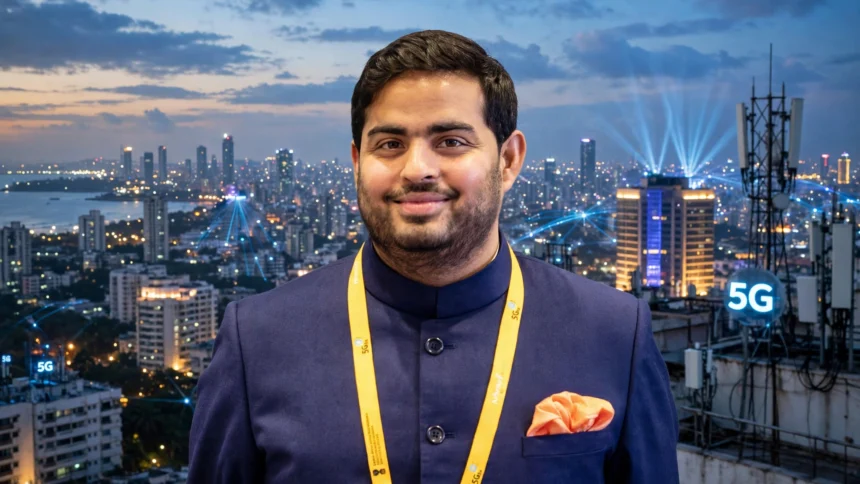
Mumbai: Ahead of what is set to be India’s largest ever IPO, Jio Platforms managing director Akash Ambani laid out how the company plans to keep growing after the listing. The message, delivered at a Mumbai press conference on Thursday, was simple: revenue will come from selling more services to customers, not from pushing tariffs up.
“We always have the ability to take up prices,” Ambani told reporters, but said the company’s preference is clear. It would rather give customers more services and charge for those than lean on data prices as its main revenue lever. When asked whether a tariff hike was imminent, he gave no timeline.
Chief executive Pankaj Pawar added that tariffs were only one of several levers available to the company. The pitch matters because investors pricing the Rs 30,213 crore issue, which opens on October 21, need to believe Jio can keep raising what each subscriber spends without sparking a backlash.
Ambani’s case rests on a single statistic: telecom spending per user has roughly halved to about 1% of India’s per capita income since Jio launched in 2016, leaving room for growth. Jio charges around Rs 4.9 per gigabyte, against an industry average of Rs 7.5, while its customers use about 43.7 GB a month.
The $1.4 trillion bet
The centrepiece of the strategy is a big projection. Ambani said Jio expects India to have a $1.4 trillion digital economy by FY31, up from roughly $600 billion today, and that the company intends to take “a huge market share” of it.
That number comes from an Analysys Mason industry report prepared for Jio Platforms. It puts the sector’s share of India’s gross value added rising from about 14% to 22%.
Three engines will drive the push: mobility, home broadband, and enterprise and international services. Each got its own set of targets.
Mobility: 340 million new customers in sight
Jio expects the industry to add around 340 million 4G and 5G customers between FY26 and FY31, including about 100 million first-time users and 240 million people migrating from 2G to faster networks. It reported 533.3 million customers at the end of June, of which 285 million are on 5G, making it the largest 5G customer base outside China.
Ambani noted the company had added three times as many net active subscribers as its nearest competitor in the previous financial year. Average monthly revenue per user stood at Rs 215.6, and the company said it carries more than 60% of India’s wireless data traffic.
Home broadband: the biggest engine
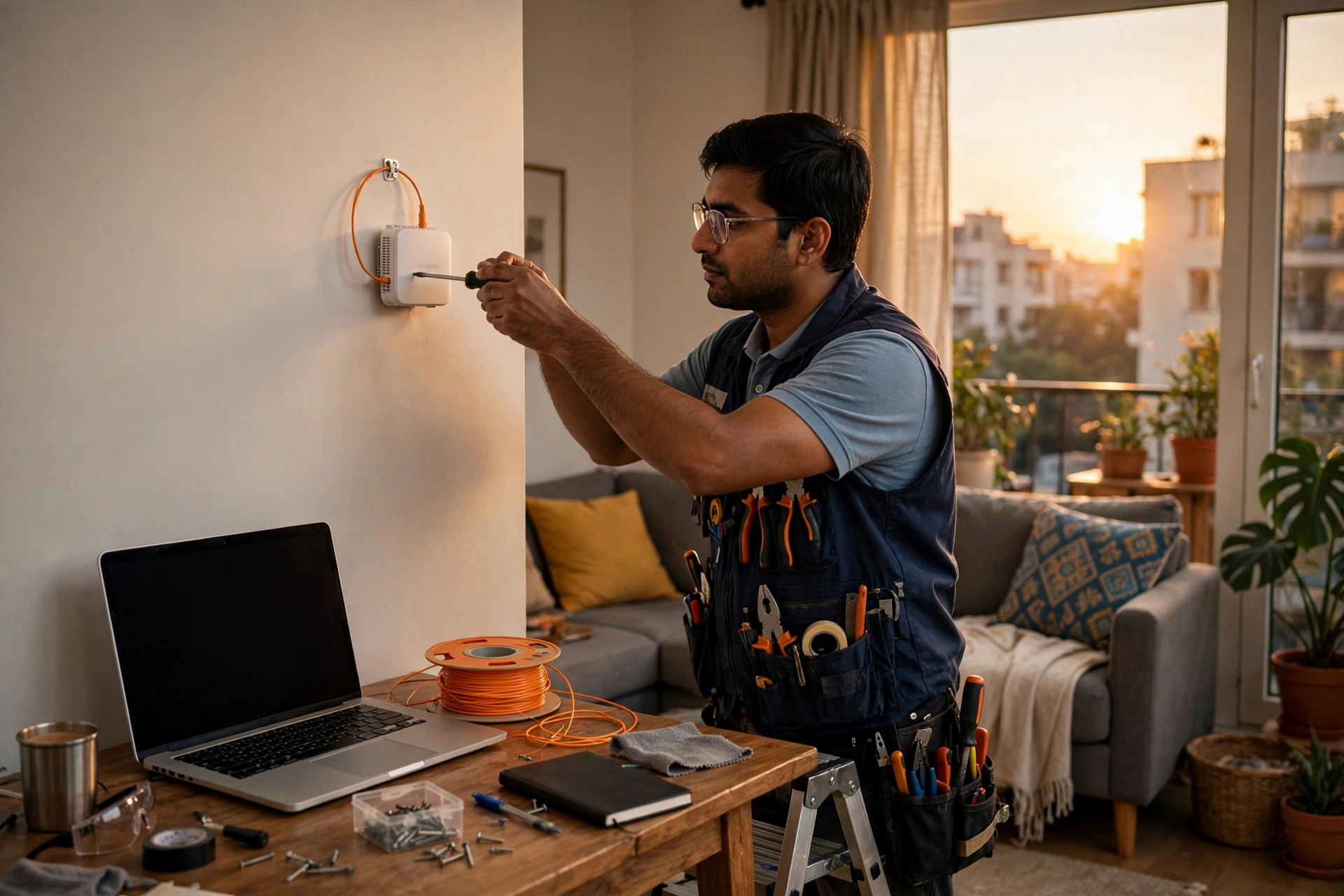
The most aggressive target is in the living room. Jio plans to expand from around 30 million home broadband customers and 40 million home passes today to 100 million connected homes across 19,000 PIN codes.
The company is banking on its proprietary unlicensed 5G fixed wireless technology, called UV, which it says can deliver speeds from 1 Gbps to 5 Gbps over the Wi-Fi band. Jio already accounts for 67.5% of India’s net fixed broadband additions, and 40% of its net additions now come from outside Tier-1 and Tier-2 cities.
Enterprise: the $56 billion opportunity
On the business side, Jio sees a $56 billion opportunity in connectivity and technology solutions for enterprises and institutions. The company already provides high-grade, secure broadband and video surveillance connectivity to 65% of Indian bank branches.
Beyond India, Jio plans to monetise its home-built technology stack in selected overseas markets, positioning itself as a technology company rather than just a mobile carrier. The business remains overwhelmingly domestic for now.
A decade of transformation
Ambani used the occasion to recount how far India’s digital connectivity has come since Jio entered the market in 2016, when average download speeds were around 2.5 Mbps. They have since risen to about 68 Mbps nationally. Jio said its own average 5G download speed was 198.9 Mbps, roughly twice that of rival operators over the past three years.
The financial backdrop is solid. Jio reported EBITDA of Rs 76,225 crore in FY26, growing at a compound annual rate of 17.8% between FY24 and FY26, with an EBITDA margin of 53.3% in the first quarter of FY27.
Whether the growth story lands will shape the reception of the IPO, which is expected to be India’s biggest share sale. For now, Ambani’s pitch is that the next leg of growth will be built on services and scale, not on charging customers more for the same data.
FAQs
Q: What did Akash Ambani announce on October 15?
A: He outlined Jio’s growth strategy ahead of its record IPO, targeting 100 million connected homes, a $56B enterprise play, and a large share of India’s projected $1.4 trillion digital economy by FY31.
Q: Will Jio raise tariffs soon?
A: Ambani said the company prefers to grow revenue by selling more services rather than raising prices, though he kept the option open and gave no timeline for any tariff hike.
Q: How many customers does Jio have now?
A: Jio had 533.3 million customers at the end of June 2026, including 285 million 5G users, with average monthly revenue per user of Rs 215.6.
Q: When does the Jio IPO open?
A: The Rs 30,213 crore Jio Platforms IPO opens for subscription on October 21 and is expected to be India’s largest ever public issue.
Informeia will track the Jio IPO and the rollout of its broadband and enterprise targets as they develop.