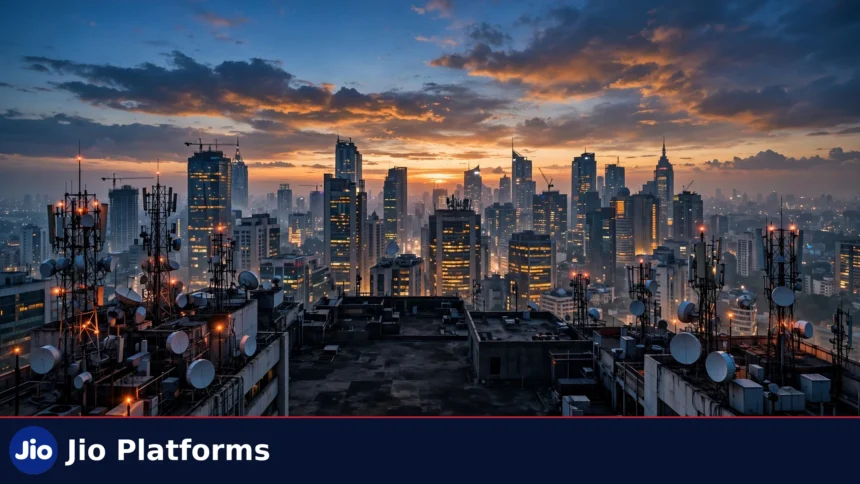
India’s biggest-ever public issue opens for bidding today. Jio Platforms, the telecom and digital arm of Mukesh Ambani’s Reliance group, has opened its three-day share sale on Wednesday, October 21, with a price band of Rs 1,065 to Rs 1,119 per share. At the top end of the band, the fresh issue of 27 crore shares will raise Rs 30,213 crore, comfortably beating the previous national record of around Rs 27,900 crore set by Hyundai Motor India’s 2024 listing.
The issue will remain open till Friday, October 23. Shares are expected to list on the BSE and NSE on October 28, and the anchor book has already shown how deep institutional demand runs: on Monday, bids crossed Rs 2.5 lakh crore for the Rs 8,109.85 crore anchor portion, roughly 30 times the shares on offer.
The issue at a glance
- Price band: Rs 1,065 to Rs 1,119 per share (face value Rs 10)
- Lot size: 12 shares, so a minimum investment of Rs 13,428 at the upper band; retail investors can bid for up to 14 lots
- Subscription window: October 21 to October 23, 2026
- Allotment and listing: allotment expected on October 26, demat credit on October 27, tentative listing on October 28
- Issue structure: 100 per cent fresh issue of up to 27 crore shares, no offer for sale
- Special quotas: up to Rs 2,500 crore reserved for eligible Reliance Industries shareholders, and up to Rs 500 crore for employees with a Rs 54 per share discount
- Registrar: KFin Technologies
Why Jio wants to be seen as a tech company
On paper, Jio Platforms is India’s largest telecom operator by subscribers, with over 53 crore customers, about half of the country’s wireless broadband market, around 42.6 per cent of fixed broadband, and roughly 60 per cent of India’s wireless data traffic. But the IPO pitch is bigger than phone calls: the company wants investors to value it as a technology platform, not a telecom utility.
The plan rests on three bets. First, monetising 5G, after what the company calls one of the fastest nationwide rollouts in the world. Second, expanding home broadband, cloud infrastructure and enterprise services. Third, building digital and AI businesses on top of that network, with Google and Meta already on board as strategic investors.
That transition is not complete. Most of the revenue still comes from telecom services, and brokerages say the next leg of growth will depend on lifting average revenue per user and selling premium digital plans, not just adding subscribers.
Where the money will go
Almost all of the Rs 30,213 crore is earmarked for cleaning up the balance sheet. Up to Rs 27,500 crore will be used to prepay borrowings of Reliance Jio Infocomm, the operating telecom company, with the balance kept for general corporate purposes. Notably, no existing investor is selling any stake: because the entire issue is a fresh issue, the money flows into the company rather than out to shareholders.

The anchor frenzy
Two days before the public issue opened, the anchor investor book gave the clearest signal of demand. On Monday, October 19, 212 anchor investors were allotted Rs 8,109.85 crore of shares at Rs 1,119 apiece, while bids crossed an unprecedented Rs 2.5 lakh crore. That overflow matters for retail bidders: unmet institutional demand often spills into the secondary market after listing.
Grey market signals and valuation
The unofficial grey market has been upbeat. The grey market premium was quoting around Rs 260 per share on Tuesday evening, up from about Rs 250 on Sunday night, implying an indicative listing near Rs 1,365 to Rs 1,379, roughly 22 to 23 per cent above the upper price band. Treat this with care: the GMP is an informal sentiment indicator, it can reverse quickly, and it never guarantees listing gains.
On fundamentals, the issue is priced at about 33.3 times FY26 earnings, roughly 18 per cent below Bharti Airtel’s 40.7 times, though Jio’s return on net worth trails Airtel’s. For FY26 the company reported about Rs 1.47 lakh crore in revenue and close to Rs 30,050 crore in net profit. Several brokerages have advised subscribing, citing the valuation discount and Jio’s market leadership, while flagging risks such as tariff-led churn and large deferred spectrum liabilities.
FAQs
When does the Jio Platforms IPO open and close?
The subscription window is open from October 21 to October 23, 2026.
What is the minimum investment in the Jio IPO?
One lot of 12 shares, costing Rs 13,428 at the upper price band. Retail investors can apply for a maximum of 14 lots.
Is there a discount for employees?
Yes. Eligible employees get a Rs 54 per share discount on the issue price, from a reservation of up to Rs 500 crore.
When will Jio Platforms shares list?
Allotment is expected on October 26, and the shares are tentatively scheduled to list on the BSE and NSE on October 28.
Are existing shareholders selling in this IPO?
No. The entire Rs 30,213 crore issue is a fresh issue of 27 crore shares; there is no offer for sale by promoters or investors.
The subscription window is now open, and the next three days will test how deep investor appetite runs for India’s largest-ever share sale. Read the red herring prospectus and consult a SEBI-registered adviser before applying.