India and Israel moved a step closer on Thursday, October 22, when Israeli Prime Minister Benjamin Netanyahu dialled Prime Minister Narendra Modi and extended a striking invitation: come to Israel’s Independence Day and light a torch alongside a brave Indian pilot.
Netanyahu shared the news himself on X after the call. “I spoke with my friend, Indian Prime Minister Narendra Modi, and invited him to light the torch alongside a brave Indian pilot on Israel’s Independence Day,” he wrote. Modi, he added, thanked him for the invitation and said that “on land and in the air, India and Israel are fighting terrorism together.”
The phrasing matters. Netanyahu did not just invite a foreign leader to a ceremony. He placed Modi next to Captain Smit Machchhar, the Indian pilot who became a hero in Israel after foiling a mid-air attack aboard flydubai flight FZ1073 on September 30. It is a carefully chosen gesture, and it tells you everything about where the India-Israel relationship stands today.
What the two leaders discussed
The Ministry of External Affairs released its own readout of the conversation. According to the MEA statement, the two leaders welcomed the “sustained momentum” in India-Israel relations and reaffirmed their shared commitment to further strengthening the “Special Strategic Partnership” between the two countries.
They also exchanged views on recent developments in West Asia, underlining the urgent need to restore peace and stability in the region. Modi reiterated India’s call for dialogue and diplomacy as the way forward. The two leaders agreed to remain in touch.
Modi also posted on X after the call, saying the two leaders reviewed the sustained momentum in bilateral ties and reaffirmed their commitment to strengthening the partnership. On West Asia, he wrote that both leaders exchanged views and “underscored the urgent need to restore peace and stability in the region.”
The pilot who brought the two countries together
Captain Smit Machchhar is the human thread running through this story. On September 30, he was seriously injured after allegedly being attacked by his co-pilot, an Omani national, with a crash axe aboard flydubai flight FZ1073, which was travelling from Dubai to Tel Aviv with 174 passengers on board.
The aircraft reportedly transmitted emergency signals before plunging more than 17,000 feet in a rapid descent from 34,000 feet. Injured in the cockpit, Machchhar reportedly realised what was happening and made what was described as “one last push” to open the cockpit door, a move that helped avert a catastrophe.
Days later, Netanyahu spoke with Machchhar over the phone and praised him as a “true hero.” His words then are worth repeating now: “You are a hero for Israel, India and the entire world. I invite you to light a torch on Israel’s Independence Day.”
Why this invitation is significant
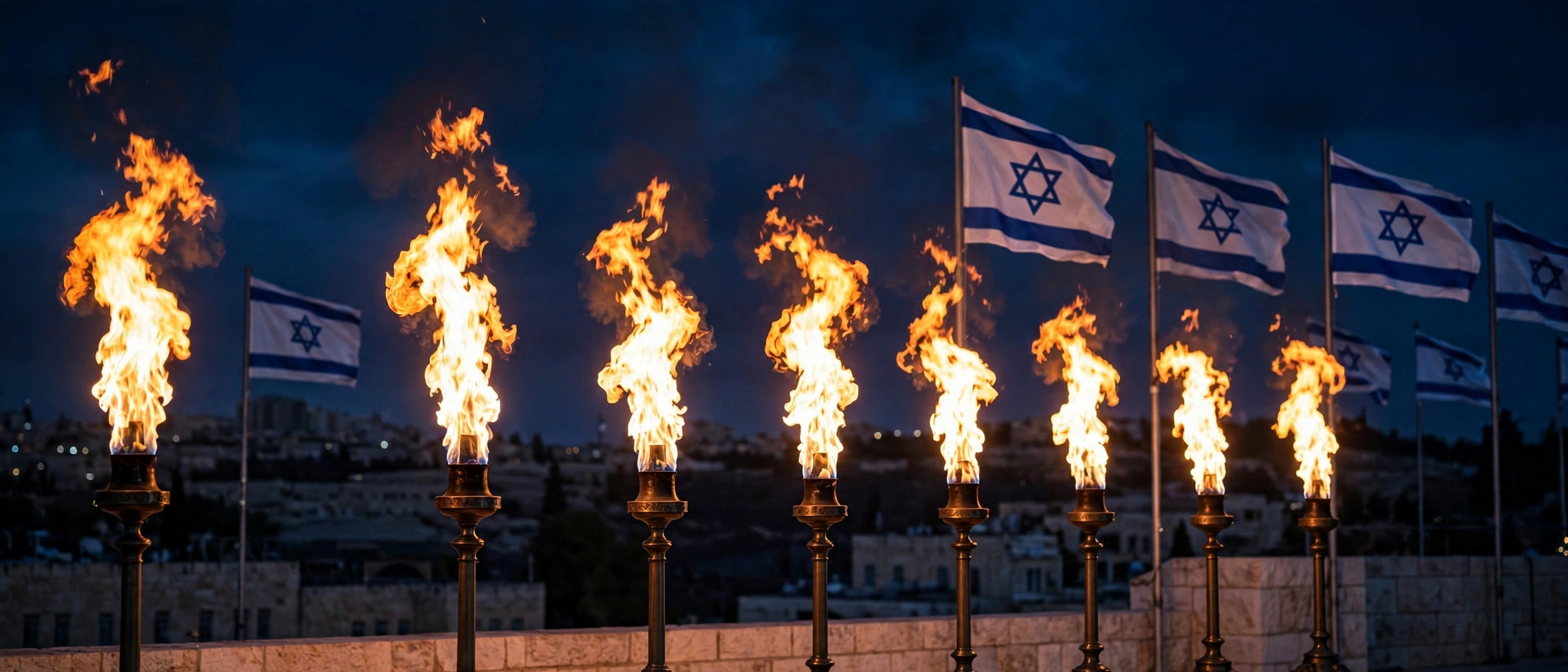
Israel’s Independence Day torch-lighting ceremony is one of the country’s most solemn national rituals. Netanyahu himself has said the honour is usually reserved for Israeli citizens. Extending it to a foreign leader and a foreign pilot is exceptional.
For India, the symbolism runs deep. The Modi government’s foreign policy has leaned heavily into the counter-terrorism partnership with Israel, from defence procurement to intelligence cooperation. Netanyahu’s message, that the two countries fight terrorism “on land and in the air,” echoes language New Delhi has used for years.
There is also a domestic audience. Modi has cultivated an image of commanding global respect, and a torch-lighting invitation from a major ally fits that narrative neatly. With regional tensions in West Asia still high, the call also positions India as a voice for de-escalation, the “dialogue and diplomacy” line the MEA readout carefully preserved.
What happens next
No date has been announced for Modi’s acceptance or travel, and Israel’s next Independence Day is months away. For now, the call serves as a signal rather than a schedule: India and Israel are publicly doubling down on their strategic bond, with counter-terrorism at its core.
The two leaders agreed to stay in touch. Given the pace of developments in West Asia, the next call may not be far off.
FAQs
What did Netanyahu invite Modi to do?
Netanyahu invited PM Modi to light a torch alongside Indian pilot Captain Smit Machchhar at Israel’s Independence Day celebrations, after dialling him on October 22, 2026.
Who is Captain Smit Machchhar?
An Indian pilot who foiled an alleged mid-air attack by his co-pilot aboard flydubai flight FZ1073 from Dubai to Tel Aviv on September 30, 2026, saving the lives of 174 passengers.
What did Modi say during the call?
According to Netanyahu’s post on X, Modi thanked him for the invitation and said that “on land and in the air, India and Israel are fighting terrorism together.”
What did the MEA statement say?
The MEA said the leaders welcomed the sustained momentum in ties, reaffirmed the Special Strategic Partnership, exchanged views on West Asia, and underlined the urgent need to restore peace and stability in the region.
Has Modi accepted the invitation?
No formal acceptance has been announced yet. The two leaders agreed to remain in touch.