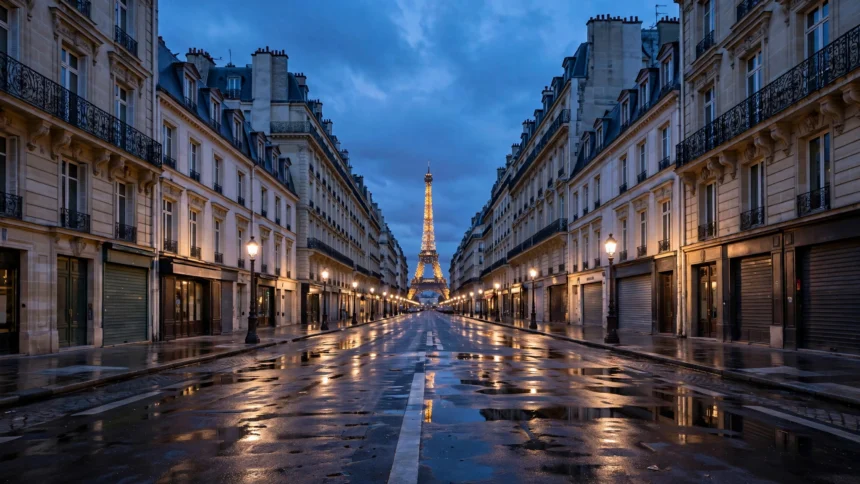
Paris woke up on Sunday morning to streets scarred by burned cars, smashed shopfronts and looted businesses. What began on Saturday as a wave of largely peaceful marches against the rising cost of living had, by nightfall, spiralled into some of the worst rioting France has seen in years.
Across the country, around 550,000 people took part in 110 separate demonstrations, according to Interior Minister Laurent Nunez. Organisers, including the CGT labour union and student groups, put the real figure closer to 800,000. By the time the smoke cleared, police had arrested more than 1,200 people and over 150 officers had been injured.
“It is a miracle the toll is not higher,” Prime Minister Sebastien Lecornu said on Sunday, announcing that the government would not be “intimidated” by the violence. President Emmanuel Macron vowed that everyone responsible for looting and attacks on public buildings “will be prosecuted and punished”.
How a peaceful protest turned violent
The day’s demonstrations were called to protest soaring prices, deteriorating public services and poor conditions in schools. High school and university students, who have been protesting for weeks, formed the backbone of the early marches, which moved through city centres with music, banners and chants.
The mood changed sharply in the late afternoon. In Paris, masked youths descended on Republique square, where a burning car became one of the day’s defining images. Groups reportedly disconnected security cameras before smashing shop windows and ransacking luxury boutiques, supermarkets, pharmacies and electronics stores. Police responded with tear gas and water cannon as projectiles and fireworks rained down.
Paris Deputy Mayor Emmanuel Gregoire said “whole streets have been devastated” by the violence.
Cities across France hit
The unrest was not confined to the capital. In Limoges, the historic city hall, a building more than 140 years old, was largely destroyed by fire after masked protesters broke into the premises. In Marseille, demonstrators forced their way into the town hall and defaced its walls with graffiti, while in Lyon the city’s tourist office was torched.
- Limoges: 140-year-old city hall largely destroyed by fire
- Marseille: town hall breached and vandalised
- Lyon: tourist office set ablaze
- Bordeaux: police compound attacked
- Saint-Etienne: a 17-year-old protester lost his right hand after being hit by a crowd-control grenade
- Paris, Nice, Lille, Strasbourg, Toulouse, Nantes: looting, torched vehicles and clashes reported
The arrest tally told its own story of escalation. An initial count of 400 arrests had more than tripled by late Saturday, as clashes spread from city to city.
Why France is angry
The anger on the streets has been building for weeks. Inflation across Europe has pushed up the price of daily necessities, a squeeze that French households say has not eased. Students have been staging walkouts for weeks demanding more investment in education and protesting what they describe as excessive police force during earlier demonstrations.
The unrest also comes with the country’s political calendar looming large. France is around six months away from its next presidential election, and the violence quickly became a political battleground. Lecornu blamed the chaos on the “ultra-left” and common criminals, warning that no political camp would be allowed to impose its agenda through street violence. Far-right and left-wing contenders traded blame through the night.
Far-left presidential candidate Jean-Luc Melenchon joined the protest in Paris on Saturday, backing the student movement that helped spark the day’s marches.
Unrest spreads beyond France
Saturday’s anger was not uniquely French. Smaller demonstrations over living costs also took place in Belgium, Italy and Portugal, where protesters rallied against housing costs, and students took to the streets again in Albania. But nowhere else did the protests reach the scale or intensity seen in France.
The government now faces a difficult week. With the cleanup underway and shop owners boarding up windows, the question being asked in Paris is not just who started the violence, but whether the underlying anger over prices and public services can be calmed before the next scheduled round of protests.
FAQs
What triggered the France protests?
The October 17 demonstrations were called over rising living costs, deteriorating public services and poor conditions in schools, backed by student groups and the CGT labour union.
How many people were arrested?
Prime Minister Sebastien Lecornu said more than 1,200 people were arrested across France, while over 150 police officers were injured.
Which cities saw the worst violence?
Paris, Marseille, Limoges, Lyon, Bordeaux, Lille, Strasbourg, Nice, Toulouse and Nantes all reported clashes, looting or arson. Limoges’ historic city hall was largely destroyed by fire.
What did President Macron say?
Macron declared there was “no room for violence in our Republic” and pledged full support to law enforcement against the “sowers of chaos”, promising prosecutions.
Are more protests planned?
Student and union groups have vowed to continue their campaign over prices and school funding, with further demonstrations expected in the coming weeks.
France now faces a tense run-up to next year’s presidential election, and Saturday’s scenes have made clear that the streets will be part of the campaign. For now, the government is betting that a tough line on the rioters, paired with answers on the cost of living, can cool the temperature before it boils over again.