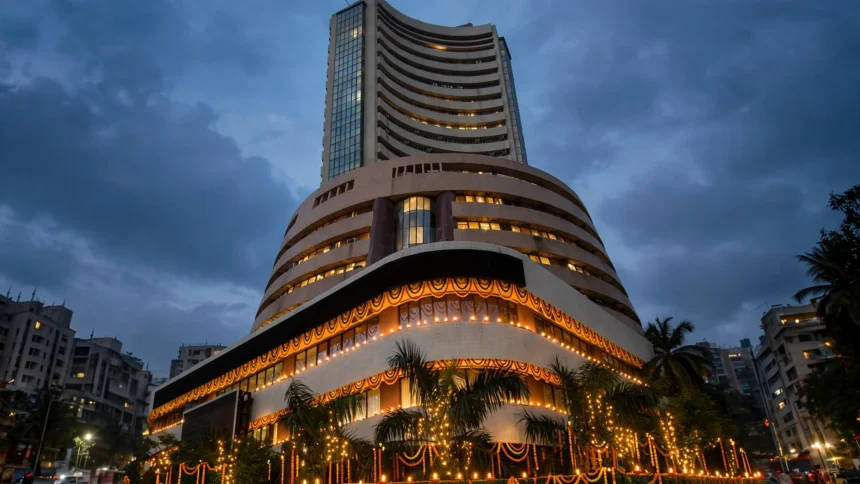
Mark your calendars, investors. The country’s two leading stock exchanges have officially announced the date and timings for this year’s Diwali Muhurat trading session, and the countdown to the most auspicious hour of the market calendar has begun.
In separate circulars issued on Monday, October 19, the National Stock Exchange (NSE) and the Bombay Stock Exchange (BSE) confirmed that the special one-hour session will be held on Sunday, November 8, 2026, on the occasion of Laxmi Pujan. Continuous trading will run from 2:20 pm to 3:30 pm, a crisp 70-minute window that traders across the country will be watching closely.
What the exchanges announced
Muhurat trading is the symbolic session held on Diwali, which also marks the start of the new Hindu calendar year. It is widely believed that trading during this auspicious hour brings prosperity and growth, and many investors make their first investment of the new Samvat year during the session. While regular trading remains closed for Diwali, the exchanges open a special window so the market can participate in the festivities.
This year’s session follows the familiar structure of previous years, but the exchanges have laid out a detailed minute-by-minute timetable:
- Member login: 1:15 pm to 1:50 pm
- Block deal window: 1:50 pm to 2:05 pm
- Pre-open session: 2:05 pm to 2:20 pm, with order matching from 2:15 pm to 2:17 pm and a buffer period till 2:20 pm
- Continuous trading: 2:20 pm to 3:30 pm
- Closing auction: trading in closing-auction securities ends at 3:15 pm, with closing activities running till 3:50 pm
- Trade modification cut-off: 4:15 pm; the market formally closes around 4:20 pm after settlement processes
A special pre-open session for IPOs and relisted securities will run from 2:05 pm to 2:50 pm, and those stocks will be available in the normal market between 3:05 pm and 3:30 pm. The exchanges have also scheduled a call auction session for illiquid securities between 2:25 pm and 3:10 pm.
Not just equities
The session covers far more than the cash market. According to the circulars, trading will be available across equity, commodity derivatives, currency derivatives, equity futures and options, and securities lending and borrowing (SLB). Importantly, the NSE clarified that all trades executed during the session will carry the same settlement obligations as a regular trading day, so participants should plan their positions accordingly.
Why this session draws so much attention
For all its symbolic value, Muhurat trading has a habit of moving the market. The shortened session often sees higher-than-usual volatility, since a full day’s worth of orders compresses into a single hour. Analysts caution that while the session’s significance lies more in tradition than in immediate profitability, the direction it takes is often read as a mood indicator for the weeks ahead.
Historically, the session has ended in the green more often than not, which only adds to its appeal. Brokers report a steady stream of token buy orders, many of them small symbolic purchases made in the name of Goddess Lakshmi. For long-term investors, it is less about the one-hour chart and more about beginning the new Samvat on a positive note.
What traders should keep in mind
- Double-check the timetable: pre-open, block deals and closing auctions all follow a different schedule from regular days.
- Liquidity can be patchy in the compressed window, so limit orders are safer than market orders.
- Settlement works like a normal trading day, so margin and pay-in timelines apply as usual.
- Do not treat the session as a trading signal: it is symbolic, and analysts advise against reading too much into a 70-minute move.
FAQs
When is Muhurat trading 2026?
The NSE and BSE will hold the special session on Sunday, November 8, 2026, from 2:20 pm to 3:30 pm, on the occasion of Laxmi Pujan.
What is Muhurat trading?
It is a special one-hour trading session held every Diwali, marking the start of the new Hindu calendar year. Investors believe trading during this auspicious hour brings prosperity.
Can retail investors trade during the session?
Yes. The session is open to all market participants through their brokers, just like a regular trading day, though timings differ.
Is settlement the same as a normal day?
Yes. The exchanges have confirmed that all trades executed during Muhurat trading carry settlement obligations identical to a regular trading session.
How long is the session?
Continuous trading runs for 70 minutes, from 2:20 pm to 3:30 pm, with a 15-minute pre-open session starting at 2:05 pm.
With the dates now official, Dalal Street can begin its Diwali countdown. Whether you trade for tradition or just watch the screens, November 8 is a date worth circling.