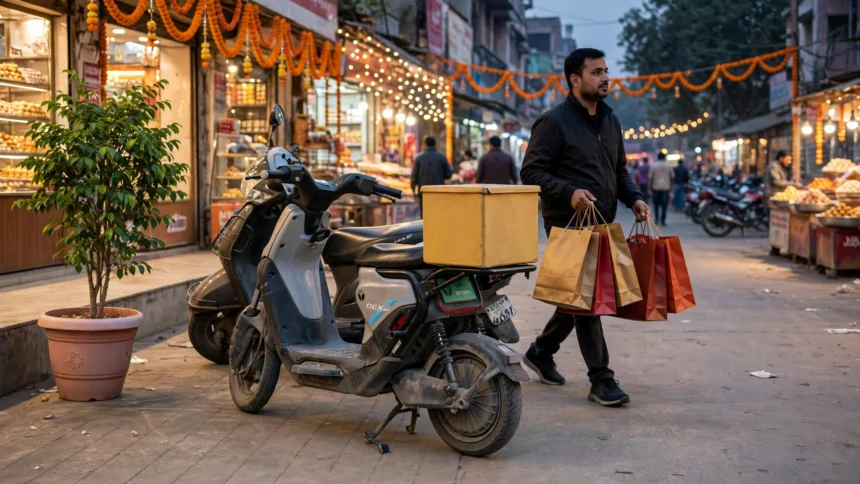
Until recently, quick commerce in India meant one thing: groceries in ten minutes. A forgotten packet of milk, a last-minute snack run, a pack of diyas bought in a panic on Diwali evening. That was the whole pitch. This festive season, the pitch has changed completely. With Diwali falling on Sunday, November 8, the apps that once delivered only atta and onions are now delivering kurtas, lipstick, perfumes, watches and gift boxes, and shoppers are buying them like never before.
Redseer estimates India’s online retail market will grow about 25 percent this festive season, its strongest performance in around five years. Quick commerce is expected to grow far faster, by 110 to 120 percent, and take its share of festive online sales from 11 percent last year to 18 percent this year. Nearly one rupee in every five spent online this festive season could flow through an app that promises delivery in minutes.
Fashion and beauty lead the new basket
Myntra’s quick-commerce service, M-Now, shows how the basket is changing. Orders during the recently concluded Big Fashion Festival were more than 2.6 times last year’s figure, led by ethnic wear. The platform now lists 596 beauty brands, and demand typically peaks in the final two to three days before the festival, which this year lands right on Dhanteras and the Diwali weekend.
Amazon’s Great Indian Festival tells a similar story. Its instant delivery service, Amazon Now, drove 23 times more first-time shoppers to Amazon.in than a year ago, while daily orders grew 18 times and average order value rose 30 percent. In more than 120 Indian cities, one in every two products was delivered within minutes. Overall shopping volume is up more than 50 percent year on year, with over 70 percent of customer visits coming from outside the metros.
Flipkart Minutes is seeing the same pattern beyond the big cities. Festive lighting, diyas, home decor and gifting essentials are leading pre-Diwali demand, with orders in East India up 40 percent and demand in Tier-2 and smaller cities up nearly 20 percent. Customers in Tier-3 cities bought over 50 percent more beauty products year on year.
Brands are following the customer
Beauty brands have stopped treating quick commerce as a side channel. For The Body Shop India, the channel has delivered two to three times growth in orders over the last two years and now accounts for nearly 15 percent of the business. Gifting alone brings 15 to 20 percent of Diwali sales, against 8 to 10 percent in non-festive months. RENEE Cosmetics says quick commerce made up about 15 percent of its FY26 revenue, and a recent Blinkit campaign delivered 11.5 percent incremental sales at 48 percent lower customer acquisition cost.
From top-up shopping to planned shopping
The numbers behind the shift are striking. Quick commerce’s market size grew from about 1 billion dollars in the first half of 2023 to around 9 billion dollars in the first half of 2026, while monthly transacting users rose from 8 million to more than 60 million. Average order values have climbed from around Rs 250 to Rs 650 to 700, and monthly order frequency per user has almost doubled year on year, according to Deloitte.
Analysts say the line between top-up shopping and planned shopping is blurring. KPMG India’s Nikhil Sethi notes that during festivals, immediacy allows what he calls compressed planning: shoppers delay purchases and buy closer to the occasion, knowing the gift or the outfit will still arrive in time. The shift is not only about moving existing spending online. Convenience and discovery are also creating new occasions to buy, from an extra box of sweets to a last-minute gift for a colleague. At-home beauty is riding the wave too: Yes Madam says bookings rose nearly 75 percent on last year.
The real test comes after Diwali
For all the festive cheer, the hard question arrives after the lights come down. Speed and wider assortment add operational cost, from dark stores to faster fulfilment, and profitability remains under pressure. The long-term prize is turning occasional urgency into repeat behaviour: shoppers who first tried quick commerce for a forgotten gift, and then kept coming back for the weekly shop.
For now, though, the festival belongs to the impatient shopper. A kurta ordered at noon can be worn to the evening puja, and a gift forgotten until the last hour can still arrive before the diyas are lit. That, more than any discount, is what this Diwali’s quick-commerce boom is really selling: time.
FAQs
Why is quick commerce growing so fast this Diwali?
Platforms have expanded beyond groceries into fashion, beauty and gifting, while Redseer projects 110 to 120 percent festive growth for the channel.
Which categories are selling most?
Ethnic wear, beauty products, perfumes, watches, festive lighting, diyas, home decor and gifting essentials.
How big is India’s quick commerce market now?
It grew from about 1 billion dollars in the first half of 2023 to around 9 billion dollars in the first half of 2026, with monthly users rising from 8 million to more than 60 million.
Are orders only coming from big cities?
No. Over 70 percent of visits during Amazon’s Great Indian Festival came from outside the metros, and Flipkart Minutes reports 40 percent order growth in East India.
Note: Figures are Redseer estimates and company statements reported by The Economic Times, Fortune India and The Week.