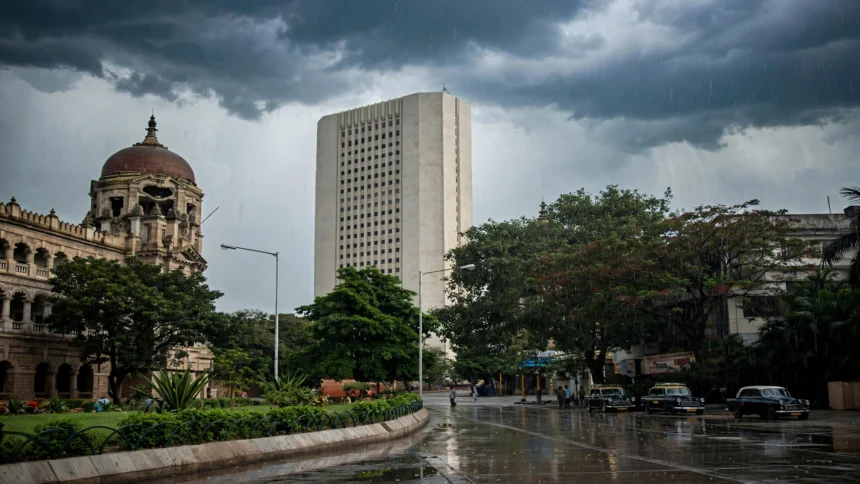
The numbers behind India’s currency defence are staggering, and for the first time, the scale of it is out in the open. A Financial Times report published on Thursday says the Reserve Bank of India has spent about $90 billion since June defending the rupee, money drawn largely from deposits the central bank raised from the Indian diaspora. The report landed on the same day the rupee snapped an eight-day winning streak, sliding to 94.82 against the US dollar as crude oil prices surged to a five-month high.
The timing tells the whole story. After eight straight sessions of gains that pulled the rupee back from the edge, Brent crude jumped more than 3 per cent to $112.30 a barrel on Thursday, and the currency buckled under the weight of higher oil import costs and fresh dollar demand from importers.
The $90 billion defence, decoded
According to the FT, which cited two foreign-exchange bankers familiar with the operations, the RBI has deployed roughly $90 billion of the more than $140 billion it raised from Indians living abroad to prop up the currency since June. The interventions included direct dollar sales in the spot market and currency swaps designed to absorb surplus liquidity. One banker described the central bank’s approach as “aggressive”. The RBI did not respond to the FT’s request for comment.
The drawdown shows up clearly in the reserves data. India’s foreign exchange reserves have fallen by about $60 billion from an early-September peak of $785 billion. Meanwhile, the RBI’s net forward dollar liabilities have ballooned to $200 billion in August, up from about $137 billion in July, according to official data cited in the report.
That combination has analysts worried. “It is not sustainable,” Dhiraj Nim, a Mumbai-based economist and foreign exchange strategist at ANZ Group, told the FT. “FX reserves are finite and the forward book obligations are large. The RBI will not draw down reserves to an extent that reserve adequacy becomes a concern.” Nim added that the central bank appeared to have “drawn a line in the sand” at Rs97 per dollar.
Thursday’s reality check for the rupee
The rupee fell to 94.82 against the dollar on Thursday, ending a rally that had made it one of the strongest performers in Asia over the previous eight sessions. Bloomberg data showed it was the worst-performing Asian currency of the day. Over the preceding eight sessions it had gained 2.4 per cent, touching 94.47 on Wednesday, its strongest level in six weeks.
The reversal was driven by oil. Escalating geopolitical tensions, including intensified attacks by Yemen’s Houthi rebels on Saudi Arabia’s energy infrastructure, pushed Brent crude to its highest level in five months. Crude is up about 8 per cent over the past two weeks, a serious problem for one of the world’s largest oil importers.
Domestic equities offered no shelter either. The Sensex tumbled 642 points to 73,067 and the Nifty fell 241 points to 22,570 in early trade. Foreign institutional investors had been net buyers on Wednesday, picking up shares worth Rs 1,022 crore, but the softer dollar index, down to 101.6, was not enough to save the rupee.
Why the RBI is fighting so hard
The pressure is coming from every direction at once:
- Record oil import costs: Higher crude prices directly widen India’s import bill and drain dollars from the system.
- Foreign investor selling: Record selling of Indian equities by overseas investors has kept the rupee on the back foot all year. The currency is down 5 per cent against the dollar in 2026, one of Asia’s worst performances.
- Rising inflation: Retail inflation quickened to 5.5 per cent in September, nearing the RBI’s 6 per cent tolerance ceiling. The central bank raised the repo rate by 25 basis points to 5.5 per cent in October, its first hike since February 2023.
- Slowing momentum: GDP growth cooled to 7.8 per cent in the June quarter from 8.6 per cent in the previous quarter, limiting how aggressively the RBI can use rate hikes as a weapon.
To fight back without burning only reserves, the RBI has rolled out unusual tools this month: a special window to absorb state oil companies’ dollar purchases away from the spot market, a lower threshold for rupee-linked derivative trades that require no proof of underlying exposure, and a rule forcing dealers to hold a 20 per cent cash reserve on forward contracts with the central bank. Earlier steps included curbing short positions against the rupee and courting diaspora deposits.
What analysts and the RBI say
Governor Sanjay Malhotra has told local media this month that the central bank remains committed to a stable rupee but does not target any particular level or band. He rejected suggestions that this month’s measures amounted to capital controls, saying they were meant to keep currency markets serving genuine hedging needs rather than speculative bets.
The IMF has a different prescription. Krishna Srinivasan, the Fund’s Asia-Pacific director, said at a briefing in Mumbai that India should let the exchange rate move as the first line of defence against the oil shock. Miguel Chanco, chief emerging Asia economist at Pantheon Macroeconomics, noted that Malhotra’s stated ethos, letting the market broadly determine the rate while the RBI only curbs excess volatility, is now being tested by the fallout from the war in the Middle East.
For traders, the near-term levels are clear. Dilip Parmar, a currency analyst at HDFC Securities, told the Financial Express that crude prices and geopolitical developments will drive the rupee from here, with 95.30 acting as strong resistance and buyers likely to emerge around 94.25 to 94.30.
What this means going ahead
The good news is that the RBI’s measures have worked in the short term. The rupee gained 230 paise since the central bank announced support steps on October 10, helped further by foreign inflows linked to Jio Platforms’ upcoming IPO, set to be India’s biggest-ever listing. The bad news is that the fight is far from over. If crude pushes toward $120, the defence will get costlier, and the RBI’s room to manoeuvre will shrink.
For now, the rupee is caught between two forces: a central bank determined to keep it stable, and an oil market determined to test that resolve. Thursday’s $112 crude and the FT’s $90 billion figure show exactly how expensive this stalemate has become.
FAQs
How much has the RBI spent defending the rupee?
The Financial Times reports the RBI has used about $90 billion since June, drawn largely from more than $140 billion in deposits raised from the Indian diaspora.
Why did the rupee fall on Thursday?
Brent crude surged 3.2 per cent to $112.30 a barrel, a five-month high, raising India’s oil import bill. Importer dollar demand, weak domestic equities and offshore dollar buying added to the pressure.
How much have India’s forex reserves fallen?
Reserves have dropped about $60 billion from an early-September peak of $785 billion, while the RBI’s net forward dollar liabilities jumped to $200 billion in August.
What is the RBI’s stance on the rupee level?
Governor Sanjay Malhotra says the central bank is committed to a stable rupee but does not target any specific rate or band. Analysts believe the RBI is informally defending the Rs97 level.
That is all for this story. For more economy news and market updates, keep reading Informeia.