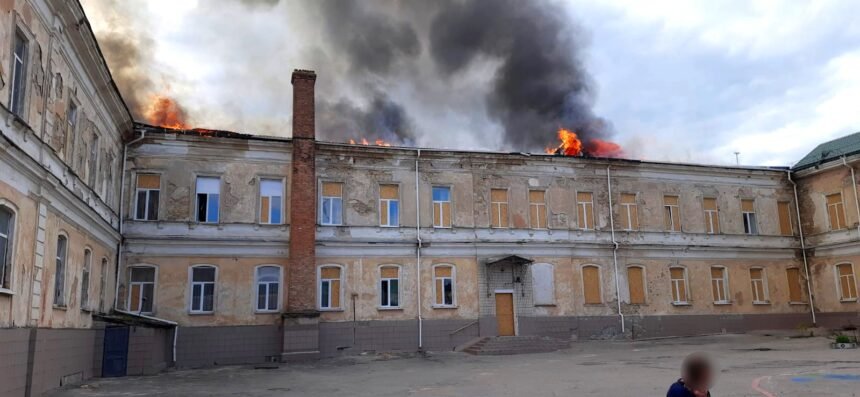
At least 26 people were killed in southern Ukraine on Monday after Russian strikes hit a school building being used to distribute humanitarian aid and a shelter nearby, Ukrainian officials said. The attack came within hours of the end of the longest ceasefire of the war, a six-day pause in Kherson that had passed without a single reported violation.
The strikes hit the village of Komyshuvakha in the Zaporizhzhia region, next to Kherson in Ukraine’s south. President Volodymyr Zelensky said the first strike targeted the school where aid was being handed out, and a second strike then hit a shelter close by. The acting regional governor put the death toll at 26, a figure reported by both AFP and the Associated Press.
It was a grim return to full-scale fighting after a rare week of quiet. The local ceasefire, which ran from October 27 to November 1, had been brokered with the help of US First Lady Melania Trump and was limited to the Kherson region. It allowed a humanitarian mission into Oleshky, a Russian-occupied city across the Dnipro from Kherson, and enabled hundreds of civilians to leave an area short of food, water and electricity.
A six-day pause that held, then ended
What made the Kherson pause remarkable was that it actually held. Neither side reported a violation during the six days, and one Ukrainian lawmaker described it as the biggest de-escalation since 2022, the year Russia launched its full-scale invasion. Ukraine’s Parliament Commissioner for Human Rights, Dmytro Lubinets, confirmed on Sunday that the ceasefire had ended after running from October 27 to November 1.
Kyiv had proposed extending the pause. A senior Ukrainian figure told AFP that Russia refused the offer, and no public reason was given by Moscow for declining. Kherson regional governor Oleksandr Prokudin warned residents to stay alert and respond immediately to air raid warnings once the truce expired.
Within hours, the warnings proved necessary. Ukrainian officials said Russian drones struck central Kherson on Monday, hitting a medical facility and a car and wounding two elderly residents. The far deadlier blow fell in neighbouring Zaporizhzhia, where the aid centre strikes killed 26 people.
Why an aid centre became a target
Aid distribution points have become a lifeline in front-line towns, where shops are shuttered, power is unreliable and residents depend on convoys of food and medicine. The school in Komyshuvakha was serving exactly that role when it was hit.
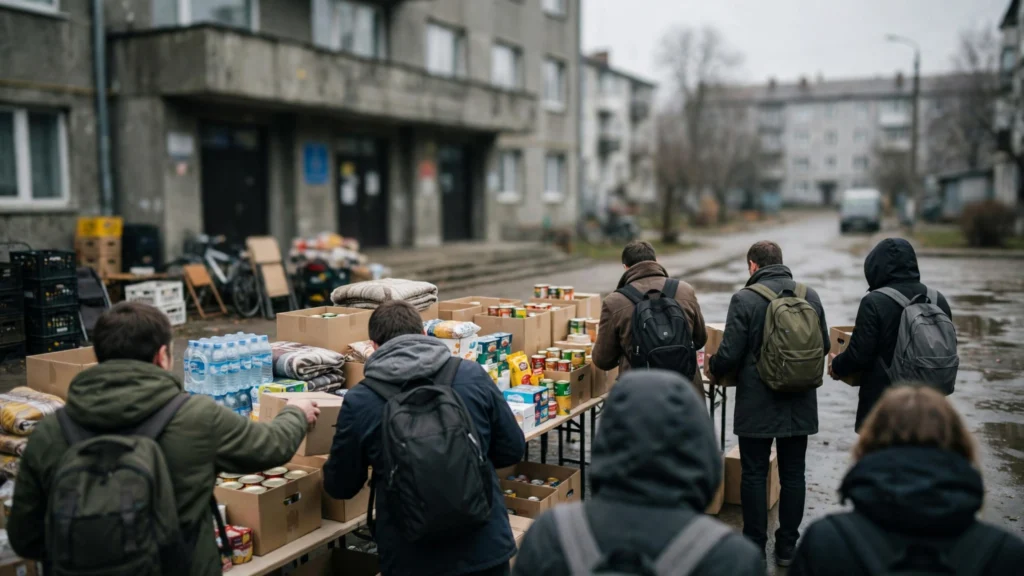
Ukraine’s general staff said Russia had used the ceasefire week to strengthen its drone defences and replenish ammunition supplies. The speed with which strikes resumed after the truce expired has dashed hopes that the local pause could become a model for wider de-escalation.
The war is now grinding through its fifth year, and the front lines in the south have barely moved in months. That is precisely why a small, local ceasefire drew so much attention: in a war defined by relentless bombardment, six quiet days felt like proof that pauses are still possible.
Hacked alerts add to the confusion
As the truce ended, both countries reported cyberattacks on their emergency warning systems. Ukraine’s air force said its Air Alarm app had probably been subjected to hostile interference after users received a false warning of a radiation threat over Kyiv, and officials stressed there was no radiation threat. Russia’s emergency ministry reported a similar attack on its own warning app the same day.
What happens next: Abu Dhabi talks
Diplomacy, for now, is the one thread still holding. US special envoy Steve Witkoff said on Monday that US-mediated talks between Russia and Ukraine are set to resume on November 10 and 11 in Abu Dhabi. Those talks had been effectively frozen since the United States and Israel launched joint strikes on Iran in February.
Zelensky, meanwhile, has tied a significant concession to American support. He said on Sunday that Ukraine would stop striking Russian oil refineries, something President Donald Trump has demanded, if Washington supplied Kyiv with powerful Patriot interceptor missiles.
For the people of Komyshuvakha, though, the diplomatic calendar offers little comfort. The 26 people killed on Monday had queued for aid, not for a battlefield. Their deaths are a reminder of what the Kherson ceasefire briefly interrupted, and of how quickly that interruption ended.
FAQs
How many people were killed in the November 2 strikes?
At least 26, when Russian strikes hit an aid distribution school and a nearby shelter in Komyshuvakha, in the Zaporizhzhia region.
What was the Kherson ceasefire?
A local ceasefire in the Kherson region from October 27 to November 1, 2026. It was the longest truce of the war, passed without a reported violation, and enabled a humanitarian mission and civilian evacuations from Russian-occupied Oleshky.
Why did the ceasefire end?
Kyiv proposed extending the pause, but Russia refused the offer, according to a senior Ukrainian figure cited by AFP. Moscow has given no public reason for declining.
When are the next Russia-Ukraine peace talks?
US special envoy Steve Witkoff said US-mediated talks are set to resume on November 10 and 11 in Abu Dhabi.
What did Zelensky offer on oil refinery strikes?
Zelensky said Ukraine would stop hitting Russian oil refineries, as Donald Trump has demanded, if Washington provided Kyiv with powerful Patriot interceptor missiles.
The coming days will show whether the Abu Dhabi talks can produce something the Kherson pause could not: a ceasefire that lasts longer than a week.