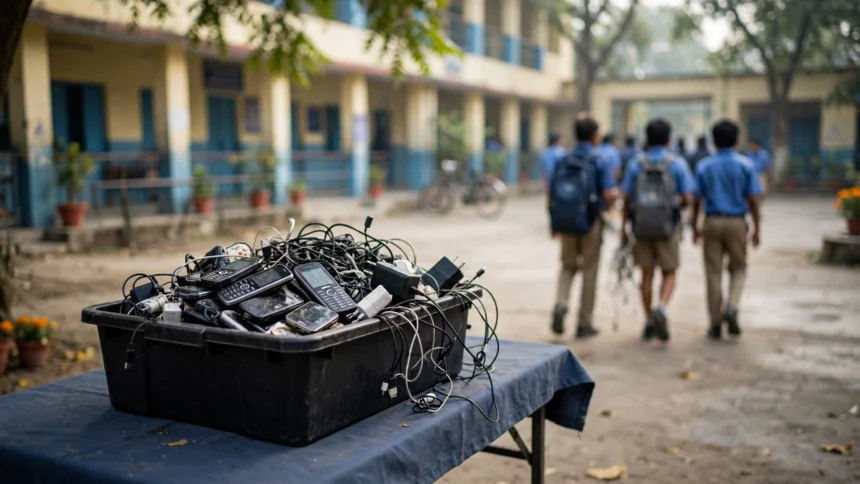
Old phones lying in drawers, chargers that fit nothing any more, cables tangled in a corner. Today, October 28, school students across India are being asked to bring exactly that kind of clutter to school, and to hand it over the right way.
Schools are holding a nationwide e-waste awareness and collection drive today as part of Special Campaign 6, run by the Department of School Education and Literacy under the Union Ministry of Education. The campaign runs from October 2 to October 31, and today is its dedicated e-waste day, led in schools by Eco Clubs under the Mission LiFE programme.
The idea is simple. Electronic items pile up at home long after they stop working. Thrown in with ordinary rubbish, or sold to the nearest scrap dealer, they can leak harmful substances into soil and water. Sent to authorised recyclers, much of the same material can be recovered and reused safely. That distinction is at the heart of what students are learning today.
What schools are doing today
In Andhra Pradesh, every government and private school and junior college is holding concluding activities for the campaign today. The morning assembly carries a special quiz on e-waste management, reuse and safe disposal, and students have been encouraged to bring unused or damaged electronic items from home, including old devices, cables, chargers and mobile phones.
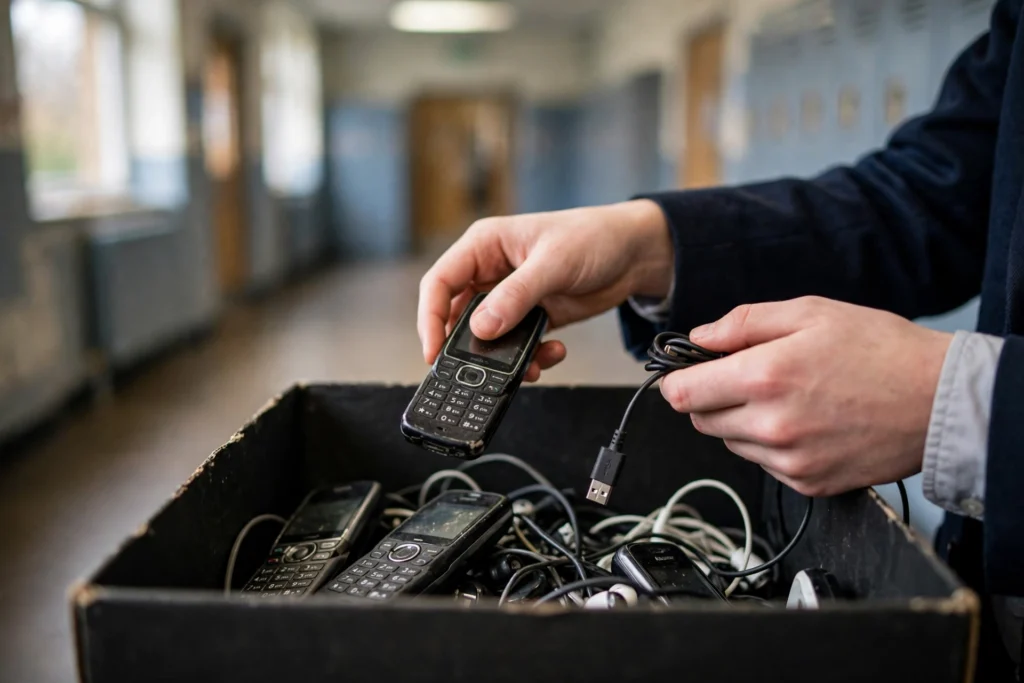
The items go into designated black boxes at e-waste collection corners in schools. From there, the material is sent to the Mandal Education Office, which arranges collection by authorised recyclers. Schools have been told to hand e-waste only to recyclers or refurbishers authorised by the Central or State Pollution Control Board. Handing it to unauthorised scrap dealers is strictly prohibited.
Uttar Pradesh is running a similar statewide push in its schools today, with quizzes, assembly activities and learning material on safe collection and disposal, monitored by district education officials.
Safety comes first
One instruction has been repeated in state after state. Students and staff have been told not to dismantle hazardous electronic items. Batteries, CRT monitors, LED bulbs and CFL bulbs must not be pulled apart at school. The items are to be collected whole, stored safely, and left to people trained and authorised to handle them.
Figures reported from Andhra Pradesh ahead of the drive put the collection at 53,627 e-waste items logged by 14,546 schools, after awareness activities through the second half of September. The numbers come from data uploaded by the participating institutions themselves.
A mural made of 50 kg of e-waste
The campaign had a visible symbol before today. To mark International e-Waste Day on October 14, the department installed a creative e-waste mural and e-waste bins at Kartavya Bhavan 2 in New Delhi. The mural is made from 50 kg of e-waste collected by school students, and it carries the message at the centre of the exercise: reduce, reuse and recycle.
The bins installed alongside it serve the same purpose in miniature: a designated place to leave discarded electronic items, instead of a general bin. It is the same logic as the black boxes in school collection corners, scaled up to a government building.
Preparations for today’s drive were reviewed on October 16, when the Secretary of the Department of School Education and Literacy, T. K. Anil Kumar, chaired a video conference with states, Union Territories and autonomous bodies, covering the awareness campaign and the plan for handing over what schools collect to authorised vendors.
Why schools, and why now
Schools are where the habit can actually change. A child who learns at ten that a dead phone charger is not ordinary rubbish will carry that into every home they live in as an adult. And schools reach families, not just pupils: when a student brings an old phone from home, a parent has to find it and decide it is truly finished. That small conversation at the kitchen table is part of the campaign too.
For students, the lesson is practical. Electronic waste is the drawer at home, the box of old cables, the phone with a cracked screen that nobody uses. What happens to it next is a choice, and today schools are showing students how to make the safer one.
Frequently asked questions
What counts as e-waste for today’s school drive?
Unused or damaged electronic items from home, including old mobile phones, devices, cables and chargers, to be deposited in the designated collection boxes.
Can students take apart old electronics at school?
No. Students and staff have been instructed not to dismantle hazardous items such as batteries, CRT monitors, LED bulbs and CFL bulbs. Items should be collected whole and handed over through the prescribed channel.
Where does the collected e-waste go?
Through the prescribed channel to authorised recyclers or refurbishers, such as via the Mandal Education Office in Andhra Pradesh. Handing collected e-waste to unauthorised scrap dealers is prohibited.
What is Special Campaign 6?
A campaign run by the Department of School Education and Literacy from October 2 to October 31, 2026, covering administrative efficiency, cleaner campuses and responsible e-waste management, with Eco Clubs for Mission LiFE leading the school-level work.
Does the campaign end today?
Today is the nationwide e-waste day, but Special Campaign 6 runs until October 31, and Eco Club activities continue year-round in schools.
Schools taking part today should follow their state education department’s instructions, and send collected material only to authorised recyclers.