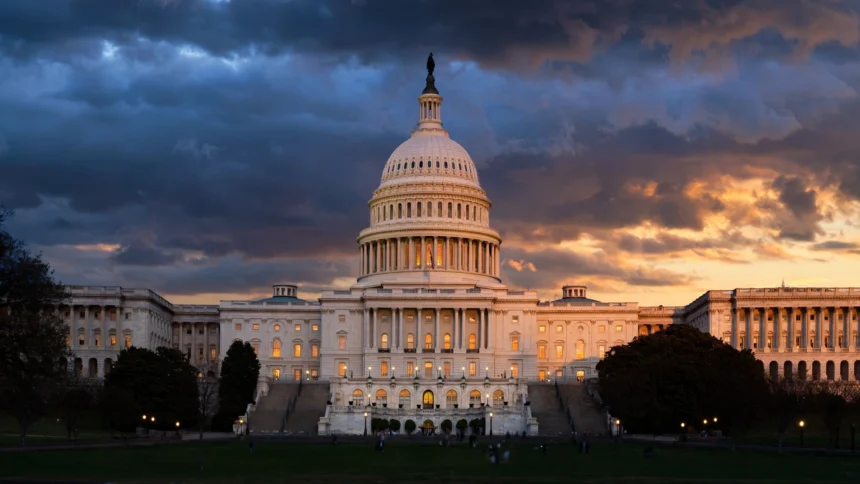
America votes tomorrow. On Tuesday, November 3, tens of millions of voters across the United States will head to polling stations in the 2026 midterm elections, a contest that will decide who controls Congress for the final two years of Donald Trump’s presidency. Every one of the 435 seats in the House of Representatives is on the ballot, along with 35 Senate seats, dozens of governorships and ballot measures on abortion access and voter ID rules.
Midterms are traditionally brutal for the party in the White House, and this year looks no different on paper. Polls and forecasts agree on the broad direction: Democrats are favoured to retake the House, while the Senate is a far tighter fight. But polls are snapshots, not results, and a handful of close Senate races could still swing either way.
What is at stake in the House
The House is where the clearest shift is expected. Democrats need a net gain of just three seats to win back the chamber, and the national mood appears to be with them. The RealClearPolling average of the generic congressional ballot puts Democrats ahead by more than eight points, at 51.4 percent to 43.2 percent for Republicans.
Forecast models tell a similar story, though they differ on the size of the prize. Decision Desk HQ gives Democrats an 80 percent chance of winning the House and projects 238 seats. Silver Bulletin gives Democrats a 95.1 percent chance and projects 240 seats to 195. Prediction markets agree, pricing a Democratic House win at around 92 to 93 percent.
Republicans have one structural advantage: ten states redrew their congressional maps mid-decade, changes the Cook Political Report estimated would hand Republicans a net gain of about four seats. Even so, most analysts believe the Democratic lead is large enough to overcome the new maps.
The Senate is the real battleground
If the House looks like Democrats’ to lose, the Senate is genuinely up for grabs. Republicans currently hold the chamber 53 to 47, so Democrats need a net gain of four seats to take outright control. Because Vice President JD Vance can break a 50-50 tie in Republicans’ favour, 51 seats is the real target for Democrats.
Thirty-five Senate seats are being contested: the 33 regular Class 2 seats plus special elections in Ohio, the seat formerly held by Vance himself, and Florida, vacated by Secretary of State Marco Rubio. The Cook Political Report rates seven races as toss-ups, six of them held by Republicans and one by Democrats. The decisive states read like a tour of the American map: Texas, Ohio, Iowa, Maine, Michigan, Alaska and Kansas.
In Ohio, former Democratic Senator Sherrod Brown leads Republican Senator Jon Husted by 3.1 points in the RealClearPolling average, 47.4 percent to 44.3 percent. In Iowa, Ashley Hinson leads Josh Turek by just 0.1 points. Decision Desk HQ gives Democrats a 60 percent chance of Senate control and projects 52 seats; Silver Bulletin puts it at 77.7 percent, with a 53 to 47 split.
When results will come in
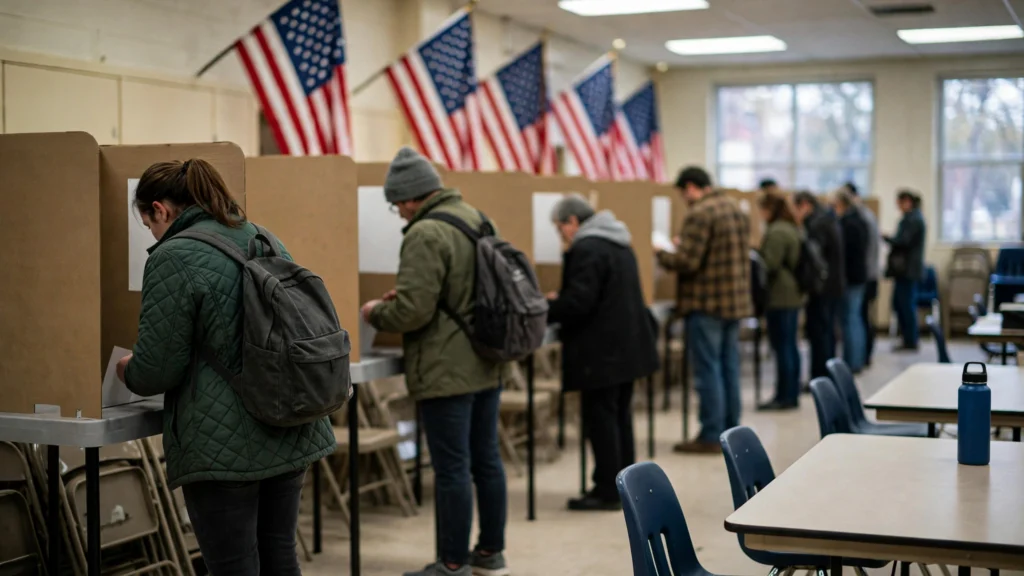
Polls begin closing at 6 pm Eastern Time on Tuesday. The last close at 1 am Eastern on Wednesday in Alaska’s western Aleutian Islands, so the full picture may not be clear until well into Wednesday, India time. Close races and mail-in ballots could delay full clarity by days.
What voters say matters most
Affordability dominates the campaign: rising healthcare costs and grocery prices are the top voter concern, alongside immigration enforcement and the broader question of checks on presidential power that defines every midterm.
- House: All 435 seats contested; Democrats need a net gain of three for a majority.
- Senate: 35 seats contested; Republicans lead 53-47; Democrats need a net gain of four.
- Key Senate battlegrounds: Texas, Ohio, Iowa, Maine, Michigan, Alaska and Kansas.
- Ballot measures: Abortion and voter ID questions in states including Missouri, Nevada, Virginia, Idaho, California, Arizona, North Carolina and Ohio.
- First polls close: 6 pm Eastern Time on Tuesday, November 3; last polls close 1 am Eastern on Wednesday in Alaska.
Why the world is watching
The result will shape more than domestic American politics. A Democratic House would gain subpoena power and control of committees, changing the terms of debate on trade, tariffs, immigration and foreign policy for the rest of Trump’s term. A Republican hold on both chambers would leave the president’s agenda largely unchecked.
FAQs
When are the 2026 US midterm elections?
Election Day is Tuesday, November 3, 2026. Polls close through the evening, with the last closing at 1 am Eastern on Wednesday in Alaska.
What is being decided?
All 435 House seats, 35 Senate seats, a slate of governorships and state ballot measures. Control of both chambers of Congress is at stake.
Who is favoured to win?
Forecasts favour Democrats to retake the House, with chances ranging from 80 to 95 percent across major models. The Senate is much closer, with Democratic chances put between 60 and 78 percent.
How many seats do Democrats need?
Three in the House and four in the Senate, where Republicans lead 53 to 47 and JD Vance can break a 50-50 tie.
When will we know the results?
Early results arrive Tuesday night US time, but close races and mail-in ballots could delay full clarity by days.
America has spoken in midterms before and surprised the forecasters. Tomorrow, it gets its say again.