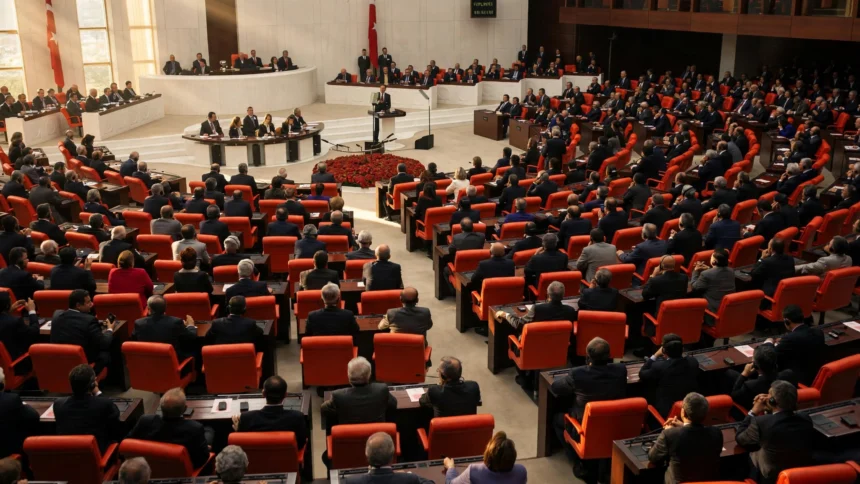
Turkey’s parliament has ratified a landmark defence pact with Pakistan and Saudi Arabia, committing the three countries to treat an attack on any one of them as an attack on all three. Lawmakers approved the Mecca Joint Defence Agreement on Thursday by 279 votes to 119, clearing the final legislative hurdle in Ankara for a deal that reshapes the security map of West Asia.
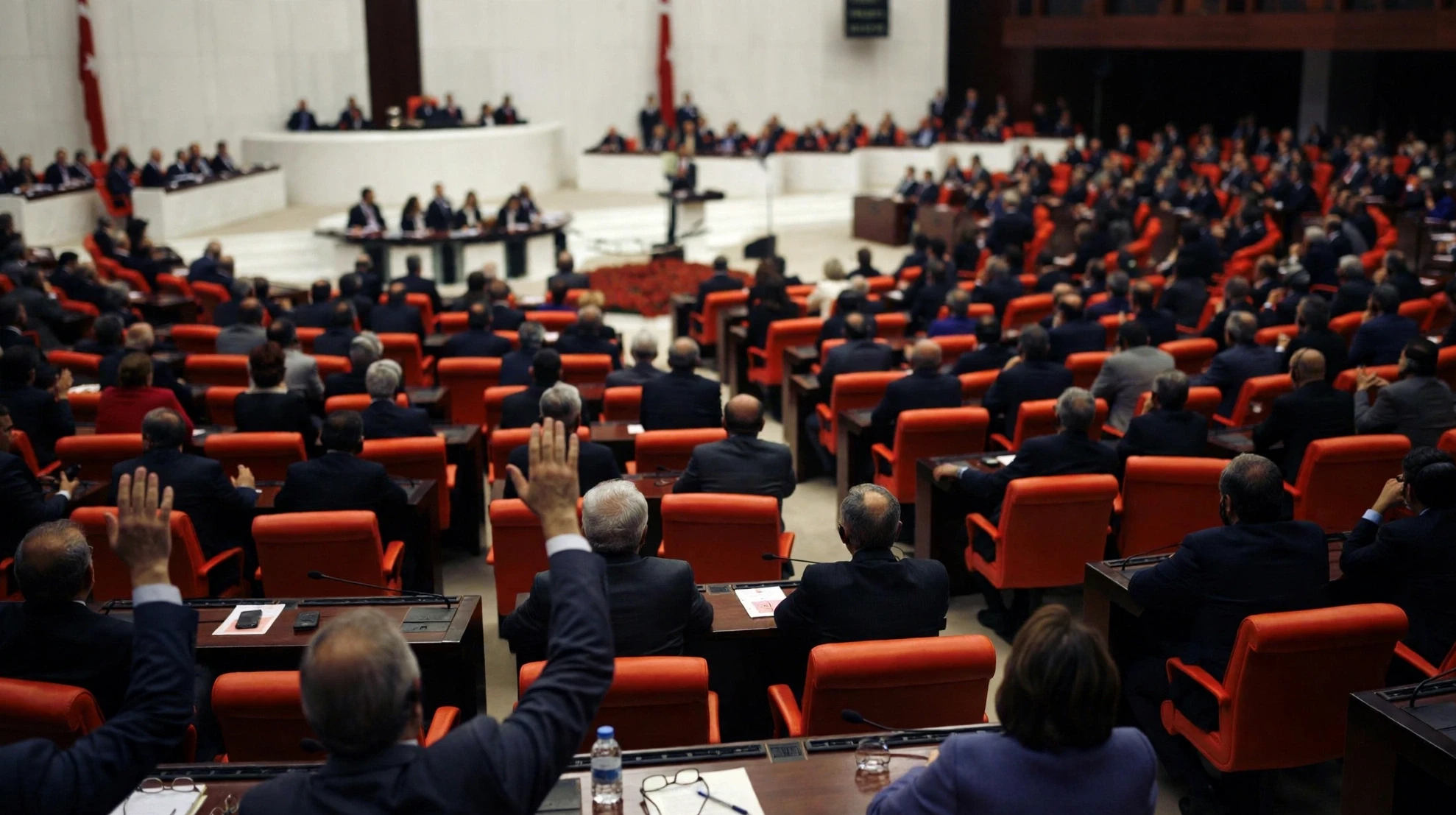
The vote, held after a long and heated debate in the Grand National Assembly, saw 398 of the chamber’s 592 members take part. President Recep Tayyip Erdogan’s ruling AK Party and its ally, the Nationalist Movement Party, backed the measure, while opposition parties voted against it, warning that the pact could pull Turkish soldiers into wars that are not Turkey’s own.
What the pact actually says
The agreement runs to 16 articles and was signed by Erdogan, Saudi Crown Prince Mohammed bin Salman and Pakistan Prime Minister Shehbaz Sharif at a trilateral summit in Mecca on August 7. Its core is a collective defence clause: an armed attack from outside on any one member is to be treated as an attack on all three, with the signatories obliged to assist one another.
Beyond that headline commitment, the pact sets up a framework for closer military cooperation, including joint work to deter threats, intelligence sharing and deeper ties between the three countries’ defence industries. It will remain in force for 10 years, and no member can withdraw during that first decade. After the term ends, a country wishing to leave must give three months’ notice.
Turkey submitted the ratification bill to parliament on October 20. The Foreign Affairs Committee cleared it on October 27, and the full chamber began debating it on November 4 before voting in the early hours of Thursday.
Why Riyadh wanted it
For Saudi Arabia, the timing is no accident. The kingdom has faced repeated attacks from Yemen’s Iran-backed Houthi rebels, and Riyadh has been looking for stronger regional backing as the conflict grinds on. Turkish officials have said Ankara is considering sending military assistance to Saudi Arabia under the pact, but they insist the agreement is defensive and that no Turkish troops would be deployed to fight in Yemen or to attack the Houthis.
That assurance has not satisfied the opposition in Ankara. During the debate, opposition lawmakers asked why Turkish youth should be risked for the political ambitions of foreign governments, and warned that the collective defence clause could drag Turkey into a regional war it did not start. The government counters that the pact deters aggression rather than inviting it, and that a formal alliance gives Turkey a bigger say in how West Asian security is managed.
No troops yet, and that matters
One point the government has stressed repeatedly is that ratification on its own does not put Turkish boots on Saudi ground. Under Article 92 of the Turkish Constitution, sending armed forces abroad generally needs separate parliamentary authorisation. A ruling party lawmaker told Reuters last month that Turkey would also submit a separate mandate to parliament allowing military personnel to be deployed to Saudi Arabia under the pact.
In other words, Thursday’s vote opens the door but does not walk through it. Any actual deployment would return to the same chamber for another vote, and that debate is likely to be just as fierce as this one.
What it means for the region, and for India
The pact formalises a triangle that has been taking shape for months. Turkey, Pakistan and Saudi Arabia have been coordinating more closely on security, and the three countries’ foreign ministers have held joint consultations in recent weeks. For Pakistan, the agreement adds a formal security guarantee from two influential partners. For Turkey, it cements a role as a security provider well beyond its own borders.
- A new axis: the pact links a NATO member, a nuclear-armed South Asian state and the Arab world’s largest economy in a single mutual defence commitment.
- Deterrence, not deployment: the immediate effect is political, a signal to rivals that an attack on Riyadh or Islamabad now carries a wider cost.
- India’s watch: New Delhi will be reading the fine print closely, given Pakistan’s central role and the pact’s implications for the balance of power in India’s extended neighbourhood.
- Iran in the background: the deal lands at a moment of high tension across West Asia, with the United States and Iran locked in a standoff and regional capitals hedging their bets.
Analysts caution that the real test will come not in parliament but in a crisis. Collective defence clauses are only as strong as the political will behind them, and the three capitals have different interests, different threat perceptions and different red lines. What Thursday’s vote does, beyond doubt, is put those commitments on paper, and in a region where signals matter, that alone is significant.
FAQs
What is the Mecca Joint Defence Agreement?
It is a 16-article defence pact signed in Mecca on August 7 by Turkey, Pakistan and Saudi Arabia. Its central clause says an armed attack on one member counts as an attack on all three.
How did the Turkish parliament vote?
Lawmakers ratified the pact on November 5 by 279 votes to 119, with 398 of the 592 members of the Grand National Assembly taking part.
Does the pact mean Turkish troops will go to Saudi Arabia now?
No. Ratification alone does not authorise a deployment. Under Turkey’s constitution, sending troops abroad needs a separate parliamentary approval.
How long does the agreement last?
It remains in force for 10 years. No member can withdraw during that period, and after it ends, leaving requires three months’ notice.
Why does this matter for India?
Pakistan is a signatory, so the pact changes the security calculations in India’s neighbourhood. New Delhi will be watching how the commitment is applied in practice, especially in any future regional crisis.
The Mecca pact is now law in Turkey, and the focus shifts to Riyadh and Islamabad, where the agreement must complete its own ratification steps before it formally enters into force.